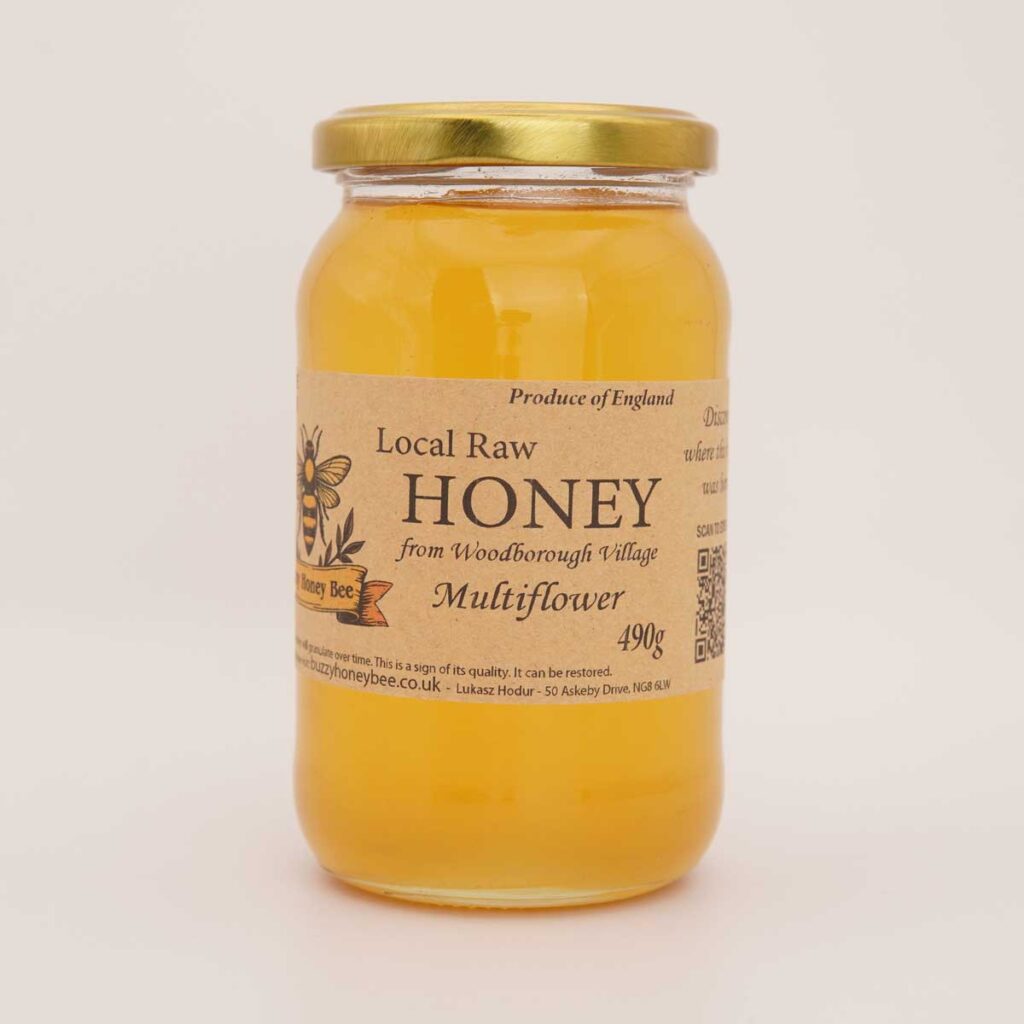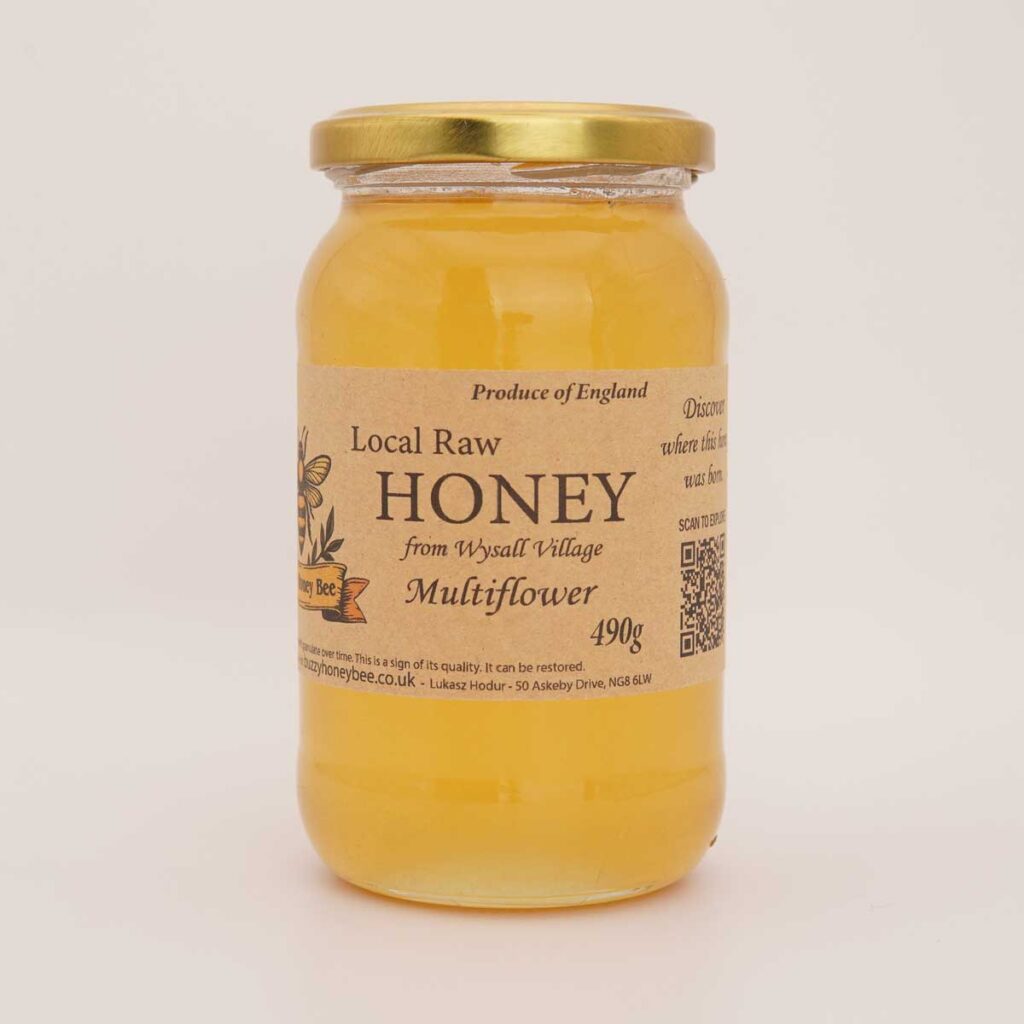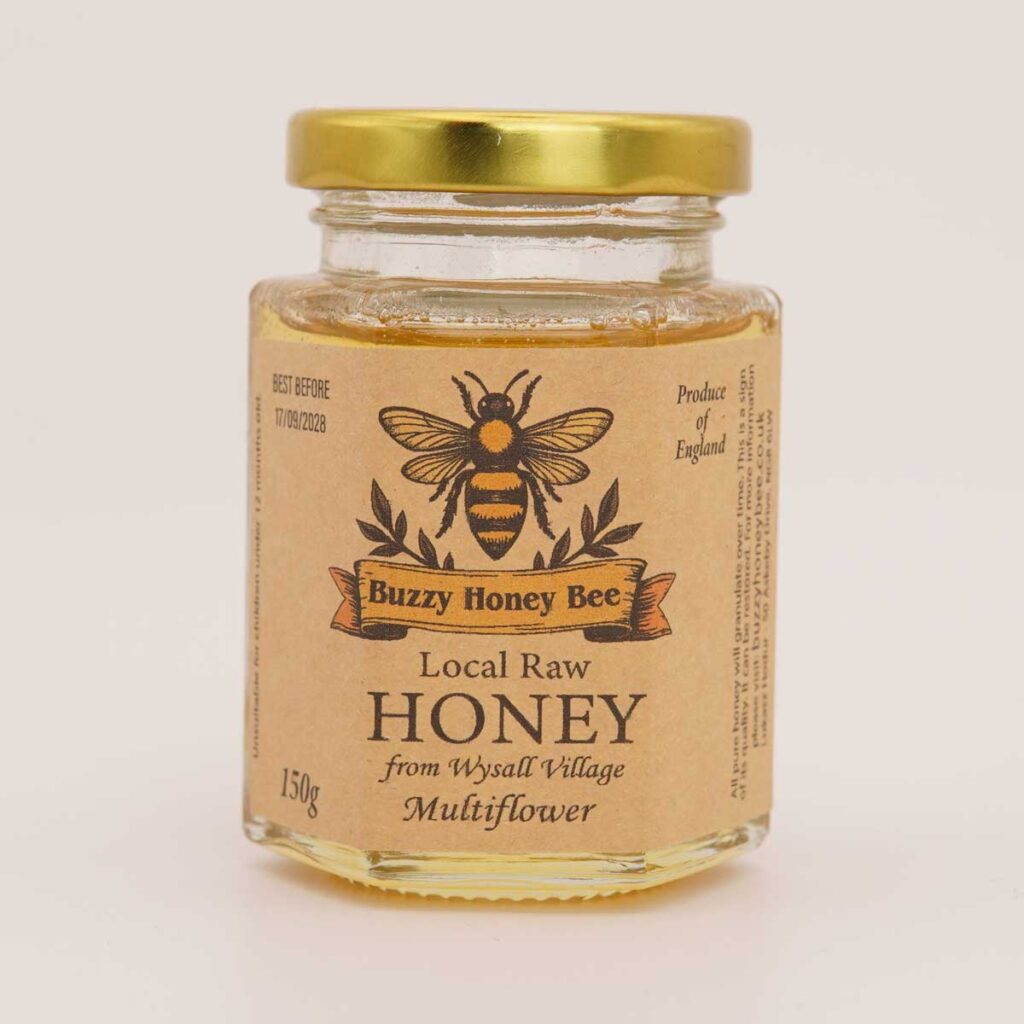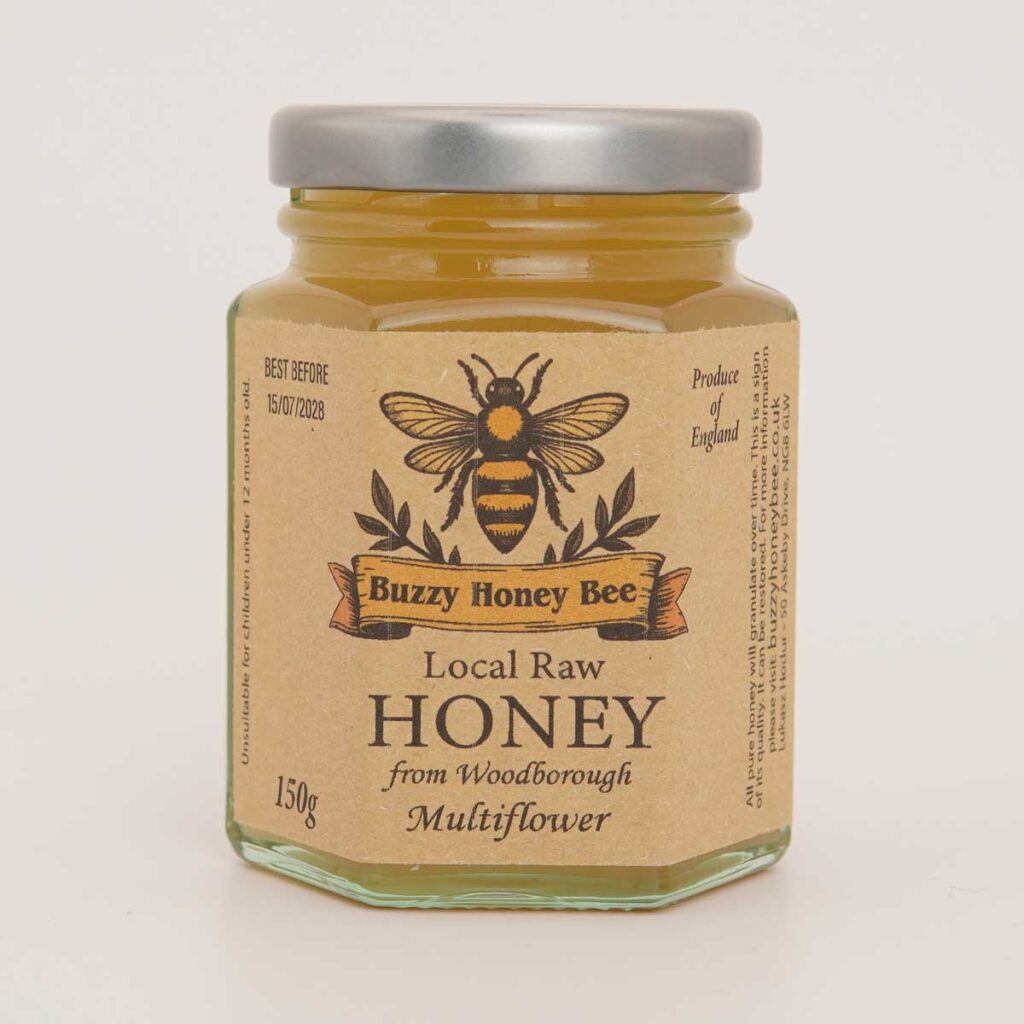
Honey is more than just a natural sweetener, it is a complex food rich in enzymes, antioxidants and antibacterial compounds. However, its delicate structure is highly sensitive to temperature, and overheating can significantly alter its composition. This article explains exactly what happens at different temperatures, what beneficial properties are lost, and when undesirable compounds start to form in raw honey and local honey.
Temperature and Honey: The Basics
Honey originates from the hive, where it naturally exists at about 34–36 °C a temperature that preserves its biological activity. Outside this range, especially when exposed to prolonged or excessive heat like in a microwave, honey starts to undergo chemical and physical changes.
What Happens to Honey Below 40 °C?
At temperatures up to about 40 °C:
- Enzymatic activity remains largely intact
- Antioxidant and antibacterial properties are preserved
- Volatile flavour and aroma compounds stay intact
This is the optimal temperature range for honey and is close to the natural environment inside beehives. It’s also the temperature recommended for gentle decrystallisation of crystallised honey without losing quality, a topic we cover in our article: How to Turn Crystallised Honey Back Into Liquid — a complete guide on safe methods.
What Happens to Honey Above 40 °C
Once honey surpasses 40 °C:
- Heat sensitive enzymes (e.g., diastase, glucose oxidase) begin to denature;
- Antibacterial activity begins to decline;
- Natural antioxidants start losing efficacy;
- Some floral and aroma notes fade.
These are subtle but measurable changes, significant if preserving raw honey’s natural benefits is your priority.
What Happens When Heating Honey to 45–50 °C
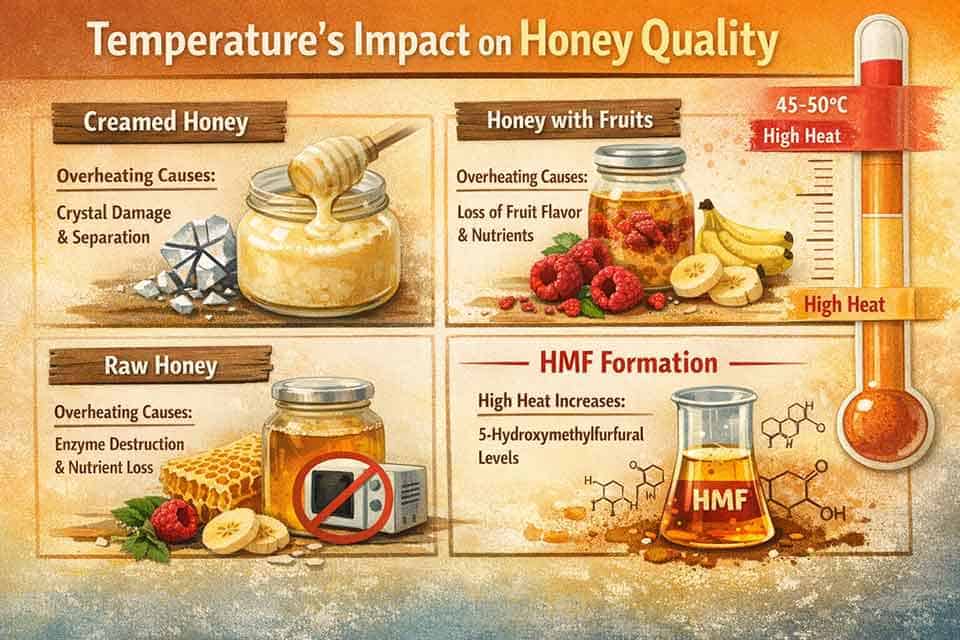
Heating honey to 45–50 °C begins to noticeably affect its natural biochemical properties. At this temperature range, enzyme deactivation becomes more significant, particularly for enzymes such as diastase and inverse, which contribute to honey’s nutritional and biological activity. As these enzymes lose activity, the overall functional quality of honey gradually declines. In addition, the antibacterial properties start to weaken, since some compounds responsible for antimicrobial effects are sensitive to heat and begin to degrade. At the same time, volatile aromatic compounds evaporate more quickly, leading to a reduction in honey’s characteristic aroma and flavour. Prolonged exposure to these temperatures can therefore reduce both the health benefits and sensory quality of honey.
Heating Honey to 60 °C and Above
Heating honey to 60 °C and above leads to substantial degradation of its natural components. At these temperatures, enzymes are largely destroyed, eliminating much of the biological activity that contributes to honey’s nutritional value. Antioxidants begin to degrade rapidly, reducing honey’s protective properties. In addition, aromatic compounds volatilise, causing a noticeable loss of the characteristic flavour and fragrance.
Higher temperatures also accelerate chemical transformations within the sugars present in honey. Most importantly, heating above about 60 °C significantly increases the formation of HMF (5-hydroxymethylfurfural).
What is HMF?
HMF forms when sugars such as fructose and glucose break down under heat and acidic conditions. While trace amounts naturally occur in honey, high levels of HMF indicate overheating or excessive processing, and are measurable in quality standards used to evaluate honey integrity worldwide. High HMF levels do not necessarily make the honey poisonous, but they signal loss of nutritional quality and authenticity.
Why Microwaving Honey Is Especially Harmful
Microwave heating is unpredictable because it heats unevenly and inevitably creates localized hotspots that exceed safe temperatures. As the microwaves interact with the liquid, some areas absorb more energy than others, causing parts of the honey to heat much faster than the rest.
As a result, even a short exposure in the microwave raises portions of the honey to well above 60 °C. At these temperatures, delicate enzymes and antioxidants begin to degrade rapidly. This damages the natural structure of the honey and significantly reduces the valuable properties that raw honey is known for.
How Overheating Affects Different Types of Honey
Different honey products found on your site are affected by heat in slightly different ways, but generally overheating has similar effects:
Raw Honey
Raw honey is unfiltered and unpasteurised, which means it retains its natural enzymes, antioxidants, pollen, and other bioactive compounds. Because of this natural composition, raw honey is highly sensitive to heat. Exposure to high temperatures destroys active enzymes, degrades antioxidants, and damages many of the beneficial compounds that give raw honey its nutritional and therapeutic value.
Heating raw honey in a microwave or boiling it causes rapid thermal degradation, leading to a significant loss of its natural biological activity. High temperatures also accelerate chemical changes in the sugars, which further reduces honey quality. For this reason, raw honey should be handled gently and not exposed to excessive heat in order to preserve its natural properties.
Explore your range of raw honey here: Raw Honey — pure, unfiltered and naturally full of enzymes.
Creamed Honey
Creamed honey is produced through controlled crystallisation, which forms very fine crystals and gives the honey its smooth, spreadable texture. Maintaining this delicate crystal structure requires careful temperature control. Excessive heating can damage or dissolve these crystals, disrupting the controlled structure created during the creaming process. As a result, the honey may lose its characteristic creamy consistency and separate or recrystallise unevenly, leading to a coarser and less desirable texture.
Honey with Fruits
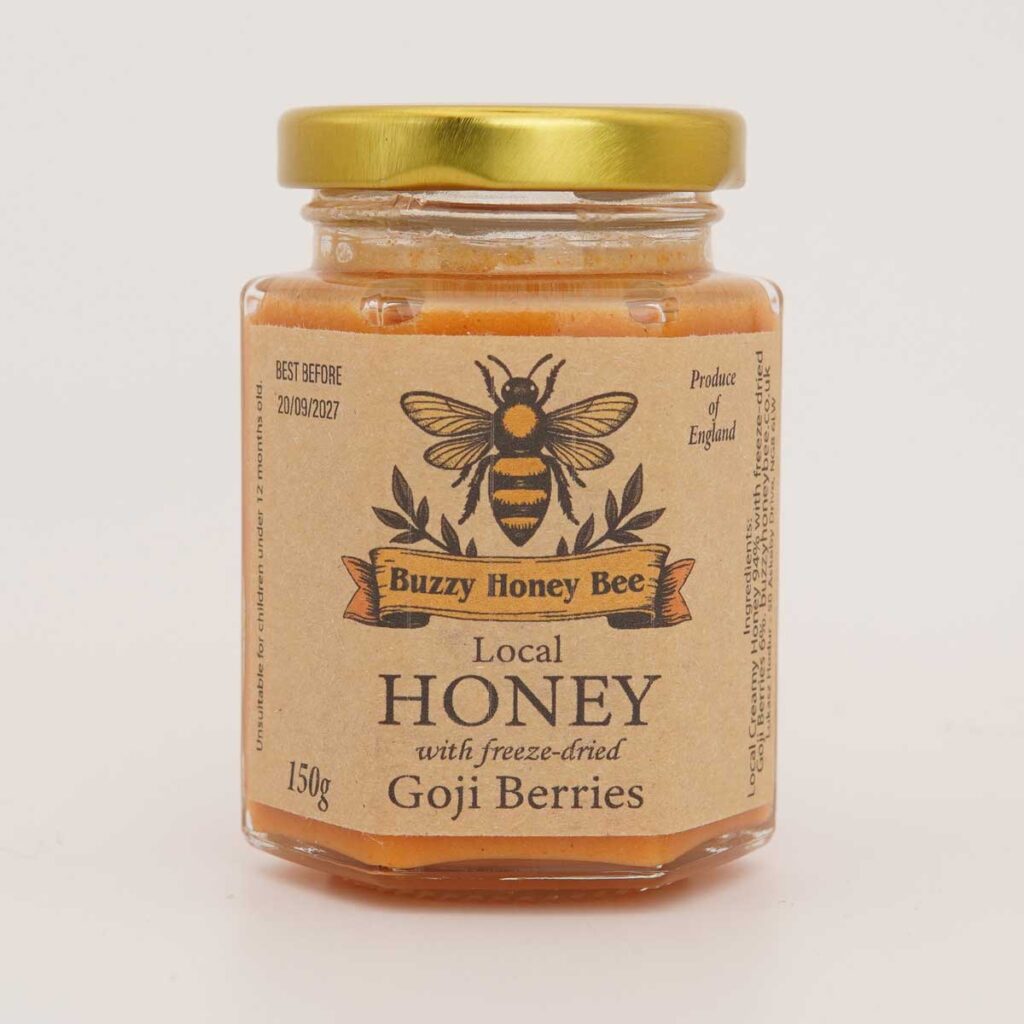
Infused honeys, such as those containing banana, raspberry, or passion fruit, are produced by blending raw honey with freeze-dried fruits. These products rely on the natural composition of both ingredients to maintain their flavour, aroma, and nutritional value. Exposure to high temperatures directly damages these qualities.
Heating reduces the intensity of fruit flavour because heat destroys volatile aromatic compounds responsible for the characteristic taste and smell of the fruit. Elevated temperatures also degrade sensitive nutrients present in both honey and the freeze-dried fruit, including antioxidants and bioactive compounds. In addition, overheating alters the texture of the product, disrupting the natural structure of honey and the fruit particles, which leads to a less stable and less desirable consistency.
Is Overheated Honey Toxic?
There is no strong evidence that moderately overheated honey becomes directly toxic, but:
- High HMF levels are undesirable and signal quality loss
- Functional benefits such as antibacterial activity and enzyme presence are diminished
- Nutritional value and flavour profiles are significantly altered
The real issue is loss of value, not acute toxicity, especially for those who enjoy honey for wellness benefits.
Practical Guidelines for Safe Honey Use
To retain the natural goodness of raw honey and local honey:
- Avoid heating above 40 °C
- Never microwave honey
- Add honey to beverages only after they have cooled
- Use gentle warming only when absolutely needed
- Embrace natural crystallised honey instead of forcing liquidity
For guidance on how to handle crystallised honey safely, see: How to Turn Crystallised Honey Back Into Liquid.
Respect the Temperature
Temperature plays a critical role in preserving honey’s natural bioactivity. From subtle enzyme changes starting above 40 °C, to accelerated degradation at 50 °C, to rapid breakdown and HMF formation above 60 °C, overheating transforms honey from a nutrient-rich food into a degraded sugar solution.
Enjoyed this article? If you’d like to support more honest writing about bees and local honey, you can buy me a coffee here:
Buy Me a Coffee – Buzzy Honey Bee
Your support also helps me continue working with the bees and offering free bee swarm collection.
Of course, the best way to support this small apiary is still by choosing one of the products below.