Stand by a hive on a warm July afternoon and ignore the catalogue names. Watch where the bees actually go. They skip the double dahlias and the packed bedding. They work the open centres — lavender, phacelia, a patch of clover, a stand of rosebay willowherb if you’ve left one. That is what flowers for bees means in a British garden: not a pretty border, a working larder.
This is the hub for the best plants for bees. Honey bees and wild bees. Bumblebees included. The aim is simple. Nectar they can reach. Pollen that dusts the body. Something in bloom from the first crocus to the last ivy.
I keep hives on village forage in the East Midlands. The lists below are what we see on the landing board and in the supers, not a garden-centre poster. When a plant is heavy enough here to flavour a jar, I’ll say so. Until then, plant it because the bees use it.
You’ll get the plants worth growing, why single flowers beat packed petals, how to cover the year, and the mistakes that waste a season. Herbs have their own guide. Individual plants will get their own pages in this series. This page is the map.
What makes good flowers for bees
Bees do not eat seeds. They eat what the flower makes.
Nectar is sugar water with a scent. It fuels flight. Pollen is the protein. Nurse bees turn it into brood food. A garden that only offers one of those, or only offers it in June, is a snack bar with a closed kitchen.
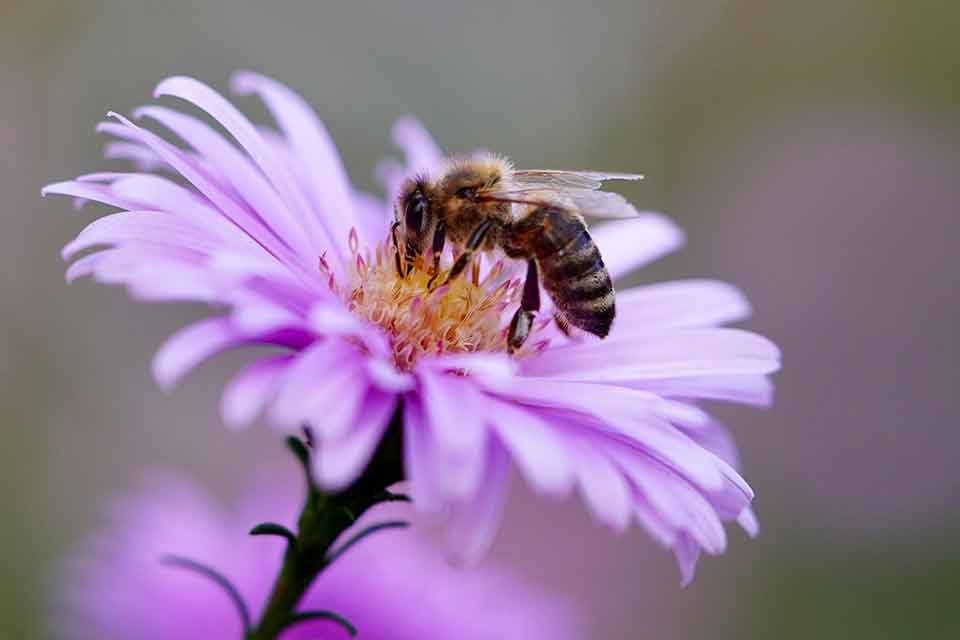
The shape of the flower matters more than the label “bee-friendly” on the pot. An open, single bloom lets a honey bee reach the nectaries. A double flower often hides them under extra petals. If you cannot see the centre, she probably cannot work it either.
Colour helps them find the patch. Blues, purples and yellows show up well to a bee. Scent helps on still evenings. None of that saves a plant that has been bred into a pom-pom.
Quantity matters as much as species. Honey bees are efficient. They lock onto a source and work it. One lonely cosmos in a mixed bed is easy to miss. A block of the same plant is a target.
If you’re unsure about a cultivar, look at the flower, not the badge on the pot. An open centre you can see is the test. Packed petals are usually a miss, whatever the label says.
The best flowers for bees in a UK garden
You do not need fifty species. You need a short list that actually gets worked, then enough of each plant to be worth the flight.
Lavender is the reliable summer one. Long flowering, high nectar, happy in a border, a raised bed or a pot. Keep it in sun and do not drown it. Bumblebees and honey bees both stay on it. The detailed lavender page can wait; the rule for now is simple. Buy a variety that still looks like a flower, not a cushion.
Salvia and sage carry mid to late summer when some borders have gone over. The tube is easy for a bee to work. They earn their space in a mixed perennial bed.
Sunflowers are pollen as much as nectar. The open disc feeds many bees at once. Allotment rows and a sunny fence both work. Leave the heads if you can. Birds will finish what the bees started.
Echinacea keeps going as the cone matures. Useful in late summer when the first flush of perennials is fading.
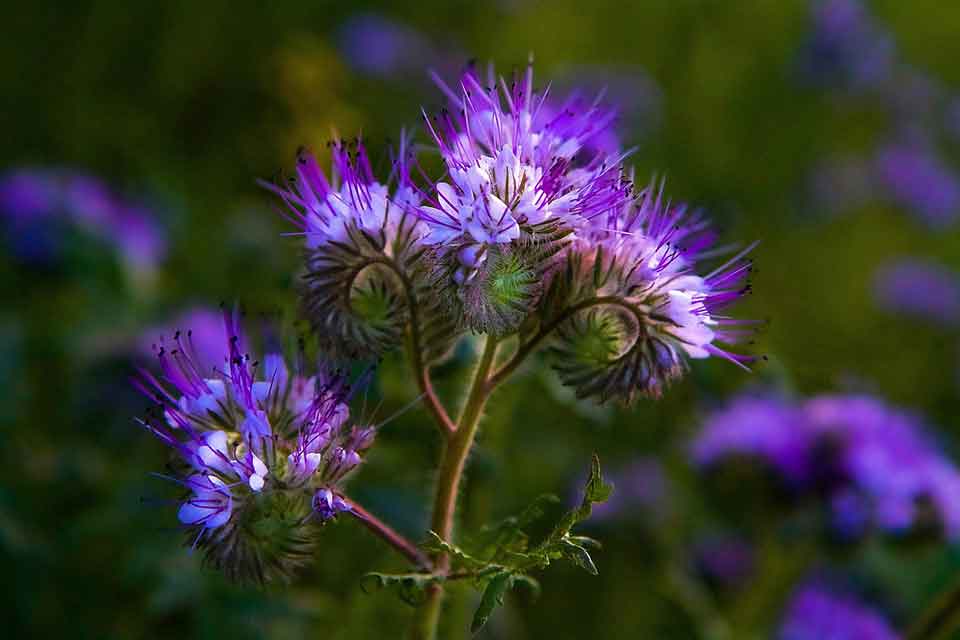
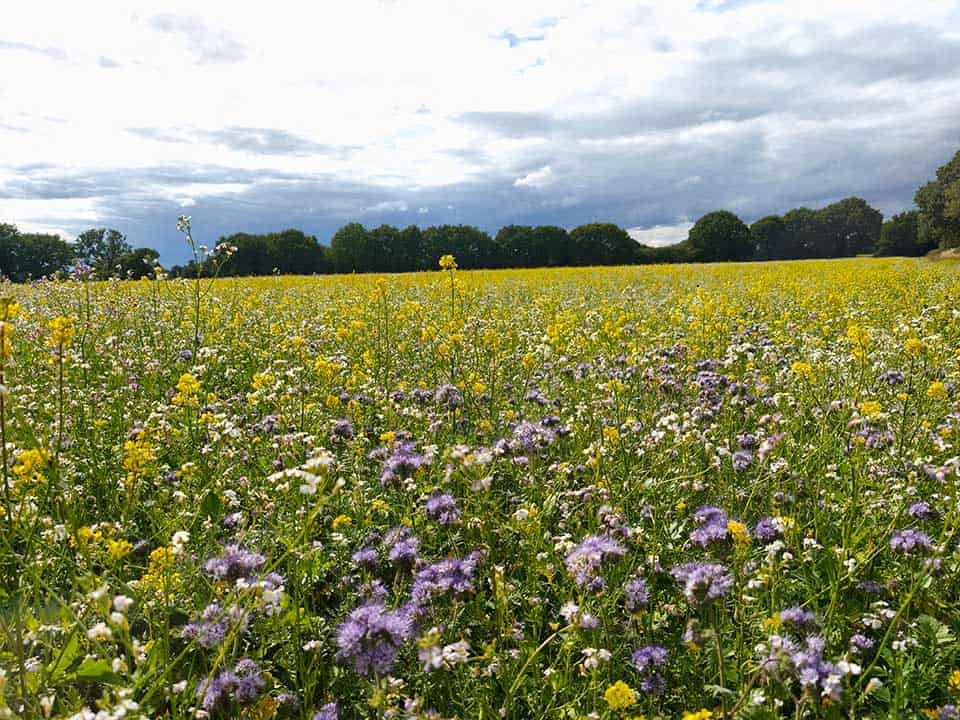
Phacelia is the one I would sow if I had a bare strip and two months. It comes fast from seed, covers ground, and the purple-blue spikes draw a crowd. In our Oakwood forage it sits in the mix with buckwheat, clover and wild radish — that is the jar behind raw multiflower honey from Oakwood Village. There is no separate phacelia honey on the shelf. The plant still earns the seed packet.
Cosmos is the easy annual. Open centres, long season, fine in a pot if you deadhead. It will not flavour a distinct honey here. It will keep foragers busy in a small garden.
Borage refills. That is the trick. A bee can work the same plant again and again in a day. Blue flowers, rough leaves, happy from seed on an allotment or in a rough corner. When we publish the borage page it will live under this hub. Until then, sow a patch and stand still on a warm morning.
Clover is the quiet one people mow off. White and red clover in a lawn you leave a bit longer will feed honey bees and a lot of wild bees. It is also part of the Oakwood mix on a good year. You do not need a meadow kit to start. Stop cutting one strip.
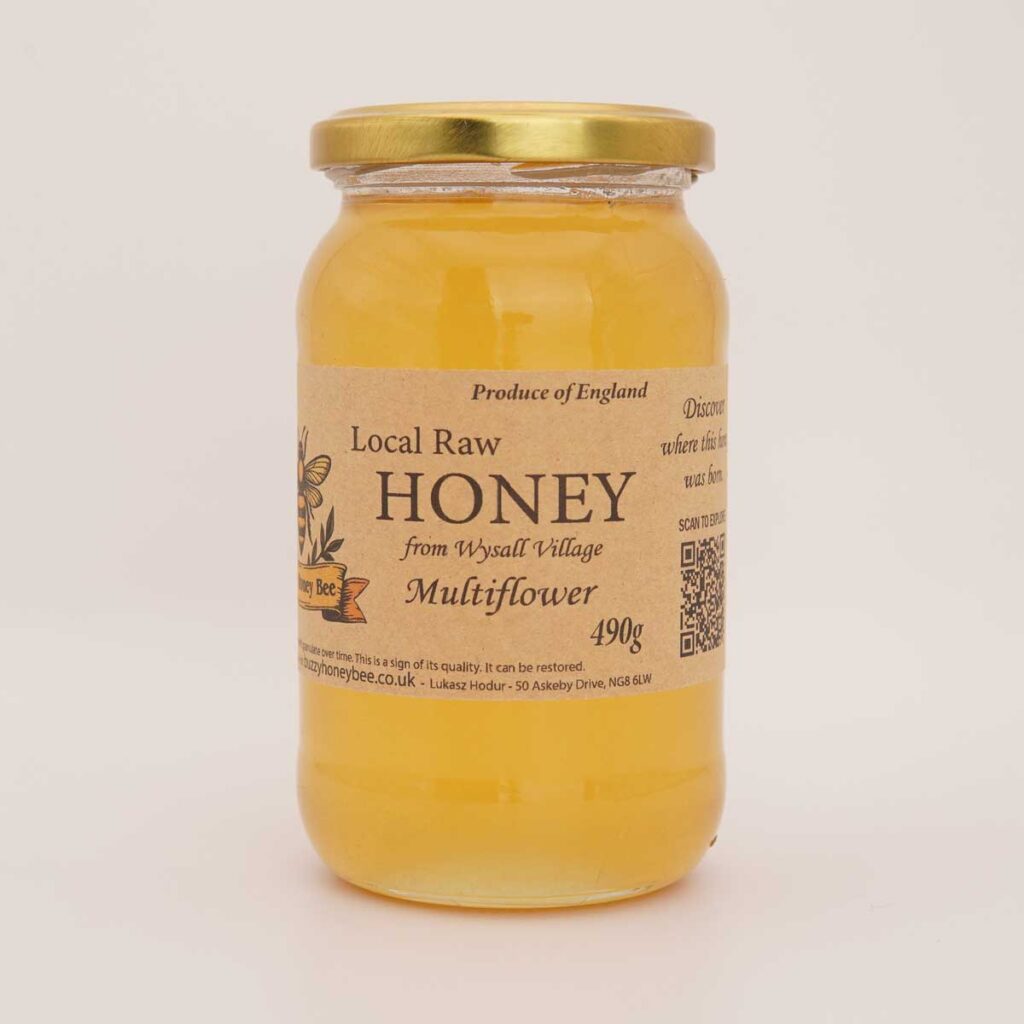
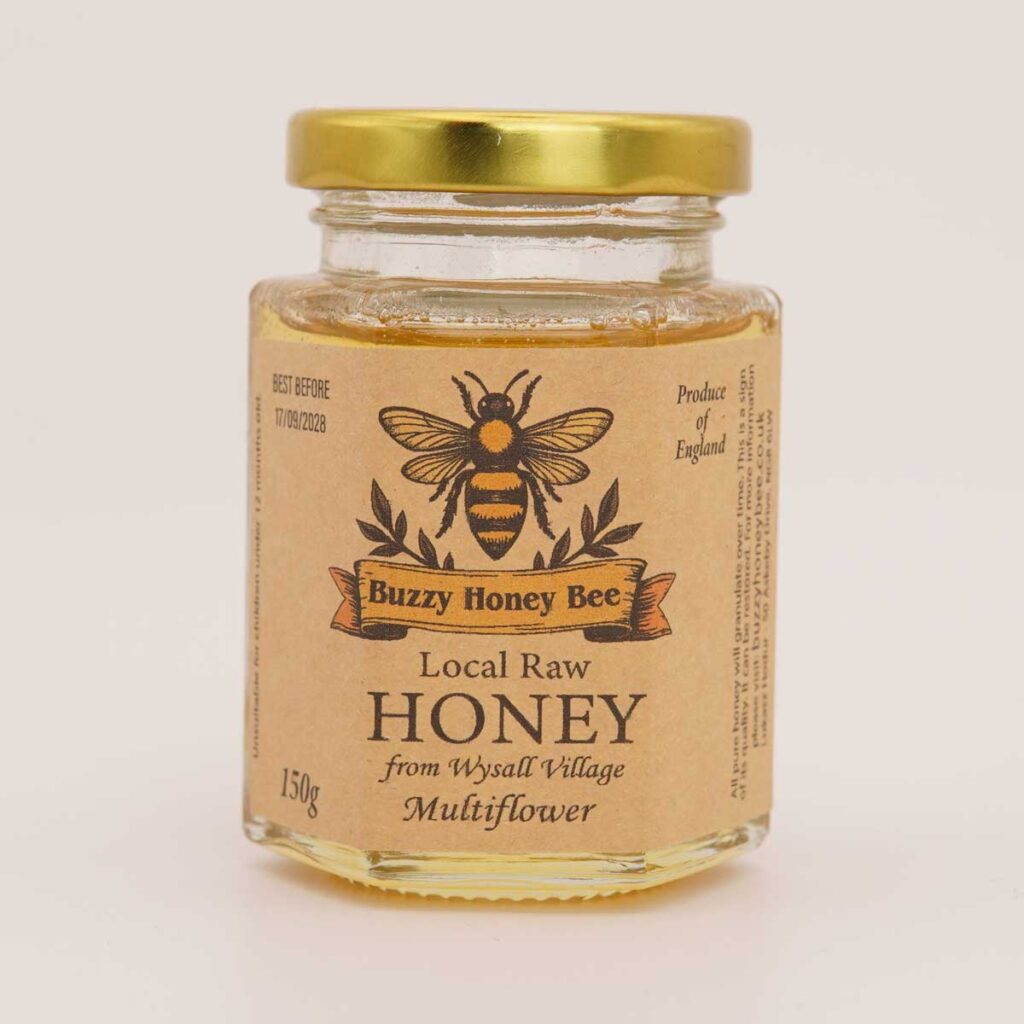
Rosebay willowherb is not a border plant. It is a wild stand — tall pink spikes on disturbed ground, rides and clearings. Where we leave it around Wysall, the bees work it hard in midsummer. When the stand is heavy enough, they can make a distinct honey from it. That jar is raw willowherb honey from Wysall Village: light, floral, gentle. The same landscape also goes into raw wild bees honey from Wysall, which carries wildflower, willowherb and a faint smoky note. Leave the stand if you’ve got one. Don’t plant it in a tidy bed and then wonder why it ran.
Foxgloves, knapweed, scabious and viper’s bugloss all belong on a longer list. They matter. They do not all need their own paragraph on the hub. If a plant has a single, reachable centre and flowers when something else has finished, it is doing the job.
Butterflies will use some of the same plants. That is fine. This page is still for bees. You do not need a second garden for wings.
Bee-friendly herbs
Herbs are some of the best plants for bees you can fit on a path edge.
Allow them to flower. That is the whole trick. A thyme you keep pinched for the kitchen is a herb. A thyme you let bloom is forage. Oregano, marjoram, mint, rosemary and chives all pull bees when the flowers are on.
Rosemary is the early one. Thyme and oregano take summer. Mint will take over a damp corner if you let it — plant it where that is a feature, not a surprise.
I am not going to unpack each herb here. That work already lives on the best herbs for bees. Use that page for varieties and the small-space list. Come back here for the year and the rest of the border.
Wildflowers and native plants
Wild bees often fly a short way from the nest. A native patch next to the fence is worth more to them than a rare shrub three gardens over.
Oxeye daisy, bird’s-foot trefoil, red clover, cornflower and viper’s bugloss are the straightforward names. A packet of mixed annuals is not a meadow. It is a start. Perennial natives take a year or two to look like the picture on the tin. Leave the first season alone.
You do not have to rip out the lavender to sow a wild strip. Do both. Honey bees will work the garden plants. Solitary bees often need the natives.
If you want the forage that actually reaches a jar from mixed wild ground, that is the Wysall wildflower story on where my honey comes from. The plants came first. The jar is the record.
Spring and autumn flowers for bees
A June border with nothing before it and nothing after it is the usual failure.
Early in the year the colony is small and hungry. Snowdrops, crocus, hellebores and primroses are the first open flowers many gardens can offer. Willow catkins and fruit blossom do the heavy lifting if you’ve got a tree. A handful of pots of crocus by the back door is not nothing.
Late in the year the flow has gone and the bees are still flying on mild days. Sedum, Michaelmas daisies and ivy — when you let the ivy flower — keep nectar in the landscape. Ivy is a tree-scale source if the plant is old enough to bloom. Cutting it hard every year is why people think it never flowers.
This hub will not clone a full spring list and a full autumn list. Those are separate pages when they go live. The rule on this page is the calendar. Something open in March. A block in June and July. Something left standing in September.
| Season | What actually gets worked | Notes |
|---|---|---|
| Late winter – early spring | Snowdrops, crocus, hellebores, primroses, willow, early fruit | First flights after winter |
| Late spring | Fruit trees, hawthorn, blackthorn, early herbs | Short, heavy bursts |
| Summer | Lavender, phacelia, borage, clover, willowherb, salvias | Main honey flow in a good year |
| Late summer – autumn | Echinacea, sunflowers, sedum, Michaelmas daisy, flowering ivy | Stores and late forage |
Dandelions sit in the spring column if you let them. Mow the path. Leave a corner.
Trees and shrubs for bees
A flowering tree is a field on a trunk.
Apple, cherry and plum. Willow. Hawthorn and blackthorn in the hedge. Lime — linden — in midsummer can stop an apiary. One street of lime in flower is more use than a border of mixed annuals.
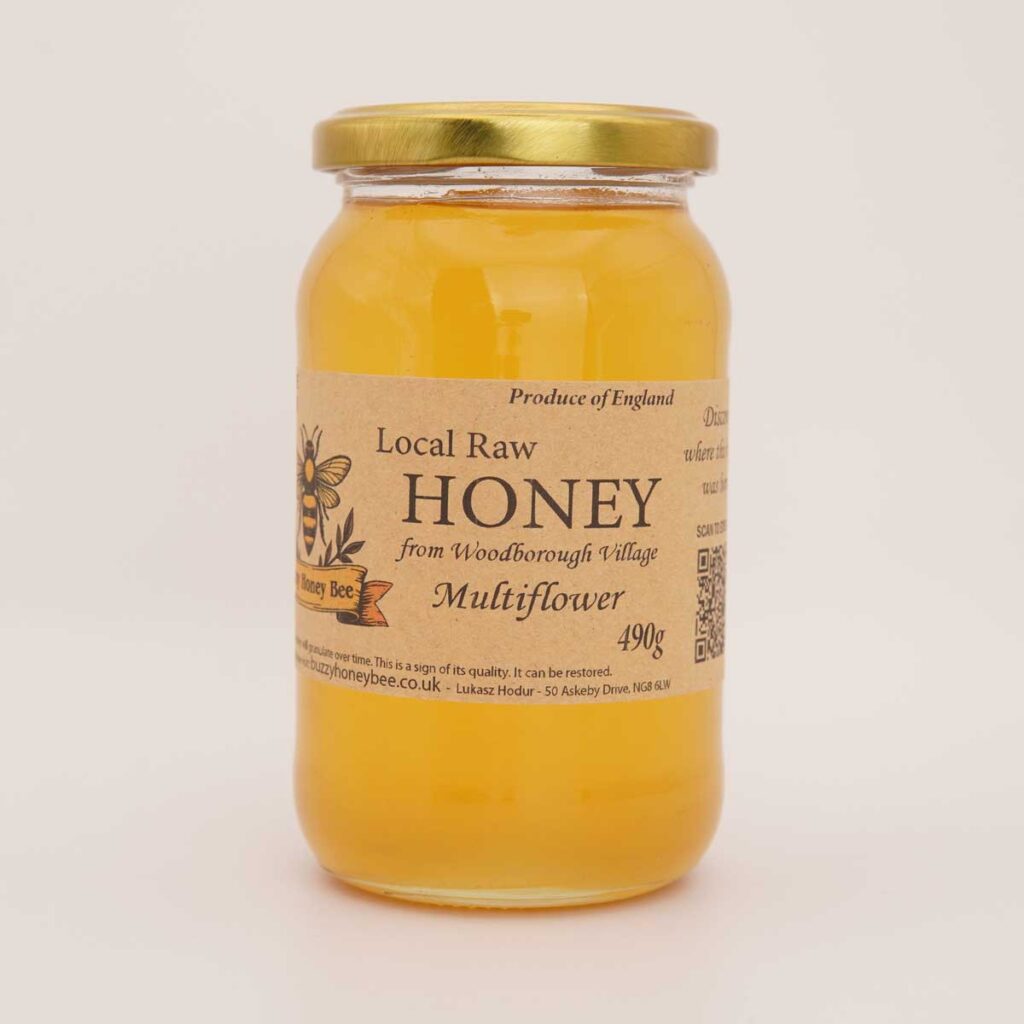
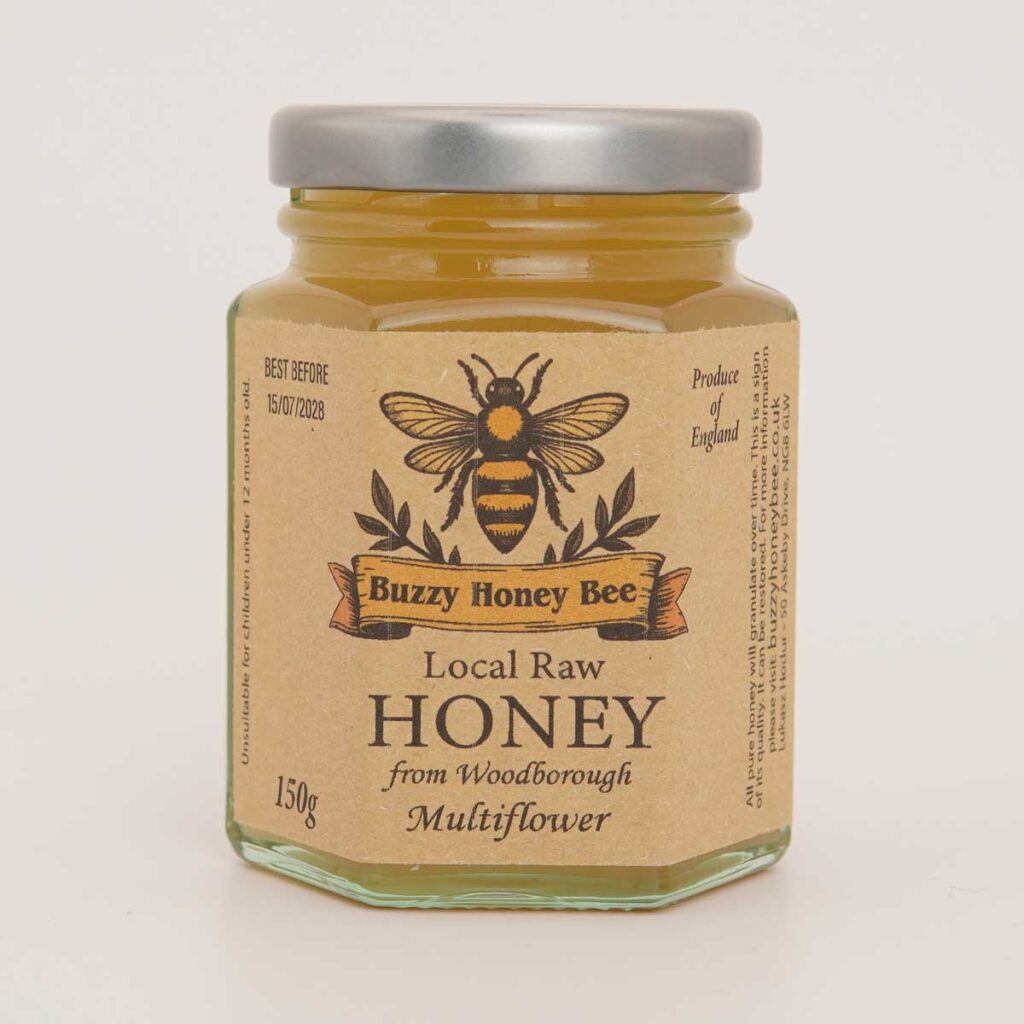
That lime shows up in the Woodborough jars when the trees and the phacelia run together, and in the Strelley / Whatton forage when lime dominates. There is no separate “linden honey” SKU on the village shelf. The multiflower is the honest label. What local honey actually is is the longer explanation of that.
Even a single fruit tree in a small garden changes the early season. Shrubs fill the gaps trees don’t cover: mahonia in winter, flowering currant in spring, a hedge you stop flailing in April.
A later page will take trees on their own. Until then, if you can only plant one large thing this year, plant a tree that flowers.
How to plant so bees actually use them
This is not the full how-to for attracting bees to a garden. That is the next piece in the cluster. The planting rules still belong here, because the wrong layout wastes the right plants.
Plant in blocks, not dots. A drift of one species is easier to find and faster to work than a speckled mix.
Choose single-flowered varieties. If the label shows a tight ball of petals, put it back.
Let plants bloom. Cutting every flower for the vase is your right. It is also a closed kitchen.
Do not spray the thing you just planted for bees. Systemic treatments in the compost and “one last spray for greenfly” undo the border. Aphids are not a reason to poison the forage.
Give them a drink. A shallow dish with pebbles. Bees drown in steep-sided water.
Pots work. Lavender, thyme, chives, cosmos and a trough of phacelia will feed bees on a balcony if they get sun and water. Group the pots. One stem in a saucer is easy to fly past.
Leave a strip of lawn. Clover and dandelion in uncut grass are flowers for bees you already own.
What this forage tastes like
A plant only reaches the jar when the stand is heavy enough for the bees to make a distinct honey from it. Most gardens will never do that, and that is fine. The bees still eat.
On our ground the named versions look like this.
Willowherb around Wysall: delicate, floral, the light jar. Wildflower on the same ground: wildflower plus willowherb and a smoky edge. Oakwood multiflower: phacelia, buckwheat, clover, wild radish. Woodborough multiflower: lime and phacelia. Strelley and Whatton: lime-heavy, or spring with oilseed rape.
If you want to taste the map rather than the plant list, start with where my honey comes from and the raw local honey shelf. The plants on this page are the reason those jars are not identical.
Common mistakes
Buying “bee mix” bedding that is all doubles.
Planting one of everything and none in a clump.
Deadheading the only late flowers in September because the border looks untidy.
Treating ivy as a problem until the day you want autumn nectar, then realising you cut the flowering wood off.
Using a neonicotinoid leftover “just on the roses”.
Expecting a packet of wildflower seed to look like a meadow in week six.
Framing every yellow-and-black insect as a pollinator you must protect. Honey bees and wild bees belong on this page. An active wasp nest in the soffit is a different job. There is a separate cluster for that.
Waiting for a perfect garden before you sow anything. A pot of lavender and a corner of clover already count.
Frequently asked questions
What are the best flowers for bees in the UK?
Open, single flowers with nectar a bee can reach. Lavender, phacelia, borage, clover, salvias, sunflowers, echinacea and native wildflowers such as knapweed and viper’s bugloss. Cover the year. One fashionable plant in June is not a list.
What is the difference between flowers for bees and bee-friendly plants?
Mostly the marketing. If the flower is single, reachable, and out when bees are flying, it is doing the work. “Bee-friendly” on a double petunia is a hope, not a fact.
Do double flowers help bees?
Rarely. Extra petals often hide the nectaries. Choose the single form of the same plant.
Which plants attract honey bees rather than just looking the part?
Honey bees work mass forage — a block they can return to. Lavender, phacelia, borage, lime blossom, clover and a heavy stand of willowherb all get traffic. One mixed patio pot is a snack.
When should I plant flowers for bees?
Think in seasons, not in a Bank Holiday weekend. Autumn planting helps perennials and bulbs. Spring sowing covers annuals such as phacelia, borage and cosmos. Trees and hedges are a winter job.
Are wildflowers better than garden plants?
Better for many solitary bees that need native pollen. Honey bees will work both. Keep the lavender. Add a wild strip.
Can I grow flowers for bees in pots?
Yes. Lavender, thyme, chives, cosmos and phacelia all work in containers in sun. Group them. Water them.
Should I still mow the dandelions?
Leave a patch. Dandelions are early forage when little else is out. Mow the path if you want a path.
Will planting flowers for bees bring wasps?
Wasps will use some of the same blooms later in the year. That is not a reason to skip planting. An active nest in the house is a separate problem.
Where can I see what these plants taste like as honey?
Only when the stand is heavy enough in our apiaries to show in the jar. Village multiflower and the named willowherb jar are the honest version. There is no separate phacelia or lime SKU.
A working garden, not a poster
A bee-friendly garden is not one plant from a Sunday supplement. It is flowers for bees in sequence: something open in March, a block of summer nectar, and a late source before the ivy finishes. Plant in clumps. Leave the single flowers. Put the sprayer away.
If you grow herbs, use the best herbs for bees next. If you want the forage as a jar, the trace page and the raw shelf are the record of what the bees actually brought home.
Further reading
Enjoyed this article? If you’d like to support more honest writing about bees and local honey, you can buy me a coffee here:
Buy Me a Coffee – Buzzy Honey Bee
Your support also helps me continue working with the bees and offering free bee swarm collection.
Of course, the best way to support this small apiary is still by choosing one of the products below.