Herbs are some of the best plants for bees. When allowed to flower, many culinary herbs produce abundant nectar and pollen, attracting both honey bees and wild bees. They are easy to grow, practical and suitable for gardens of all sizes, including small urban spaces.
This guide explains why herbs are important for bees, which bee-friendly herbs are best, and how to grow them in a way that supports pollinators throughout the year.
Why Flowering Herbs Are Important for Bees and Pollinators
Flowering herbs provide reliable food sources for bees, especially at times when fewer plants are in bloom. Nectar supplies energy, while pollen provides essential nutrients needed for healthy colonies.
Because many herbs thrive in pots, raised beds and small gardens, they are ideal for supporting bees in urban and suburban environments. Allowing herbs to flower instead of harvesting them completely greatly increases their value for pollinators.
The Best Bee-Friendly Herbs for Bees
Growing and sowing bee-friendly herbs in your own garden is one of the simplest and most rewarding ways to support bees while also benefiting yourself. Fresh herbs grown at home are far more aromatic, flavourful and nutritious than those bought in supermarkets, as they can be harvested at their peak rather than after long storage and transport. They are also cost-effective, easy to grow and well suited to gardens, raised beds, balconies, and containers. Below are some of the best herbs for bees, chosen for their ability to attract pollinators while remaining easy to grow and useful in everyday cooking.
Thyme – One of the Best Herbs for Bees
Thyme is one of the best herbs for bees, producing large numbers of small, nectar-rich flowers that attract both honey bees and wild bees throughout the flowering season. Despite its compact size, thyme provides an excellent and reliable food source for pollinators and is visited repeatedly during warm, sunny days. It is a low-growing herb, usually reaching around 10–30 cm in height, which makes it ideal for ground cover, borders, rock gardens and containers. Thyme grows best in well-drained soil and prefers light, dry or moderately fertile ground rather than rich or waterlogged soil. A sunny position encourages stronger growth and more abundant flowering. Thyme typically flowers from late spring into summer, and light trimming after the first flush can encourage additional blooms later in the season, extending its value for bees.
Oregano and Marjoram – Nectar-Rich Herbs Loved by Bees
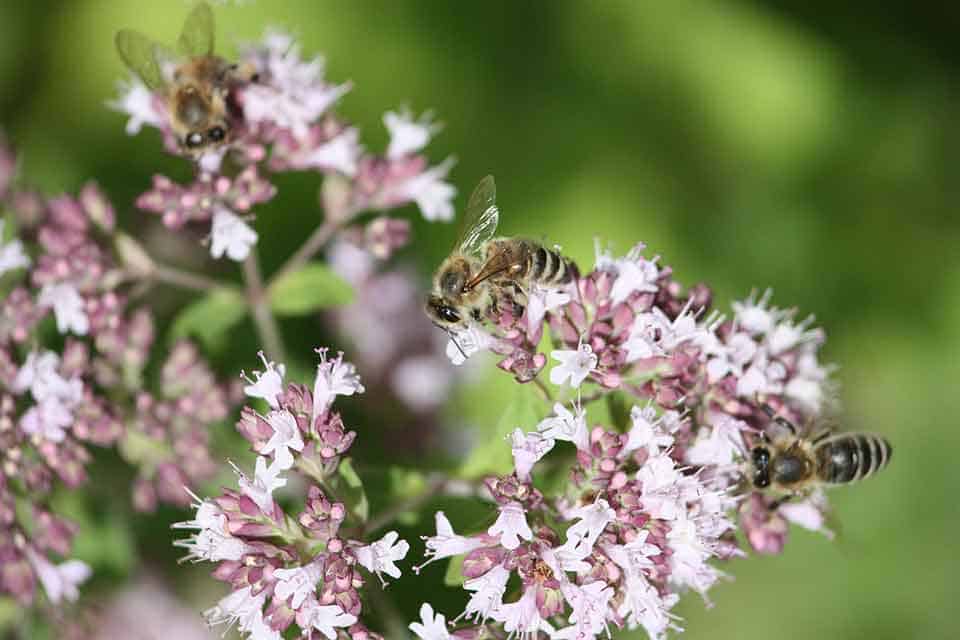
Oregano and marjoram are among the most attractive herbs for bees, producing clusters of small, nectar-rich flowers that draw large numbers of honey bees and wild bees throughout summer. When in bloom, these herbs can be alive with pollinator activity from morning to evening. They typically grow to around 30–60 cm in height and form bushy, spreading plants that work well in borders, raised beds and containers. Oregano and marjoram prefer well-drained soil and a sunny position, where they flower more freely and for longer periods. Flowering usually begins in early to mid-summer and can continue into late summer, providing a valuable and long-lasting food source during peak bee activity.
Mint – A Strong Bee Magnet in the Garden
Mint is a vigorous herb that becomes a powerful magnet for bees when allowed to flower. Its dense clusters of small flowers provide an excellent source of nectar and attract a wide range of pollinators, including honey bees and wild bees. Mint often grows to around 40–80 cm in height and prefers moist, well-drained soil, although it adapts well to many conditions. It grows best in sunny or partially shaded positions. Because mint spreads quickly, it is best grown in containers, where it can still produce abundant flowers from mid to late summer and offer reliable forage for bees over an extended period.
Rosemary – An Early-Flowering Herb That Supports Bees
Rosemary is especially valuable for bees because it flowers early in the year, typically providing nectar when few other plants are in bloom. Its pale blue or purple flowers attract bees during late winter and spring, helping support colonies as they begin their annual growth cycle. Rosemary typically grows as a small shrub, reaching around 60–120 cm in height, and prefers well-drained soil and a sunny, sheltered position. Once established, it is drought-tolerant and low-maintenance. Flowering can continue intermittently through spring and early summer, making rosemary an important early-season food source for bees.
Chives – Easy to Grow Flowers That Attract Bees
Chives are an easy and reliable herb for supporting bees, producing round, purple flower heads that attract large numbers of pollinators. When in flower, chives provide both nectar and pollen and are frequently visited by bees throughout the day. Chives typically grow to around 30–50 cm in height and perform well in gardens, borders, and containers. They prefer well-drained soil and a sunny or lightly shaded position. Flowering usually occurs in late spring to early summer, adding both visual interest and valuable forage for bees at a time when colonies are actively growing.
Bee-Friendly Herbs and Wild Bees
Flowering herbs are particularly important for wild bees, especially in towns and cities where natural forage may be limited. Many wild bee species have short foraging ranges and rely on nearby food sources. Herbs planted close to homes, balconies, and gardens can provide essential nectar and pollen within easy reach, helping support local wild bee populations.
How to Grow Herbs for Bees Successfully
To maximise the benefits of herbs for bees:
- allow herbs to flower fully
- grow herbs in groups rather than singly
- avoid chemical treatments and pesticides
- choose sunny, sheltered locations
Even a small collection of flowering herbs can make a meaningful difference for pollinators.
Bee-Friendly Herbs as Part of a Pollinator Garden
Herbs are a simple and effective way to support bees while also providing practical benefits for the kitchen. When allowed to flower, they become an important part of a wider bee-friendly garden.
Including flowering herbs in gardens around Nottingham and Derby helps support healthy bee colonies and contributes to sustainable local honey Nottingham production.
Enjoyed this article? If you’d like to support more honest writing about bees and local honey, you can buy me a coffee here:
Buy Me a Coffee – Buzzy Honey Bee
Your support also helps me continue working with the bees and offering free bee swarm collection.
Of course, the best way to support this small apiary is still by choosing one of the products below.