Honey has long held a respected place in British kitchens. From spreading it over warm toast to stirring it into tea on a cold afternoon, it is often seen as a wholesome, natural alternative to refined sugar. Yet in today’s retail environment, most honey consumed across the UK is bought in supermarkets neatly packaged, crystal clear, and remarkably uniform.
But what exactly is supermarket honey? How is it produced, and how does it differ from genuine local raw honey, produced in small batches and carefully harvested by Buzzy Honey Bee?
As someone who works directly with bees and harvests honey in small batches, I believe customers deserve a clear and honest explanation of what supermarket honey truly represents.
The Rise of Supermarket Honey in Britain
Over the past few decades, honey has shifted from being a seasonal, locally sourced food to a global commodity. The majority of honey found on UK supermarket shelves is not sourced from a single apiary or even a single country. Instead, it is typically a blend of honey imported from multiple regions around the world.
Large retailers require consistency. They need honey that looks the same in Manchester as it does in London, that pours in January exactly as it does in July. To achieve this, producers blend vast quantities of honey together. The aim is not to preserve the character of a particular flower, but to create a stable, standardised product that behaves predictably in storage and transport.
This is why many jars are labelled as a blend of EU and non-EU honeys. Such wording offers very limited transparency. It does not tell you which flowers the bees visited, which countryside the honey came from, or how many times it changed hands before reaching the shelf.
How UK Supermarket Honey Is Processed
To achieve its clear, bright appearance and uniform texture, supermarket honey is subjected to intensive industrial processing. While all honey in the UK typically carries a two-year best-before date regardless of type, large-scale producers focus heavily on creating a product that remains visually consistent, smooth, and liquid on the shelf. This consistency is prioritised over preserving the honey’s natural structure and biological complexity.
Heating of Honey
Supermarket honey is heated during processing. The purpose of heating is to prevent crystallisation, making the honey easier to filter, handle, and bottle on an industrial scale. This ensures that the final product remains liquid rather than naturally setting over time.
However, high temperatures reduce and damage some of honey’s naturally occurring components. Heat decreases enzymatic activity, including enzymes such as diastase and invertase, and accelerates the breakdown of heat-sensitive compounds. It can also diminish volatile aromatic compounds responsible for honey’s unique floral character. As a result, the honey may lose part of its natural complexity in both flavour and biological activity.
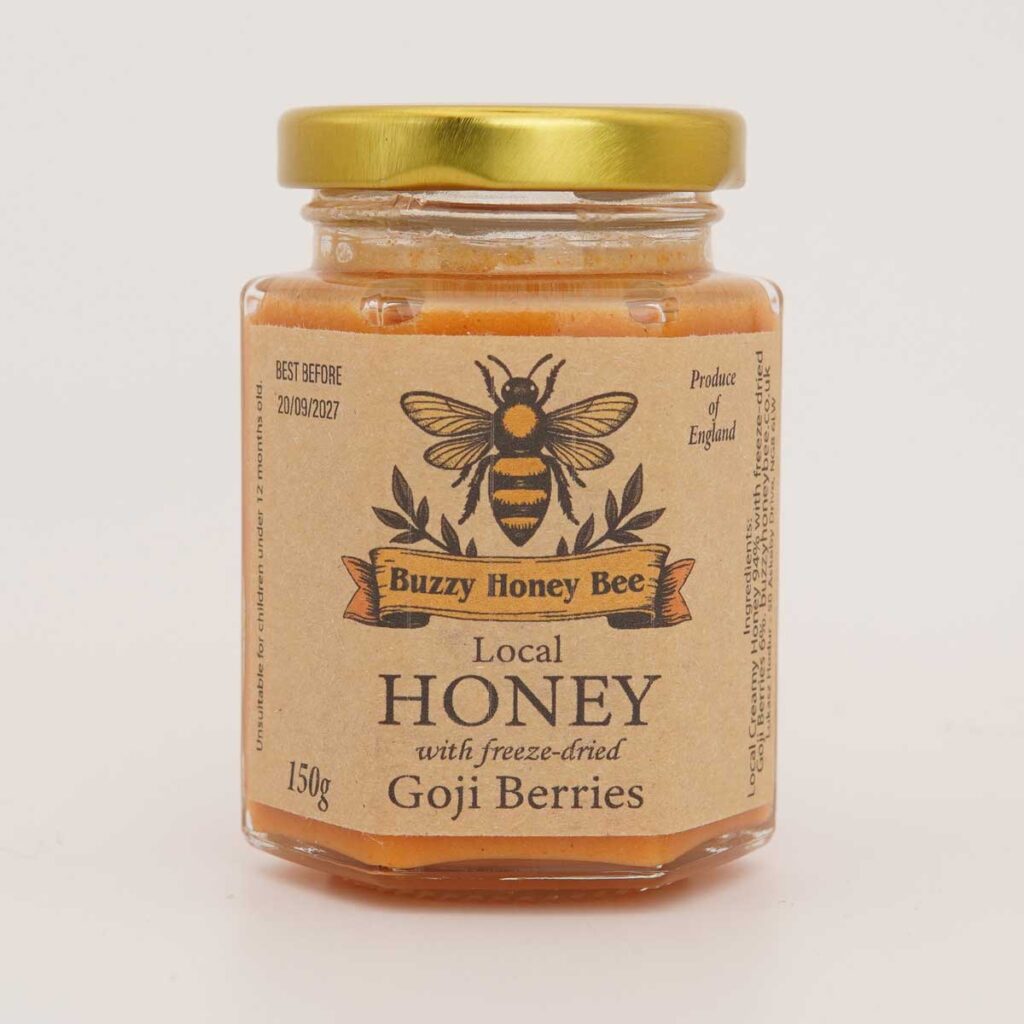
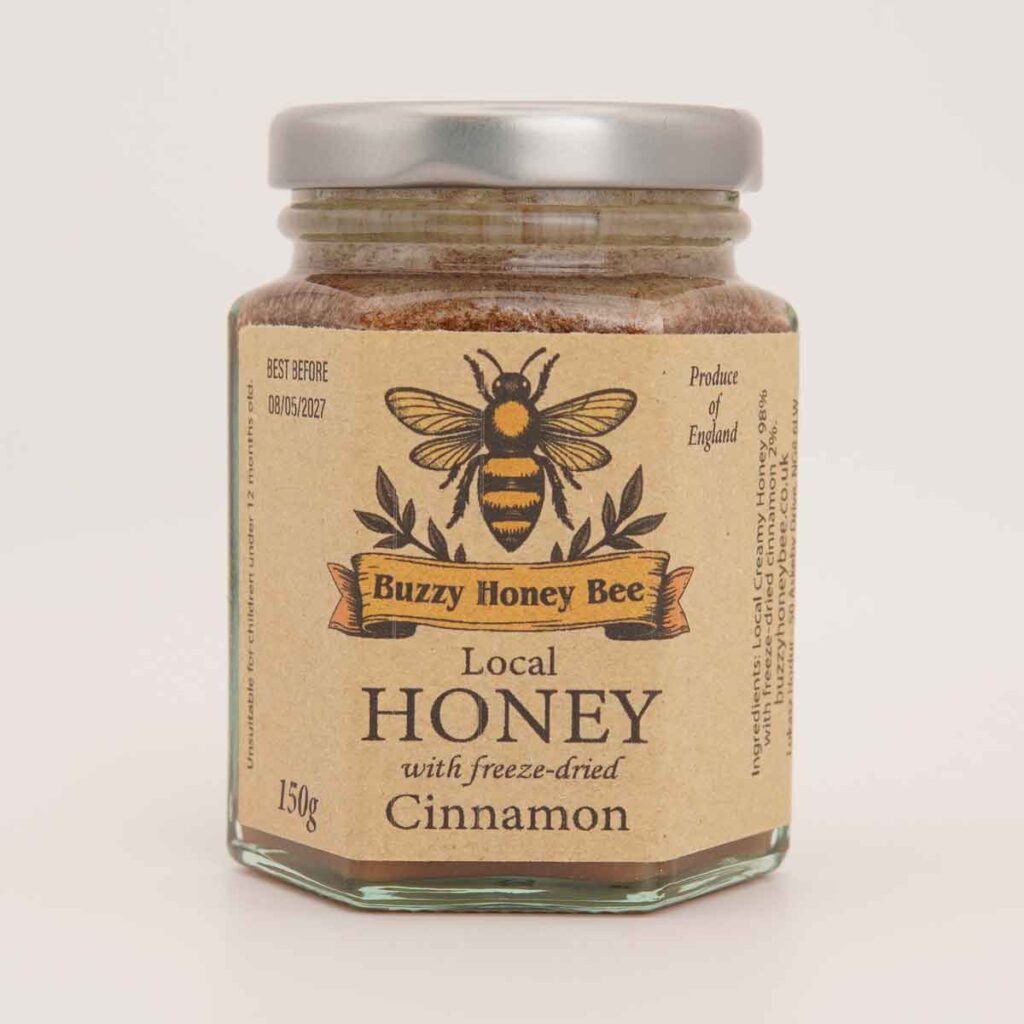
At Buzzy Honey Bee, we believe real honey does not need to be altered or improved. We do not heat it or subject it to industrial filtration. During extraction, the honey is simply passed through a coarse sieve to remove larger pieces of wax, and that is where our handling ends. Our honey is poured into jars exactly as it comes from the hive: natural, vibrant, and full of character. It retains its natural enzymes, pollen, floral aromas, and the unique flavour of the landscape it comes from. This is artisan honey in its purest form: honest, authentic, and true to the bees.
Fine Filtration of Supermarket Honey
Supermarket honey also undergoes fine industrial filtration. During this process, pollen, microscopic wax particles, and other naturally occurring elements are removed. This produces the clear, transparent appearance many consumers associate with “pure” honey.
However, pollen is one of the key elements that links honey to its botanical and geographical origin. Removing it results in a product that is visually uniform but less connected to a specific landscape or floral source.
After heating and fine filtration, the final product is a smooth, clear liquid that remains runny.
Why Supermarket Honey Does Not Crystallise
One of the most misunderstood aspects of honey in the UK market is crystallisation. Many people assume that if honey sets or turns opaque, it has “gone off”. In truth, crystallisation is entirely natural.
British honey varieties particularly those derived from oilseed rape or certain summer flowers often crystallise quite quickly. This is due to the natural ratio of glucose to fructose in the nectar.
Supermarket honey is commonly blended and processed specifically to slow this natural process. The consistent runny texture is a design choice, not necessarily a sign of superior quality.
When you see raw honey begin to thicken or set, you are witnessing a natural characteristic rather than a defect. That thicker jar is usually set honey, and the rumours around it are covered here: Common Myths About Set Honey Debunked.
Questions Around Origin and Authenticity
Across Europe, including the UK, there have been increasing discussions about honey authenticity and supply chain transparency. When honey is imported in bulk, blended and sold under generic labelling, it becomes more difficult to trace its true origin.
In recent years, investigations by the European Commission have highlighted concerns about honey adulteration within parts of the international market. This does not mean every jar on a supermarket shelf is fraudulent. However, it does demonstrate how complex and opaque large supply chains can become.
When honey travels thousands of miles and passes through multiple processors, the connection between beekeeper, bees and final product is often lost.
The Global Honey Market: Why Origin Matters
One of the most important things many consumers do not realise is that a significant proportion of the honey sold in UK supermarkets is imported in bulk before being blended and bottled. Today’s supply chains are vast, complex and often lacking in transparency.
China is the world’s largest exporter of honey and supplies substantial volumes to Europe and the United Kingdom. Although not every batch is problematic, international investigations in recent years have identified a high proportion of suspicious honey imports entering the European market, with a notable share originating from China. These concerns have centred on adulteration, mislabelling and difficulties verifying authenticity.
When a jar simply states blend of EU and non-EU honeys, consumers are given very little meaningful information. You are not told which countries contributed to the blend, in what proportions, or how many intermediaries handled the honey before it reached the shelf. In many cases, honey from multiple countries is mixed together to create a uniform, low cost product designed to meet supermarket price expectations.
Honey Blending and Adulteration Concerns in Supermarket Honey
Blending honey from different regions is standard practice in large scale commercial production. The purpose is consistency, consistent colour, flavour, texture and price. However, the more a product is blended and processed, the more difficult it becomes to trace its true origin.
Across Europe, official investigations have highlighted ongoing concerns about honey adulteration. Adulteration can involve the addition of cheap sugar syrups derived from rice, maize or beet to increase volume and reduce cost, as well as misdeclaring the country of origin.
Honey is particularly vulnerable to food fraud because it is a high value natural product that can be chemically manipulated in ways that are difficult to detect without advanced laboratory testing. This does not mean every supermarket jar is fraudulent. However, it does mean that the global honey trade has faced repeated scrutiny, and authenticity testing remains an evolving challenge.
Chemical Residues and Production Standards in Supermarket Honey
Another issue that rarely reaches mainstream discussion is the difference in production standards between countries. In some parts of Asia, beekeeping practices may involve veterinary medicines and chemical treatments that are either tightly restricted or prohibited in the UK and the European Union. Certain antibiotics and other substances have been banned in British and EU honey production for many years.
On multiple occasions, residues of substances not permitted under EU and UK regulations have been detected in imported honey consignments. While these findings do not automatically mean a product poses a direct health risk, they raise legitimate questions about quality control, production standards and regulatory oversight in parts of the global supply chain.
When honey is imported in bulk, blended and heavily filtered, it becomes increasingly difficult for the end consumer to understand how and where it was produced.
Why Supermarket Honey Is Often So Cheap
Producing genuine, high quality honey is labour intensive. It takes healthy colonies, careful seasonal management, responsible disease control and time all of which add to the real cost of authentic honey. British beekeepers also face rising expenses for equipment, feed, transport and environmental care.
When supermarket honey is sold at very low prices, it’s worth asking how that can be possible. Much of the honey on the global market is produced on a massive industrial scale and imported in bulk. In some cases, cheap sugar syrups derived from rice, wheat or sugar beet have been added to honey or mixed with it before export. Because these syrups can mimic the look and sweetness of honey, they can be blended into commercial honey without obvious signs to the consumer, making it hard to distinguish genuine honey from diluted product.
Furthermore, imported honey is often blended with honey from other regions, including European sources, and then filtered and labelled simply as a blend of EU and non-EU honeys. Such labelling gives little meaningful information about where the honey truly came from or what went into it.
All of this helps keep supermarket prices low, but it also increases the distance between the beekeeper and the jar in your cupboard. When you pay very little for honey, you have to wonder whether what’s inside is genuinely honey, or a far more industrially processed and extended product.
The Difference Between Supermarket Honey and Real Local Raw Honey
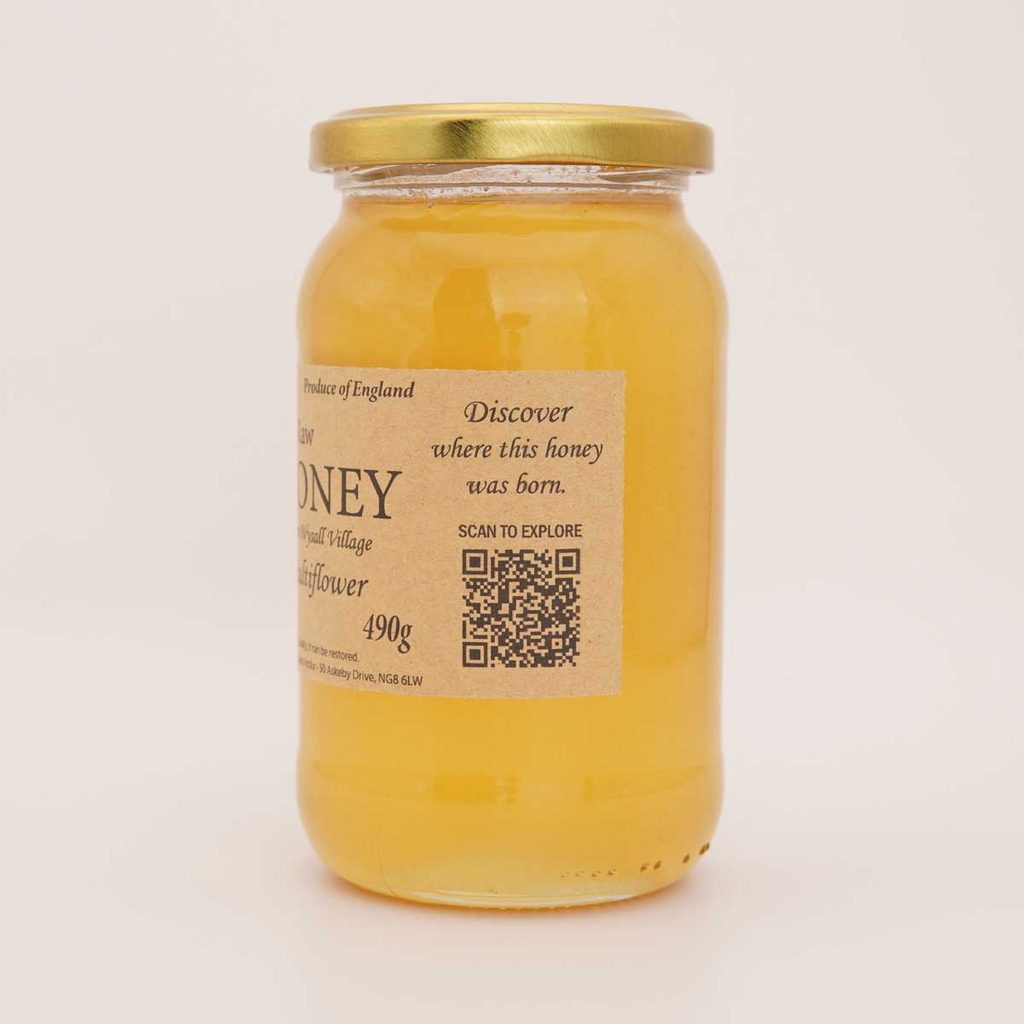
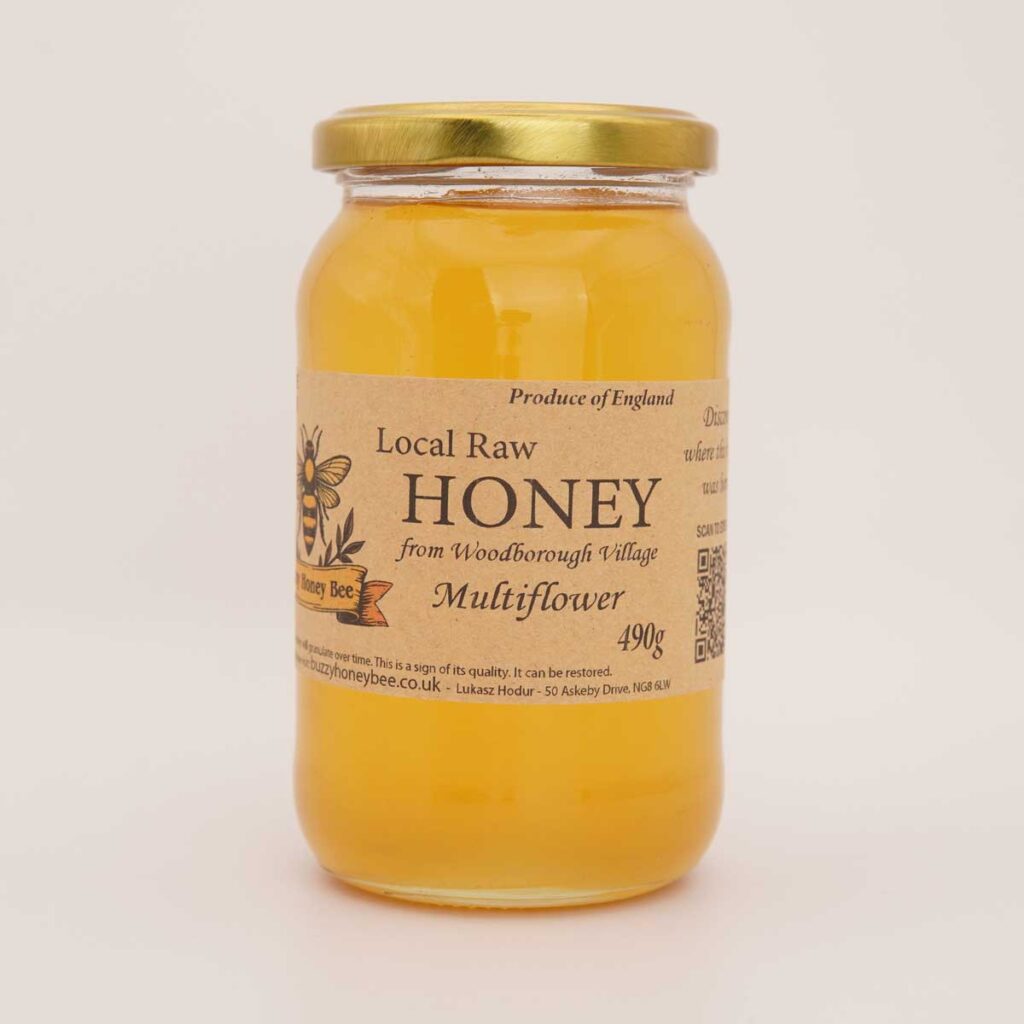
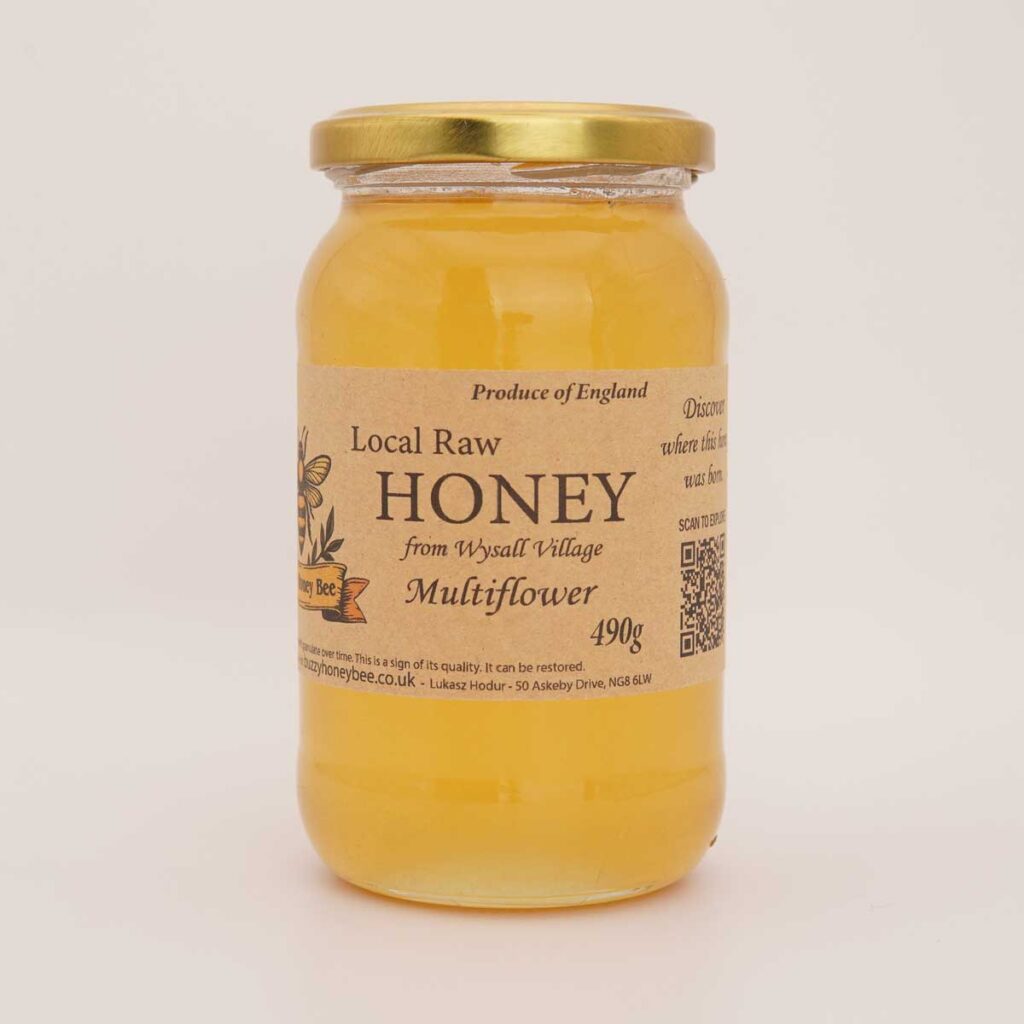
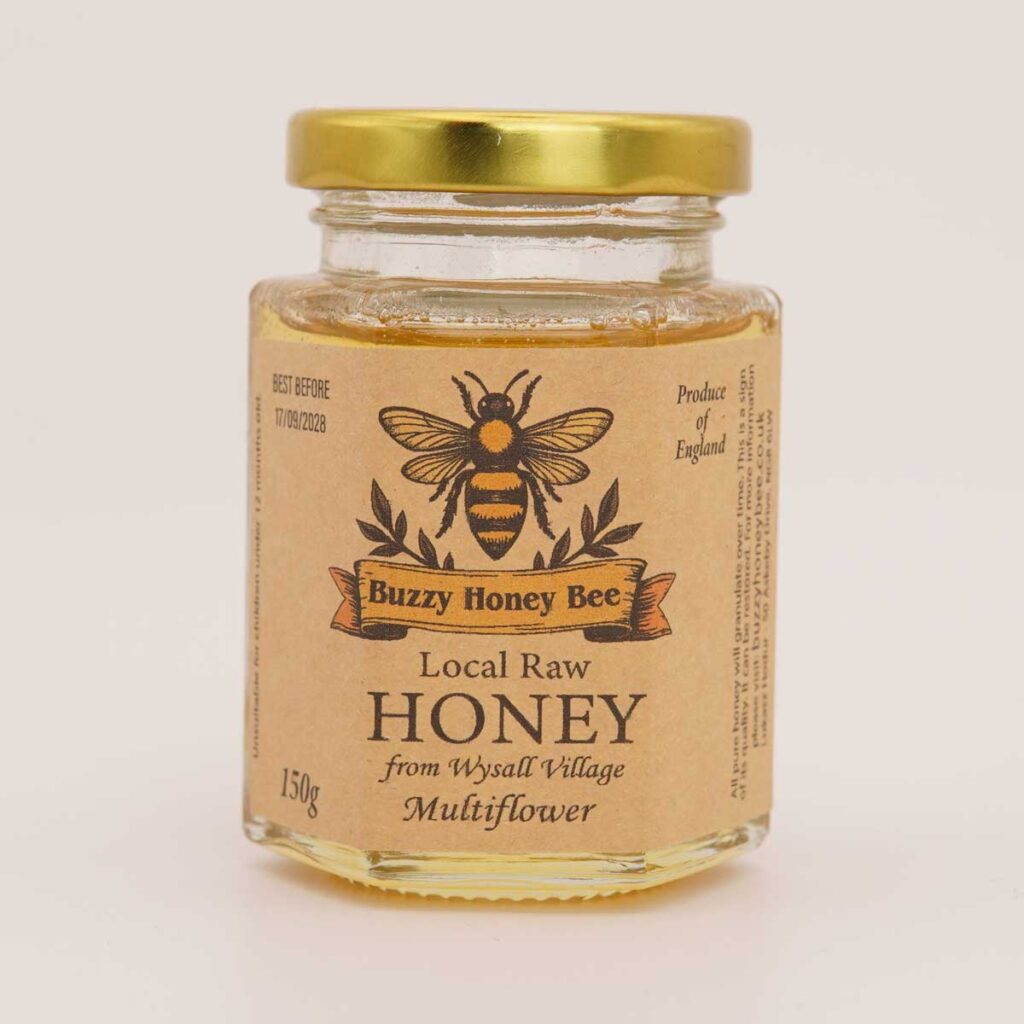
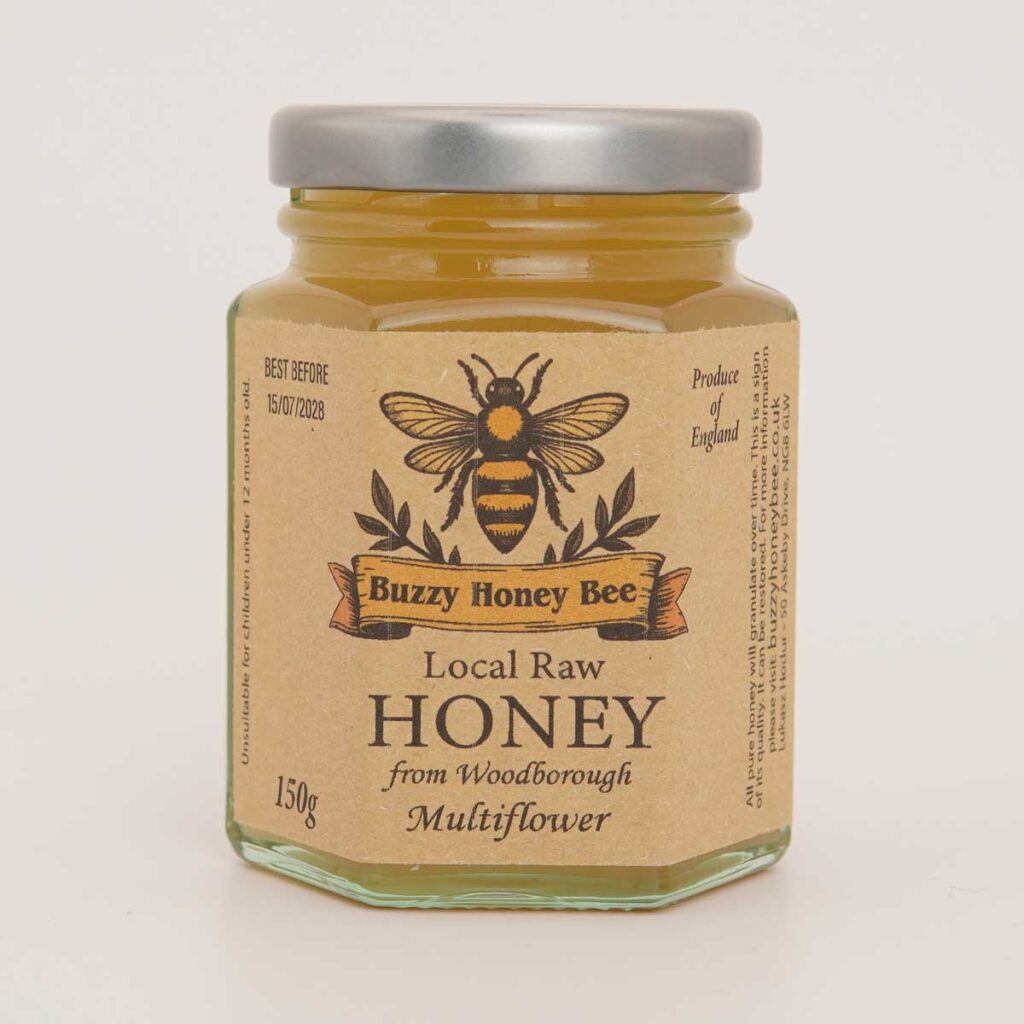
At Buzzy Honey Bee, I keep things simple and honest. I do not industrially filter my honey or strip it of its natural elements. I do not heat it to high temperatures. What comes out of the hive is what goes into the jar. My customers receive honey in its purest, highest quality form exactly as the bees created it.
Every harvest tastes different. And that’s the beauty of real honey.
The flavour depends on the flowers in bloom, the weather that season, and the specific landscape my bees have foraged. A jar collected near Nottingham can taste completely different from one gathered around Derby. One may be light and floral, another deeper and more robust.
All of the honey I produce comes exclusively from my own bee colonies. Nothing is blended from elsewhere. Nothing is imported. Just local bees, local flowers, and honest, raw honey with real character. If you want the difference explained properly, read What Is Local Honey? and Raw Local Set Honey from Nottinghamshire and Derbyshire.
Enjoyed this article? If you’d like to support more honest writing about bees and local honey, you can buy me a coffee here:
Buy Me a Coffee – Buzzy Honey Bee
Your support also helps me continue working with the bees and offering free bee swarm collection.
Of course, the best way to support this small apiary is still by choosing one of the products below.