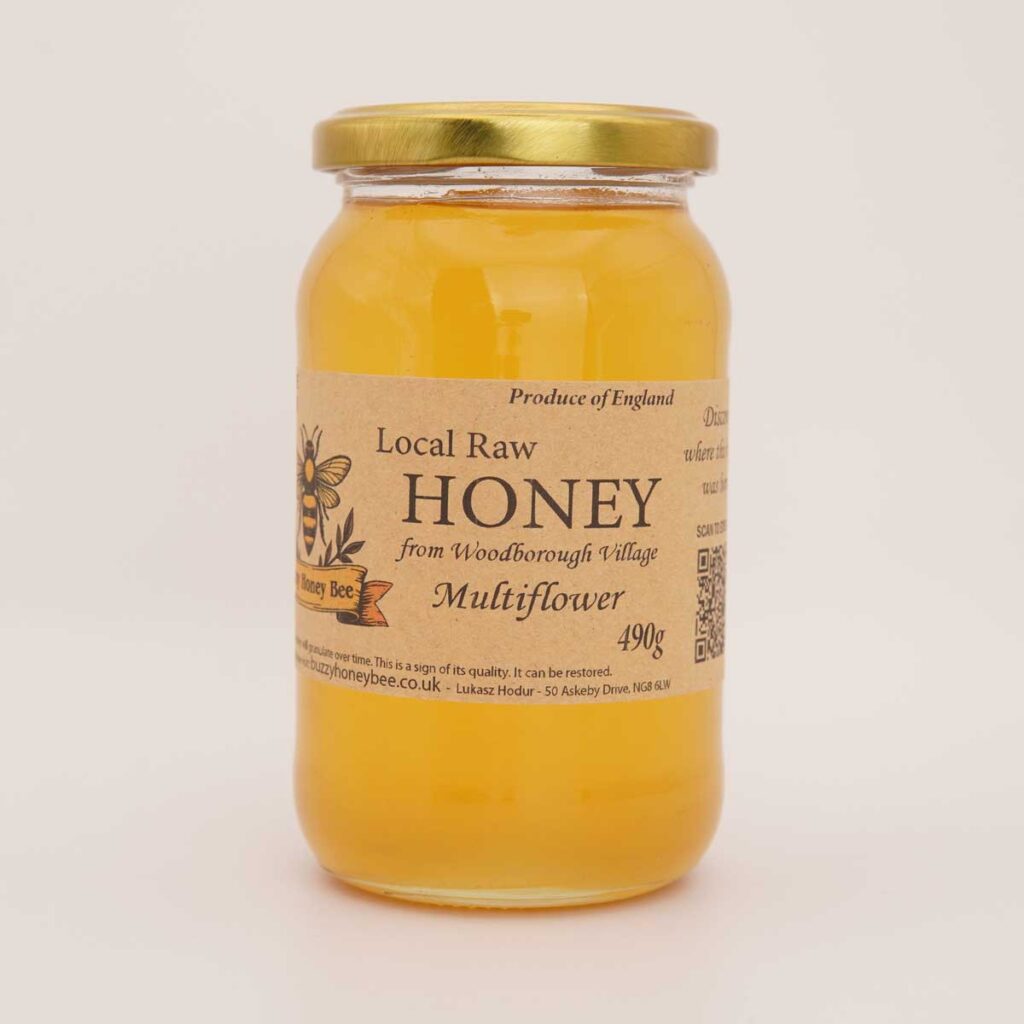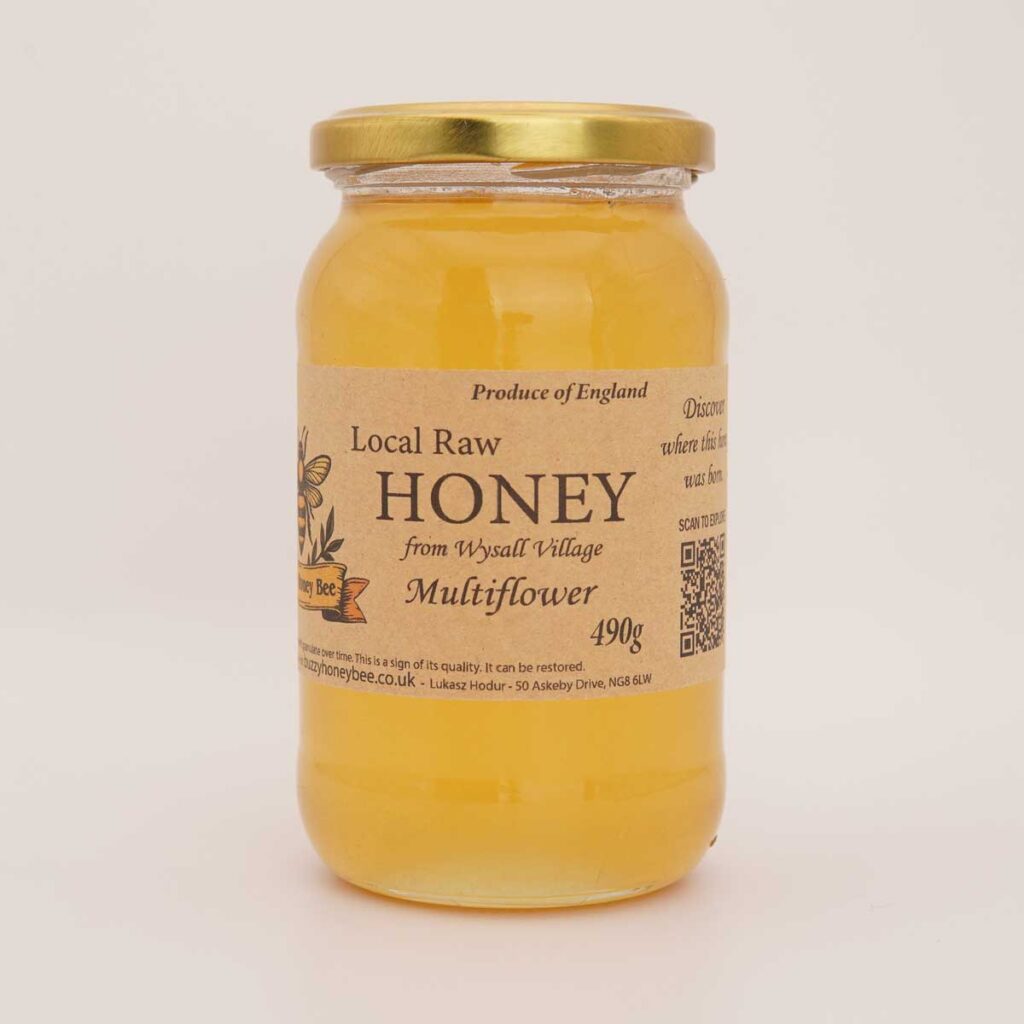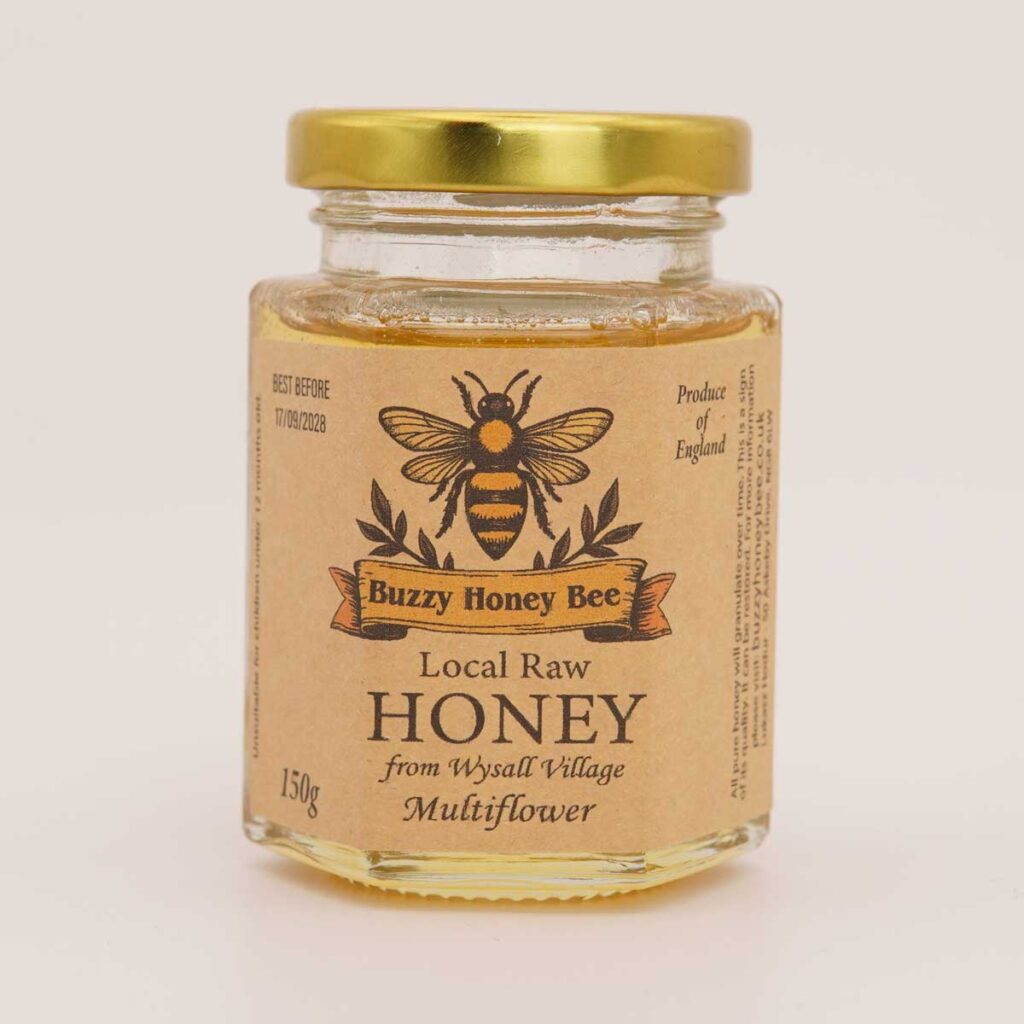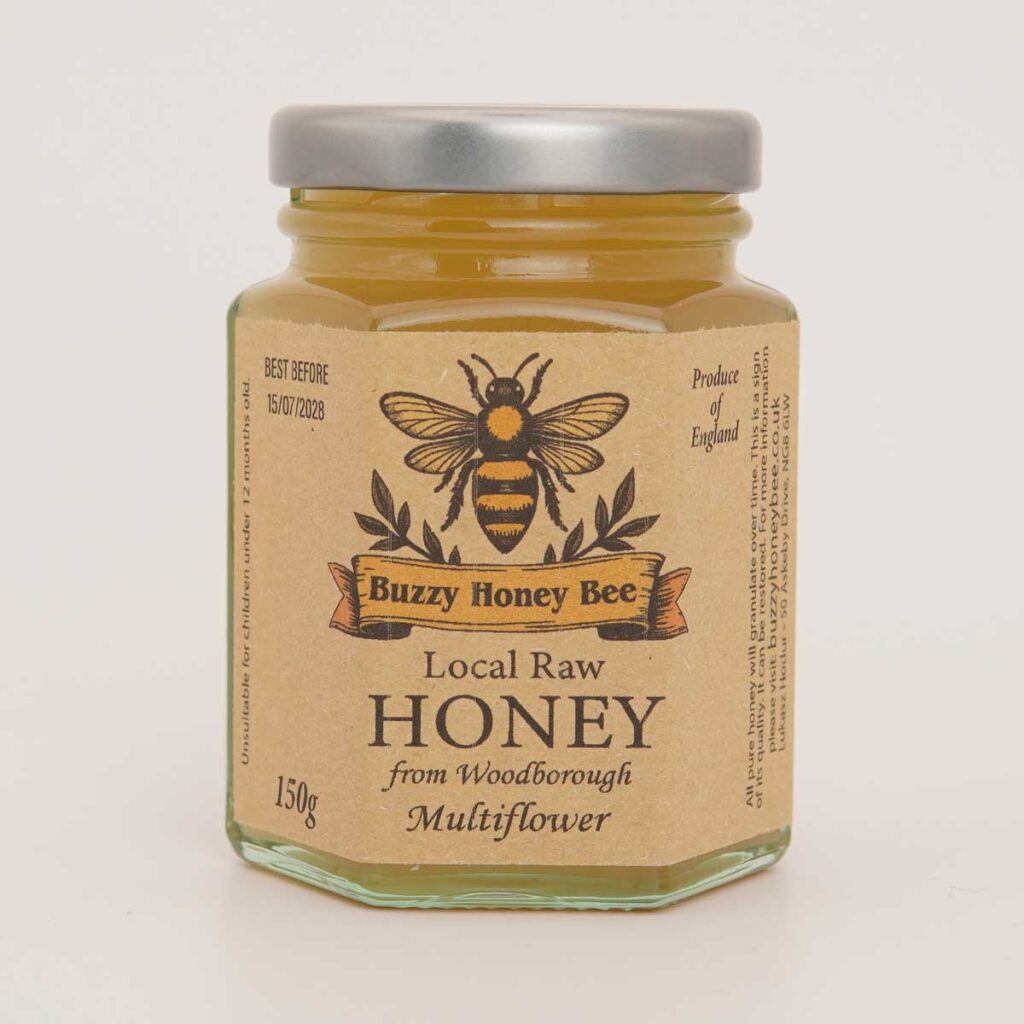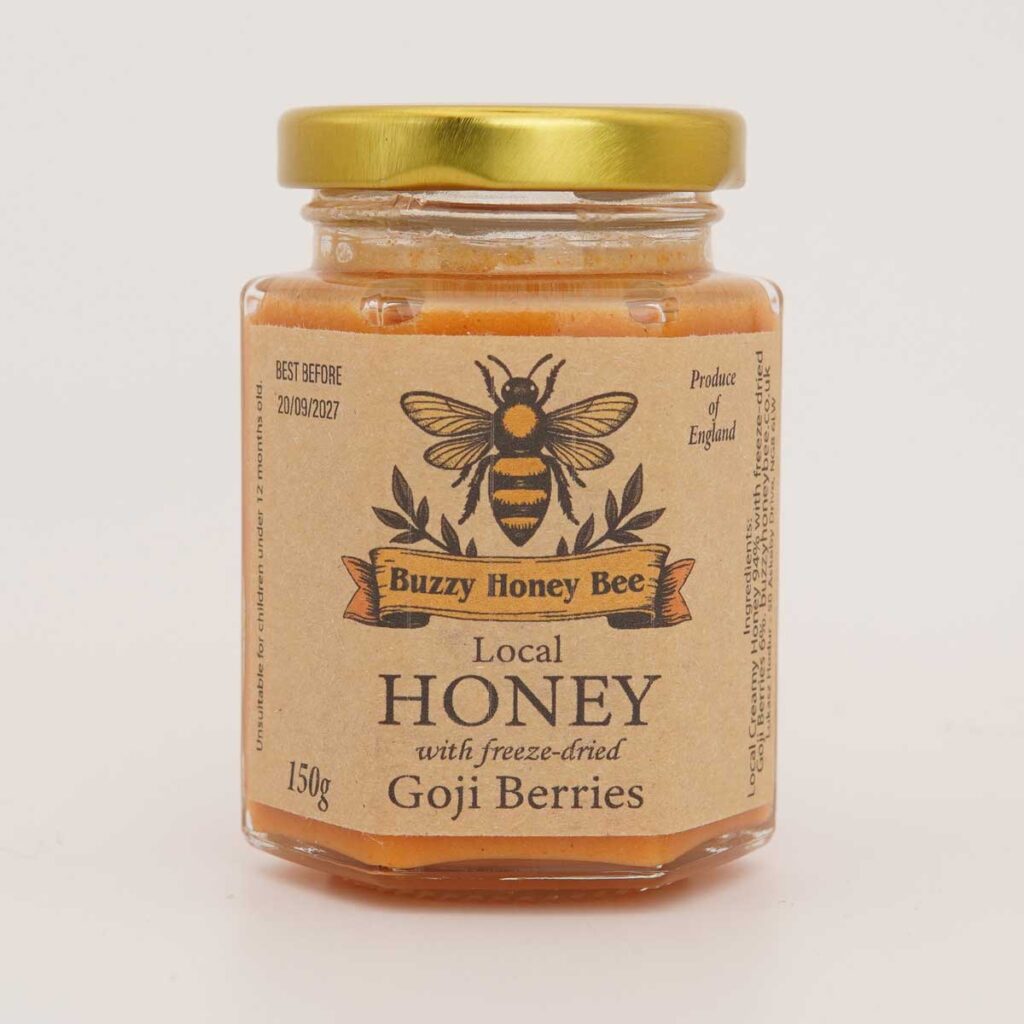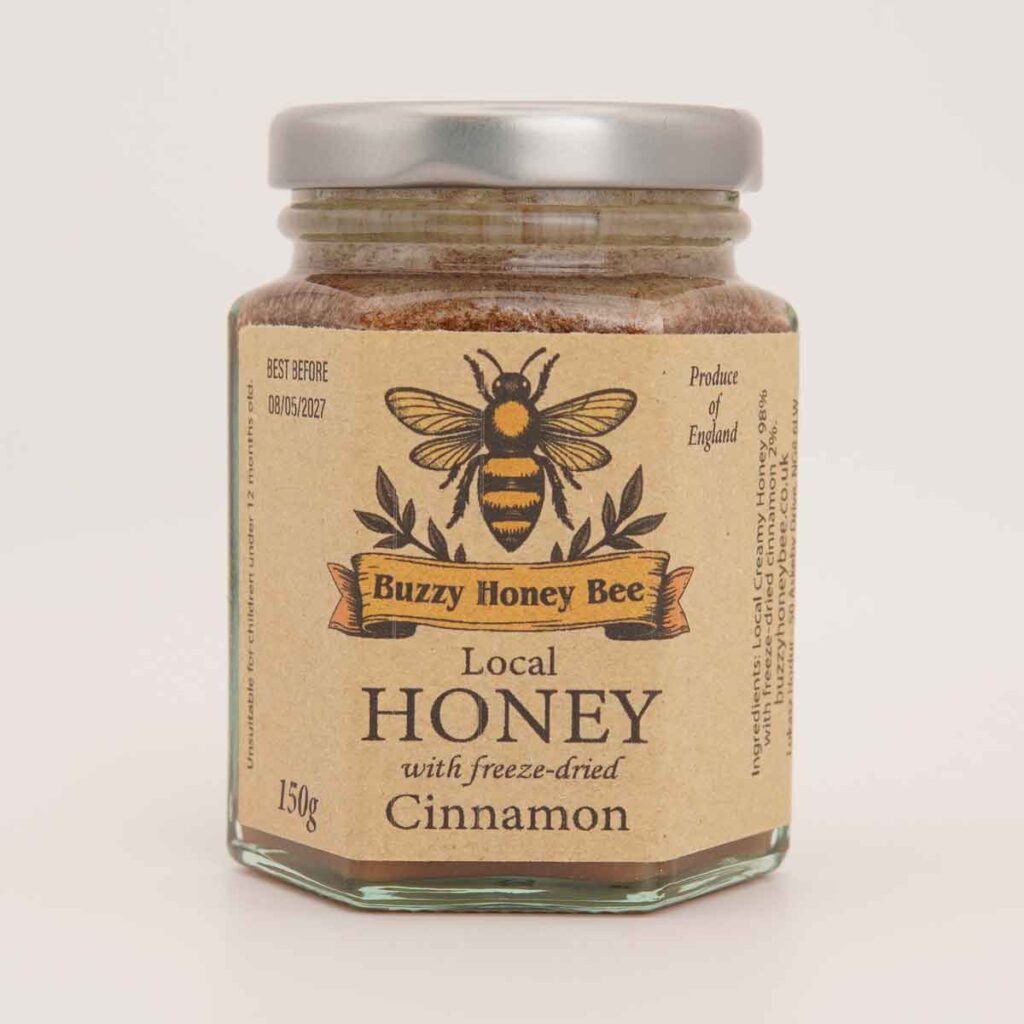
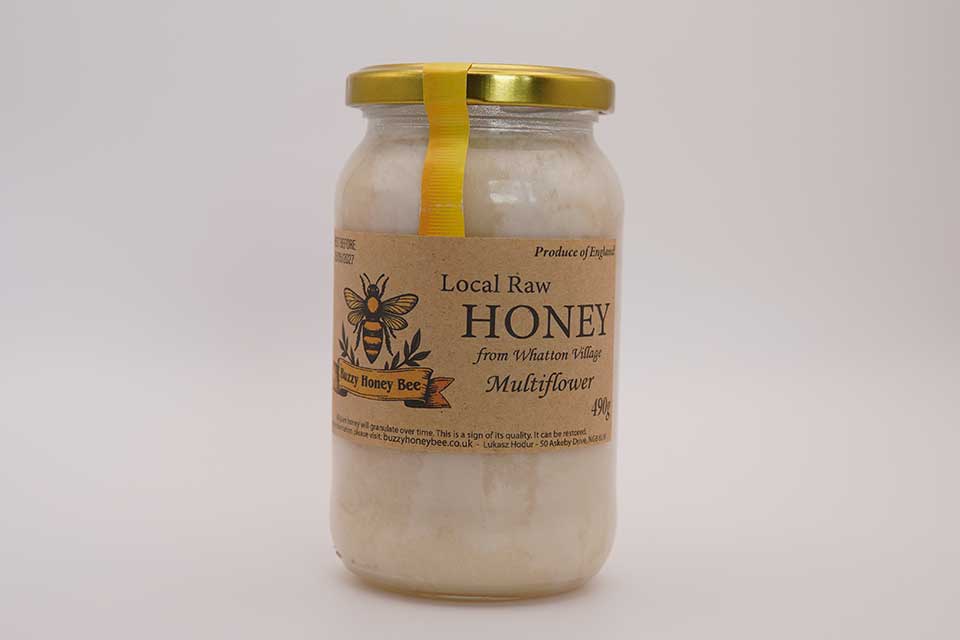
Set honey is honey that has undergone a completely natural process of crystallisation, turning it thick, cloudy and spreadable instead of runny. In the UK it’s called set honey (or “soft set” when it’s been guided into a particularly smooth texture). It’s not old, it’s not spoiled, and it’s certainly not inferior. In many ways, especially when it’s raw and local, it’s one of the purest forms of honey you can enjoy.
Have you ever opened a jar of honey and found it’s changed texture like this? Many people worry they’ve got a “faulty” jar. The truth is far more reassuring – and far more interesting.
In this guide I’ll explain exactly what set honey is, why it happens, how it differs from runny honey and creamed (soft set) honey, and why so many of us who keep bees around Nottingham and Derby actually prefer it on toast.
Why Does Honey Set in the First Place?
Honey sets because glucose naturally crystallises out of the sugar solution over time. All honey starts life runny. When bees ripen nectar in the hive they reduce the water content and create a supersaturated sugar solution rich in glucose and fructose. Over time the glucose naturally wants to come out of solution and form crystals. Those tiny crystals grow and link together, turning the honey from liquid to solid (or semi-solid).
How quickly this happens depends on three main things:
- The ratio of glucose to fructose (oilseed rape and many spring wildflowers are high in glucose and set fast)
- The presence of natural particles such as pollen (raw, unfiltered honey crystallises more readily)
- Temperature (cooler conditions speed things up)
This is why some of our local multiflower honeys from villages around Nottingham and Derby set beautifully within weeks, while higher-fructose honeys stay liquid for much longer.
Set Honey vs Runny Honey – What’s the Real Difference?
Set honey and runny honey are the same honey in two different physical states. The table below sets out the key differences:
| Feature | Runny Honey | Set Honey |
|---|---|---|
| Texture | Smooth, pourable, drips easily | Thick, spreadable, holds its shape |
| Appearance | Clear or translucent | Opaque, often lighter in colour |
| Best for | Drizzling, warm drinks, baking, dressings | Toast, crumpets, porridge, no-mess spreading |
| How it starts | Freshly extracted | The same honey after natural crystallisation |
| Shelf behaviour | May slowly set over months | Stays stable once set |
Many people reach for runny honey out of habit. Once they try a good jar of raw set honey they often switch – especially for breakfast. Runny honey is better suited for pouring into drinks or drizzling over dishes, while set honey works best where you want the honey to stay in place, such as on toast or stirred into porridge.
For a full side-by-side comparison of texture, uses, flavour release and which one suits different situations, read our detailed guide Set Honey vs Runny Honey.
Is Soft Set the Same as Creamed Honey?
Yes – in the UK the terms “soft set”, “creamed” and “whipped” are used almost interchangeably. Soft set (or creamed) honey is simply set honey whose crystal size has been controlled, so the texture is fine, smooth and buttery rather than coarse or gritty.
Natural set honey can sometimes form larger crystals. Soft set starts with the same raw honey but is guided, so the crystals remain tiny and uniform. The result is a spreadable consistency that many customers prefer. Nothing is added – it’s still 100% honey.
You can learn more about how we make it and why many customers prefer the smooth version in our article Discover the Finest Creamed Honey.
You can explore our range of naturally crystallised and soft-textured local honeys here: Raw Set Honey collection
Why Set Honey Is Often a Sign of Quality
Set honey often signals higher quality because it hasn’t been heavily processed to keep it liquid. Commercial runny honey is frequently heated and finely filtered to keep it liquid for longer on the supermarket shelf. That process removes many of the tiny natural particles that help crystallisation – and can also reduce some of the more delicate aromas and enzymes.
Raw set honey that has crystallised naturally (or been gently soft-set) usually still contains those particles. When it comes from a single local area – such as the village apiaries we manage around Oakwood, Strelley, Whatton and Wysall – you also get the true flavour of that season’s forage.
How to Use Set Honey
Set honey works best anywhere you want the honey to stay put rather than run:
- Spread thickly on hot toast or crumpets (it won’t run off the sides)
- Stir into porridge or yoghurt
- Use in baking where you want the honey to stay put
- Enjoy straight from the spoon
If you prefer it runny again, simply stand the jar (lid loosened) in a bowl of warm – not boiling – water and stir occasionally. Never microwave on full power or heat above about 40–43°C – you can read exactly why in our guide Why You Should Never Microwave Honey. For more on how long properly stored raw honey lasts, see Does Honey Expire?
Common Myths About Set Honey
“It’s gone off.”
No. Crystallisation is a physical change, not a chemical one. Properly stored honey remains safe indefinitely.
“Only cheap honey sets.”
Actually the opposite is often true. High-quality, less-processed honey sets more readily.
“You can’t use set honey in tea.”
You can – just warm it gently first or let it dissolve slowly.
Our Local Set Honey from Nottinghamshire & Derbyshire
Every jar of our set honey comes from our own apiaries in the villages around Nottingham and Derby. We extract it cold, strain it only coarsely, and let nature (or a gentle soft-set process) do the rest. Each batch carries the character of the local wildflowers, lime, willowherb or whatever the bees were working that season.
You can also find smaller jars and our wider local honey range here. The same 50g jars are what we pack as honey wedding favours — if you are counting place settings, how many honey wedding favours you need is the short version.
If you’re interested in how local honey differs from blended supermarket jars, you might enjoy our earlier guide: What Is Local Honey?
Frequently Asked Questions
Is set honey the same as crystallised honey?
Yes. “Set honey” is the everyday British term for crystallised honey.
Does set honey last longer than runny honey?
Both last extremely well when stored properly. Set honey is simply more stable in texture.
Can I turn set honey back into runny honey?
Yes – gentle warming in a water bath works perfectly.
Is soft set honey better than natural set?
It depends on preference. Soft set is smoother and more consistently spreadable. Natural set can have a more interesting, slightly grainier character that some people love.
Why is some of your honey already set and some still runny?
It depends on the floral source and the time of year the bees collected the nectar. High-glucose spring honeys set faster.
Is set honey raw?
Ours is. We never pasteurise or heavily filter it.
Does set honey contain cream?
No. “Creamed” simply describes the smooth texture.
Can children eat set honey?
Yes, in the same way as any other honey (not for infants under 12 months).
Why does set honey sometimes have a lighter colour than the same honey when runny?
Crystallisation scatters light differently to liquid honey, which is why set honey usually looks paler and more opaque even though the underlying honey hasn’t changed.
Does stirring or moving a jar of honey affect how it sets?
Yes. Undisturbed jars tend to form larger crystals, while honey that’s stirred during the early stages of crystallisation (as with soft-set honey) forms finer, smoother crystals.
Is it normal for set honey to have layers or a harder top?
Yes, this can happen if crystallisation isn’t fully even throughout the jar, particularly in larger containers. It’s still safe and simply reflects the natural, unforced way the honey has crystallised.
Final Thoughts
Set honey isn’t a problem to be fixed – it’s honey in one of its most natural and useful forms. Once you understand that crystallisation is simply glucose doing what glucose does, you start to see a jar of set honey as a quiet sign that the honey hasn’t been over-processed.
If you’ve been avoiding set honey until now, I hope this guide encourages you to try a proper local jar. Spread it on toast, stir it into porridge, or just eat it from the spoon. You’ll taste the difference that real, traceable British honey makes.
If you want to know why the jar thickened, read Why Does Honey Crystallise?. For everyday use, see The Best Ways to Use Set Honey. And if you have been told a set jar has gone off, start here: Common Myths About Set Honey Debunked.
Ready to try some?
Browse our current Raw Set Honey collection – all harvested from our village apiaries around Nottingham and Derby.
Enjoyed this article? If you’d like to support more honest writing about bees and local honey, you can buy me a coffee here:
Buy Me a Coffee – Buzzy Honey Bee
Your support also helps me continue working with the bees and offering free bee swarm collection.
Of course, the best way to support this small apiary is still by choosing one of the products below.