Have you ever pulled an old jar of honey from the back of the cupboard and wondered whether it’s still good? Does honey expire? Can it go off? It’s one of the questions I hear most often from people who care about real food.
The honest answer is reassuring. Pure, properly stored raw honey is one of the few foods that doesn’t really expire. Archaeologists have found sealed pots of honey in ancient Egyptian tombs that remained edible after more than three thousand years. That kind of staying power isn’t marketing — it’s chemistry.
Of course, not every jar on a supermarket shelf will last forever. How the honey was harvested, how much water it contains, and how you look after it at home all make a real difference. In this guide I’ll explain why good raw honey lasts so long, what can go wrong, how crystallisation fits into the picture, and the simple habits that keep a jar tasting excellent for years.
Why Honey Resists Spoilage So Well
Honey is a natural preservative. Several factors work together to stop most bacteria, yeasts and moulds from growing:
- Low moisture content — Well-ripened honey usually sits between 14 % and 18 % water. Below about 17–18 % there simply isn’t enough free water for microbes to thrive.
- Natural acidity — Most honeys have a pH between 3.2 and 4.5, which is hostile to many bacteria.
- Hydrogen peroxide — Bees add the enzyme glucose oxidase. When a little moisture is present, the enzyme produces small amounts of hydrogen peroxide, a gentle natural antiseptic.
- High sugar concentration — The osmotic pressure draws moisture out of any invading microorganisms.
Because of these built-in defences, pure raw honey that stays dry and sealed has an effectively indefinite shelf life. The colour may darken a little and the flavour can mellow over many years, but the honey remains safe and enjoyable.
Raw honey (unfiltered and unpasteurised) keeps all of these protective systems intact. That’s one reason careful producers avoid heating the honey above normal hive temperatures and only strain it lightly.
How Long Does Properly Stored Raw Honey Last?
When honey is harvested at the right moisture level and kept correctly, it can stay excellent for decades. Many beekeepers happily use honey that is five, ten, or even fifteen years old. The “best before” date you see on jars is mainly about peak flavour and labelling rules — it is not a use-by date for safety.
What Can Actually Make Honey Go Off?
True spoilage is uncommon, but it can happen under the wrong conditions:
- Excess moisture — If the water content rises above roughly 19–20 %, natural yeasts that are always present can start to ferment. You may notice a sharp alcoholic or vinegary smell and sometimes froth or bubbles.
- Contamination — A wet or dirty spoon introduces water and microbes. Over time this can lead to fermentation or surface mould.
- Poor sealing — An open or loosely sealed jar lets the honey absorb moisture from the air (honey is hygroscopic).
Crystallisation is not spoilage. It is a completely natural process that happens when glucose forms crystals. Many British multiflower honeys set quite firmly — that is often a sign of pure, unadulterated honey rather than a problem. A jar that has thickened is usually set honey, not spoiled honey. See What Is Set Honey? and How to Store Set Honey Properly.
Crystallised Honey Is Still Perfectly Good
If your honey has turned solid or grainy, there is no need to throw it away. It is still raw, still full of its natural enzymes and pollen, and still delicious.
To return it to a runny consistency:
- Place the sealed jar in a bowl of warm (not hot) water — keep the temperature below 40 °C.
- Stir gently from time to time.
- Avoid microwaving or using boiling water. High heat damages the delicate enzymes and aroma compounds that make raw honey special. You can read more about temperature sensitivity in our article on how heat affects honey quality.
Once softened, store the jar somewhere consistently warm in the house, and it will stay liquid for longer.
Simple Ways to Store Raw Honey So It Lasts
The practical rules are straightforward:
- Keep the jar in a cool, dark cupboard (ideally 18–24 °C).
- Away from the cooker, radiator or direct sunlight.
- Always use a clean, dry spoon.
- Replace the lid firmly after every use.
- Glass jars are generally better for long-term storage than plastic.
We have a full practical guide covering every detail: How to Store Honey the Right Way – Keep Your Jar Fresh for Years. It’s worth reading if you want to get the best from every jar.
Choosing Honey That Naturally Lasts
Not all honey is the same. Heavily processed supermarket honey is often heated and finely filtered, which can reduce some natural protective compounds. It still won’t spoil quickly, but the flavour and enzyme activity are usually diminished.
Local raw honey that has been carefully harvested and only lightly strained keeps more of its natural stability. When you choose honey with a clear origin and minimal processing, you are also choosing honey that is better equipped to last.
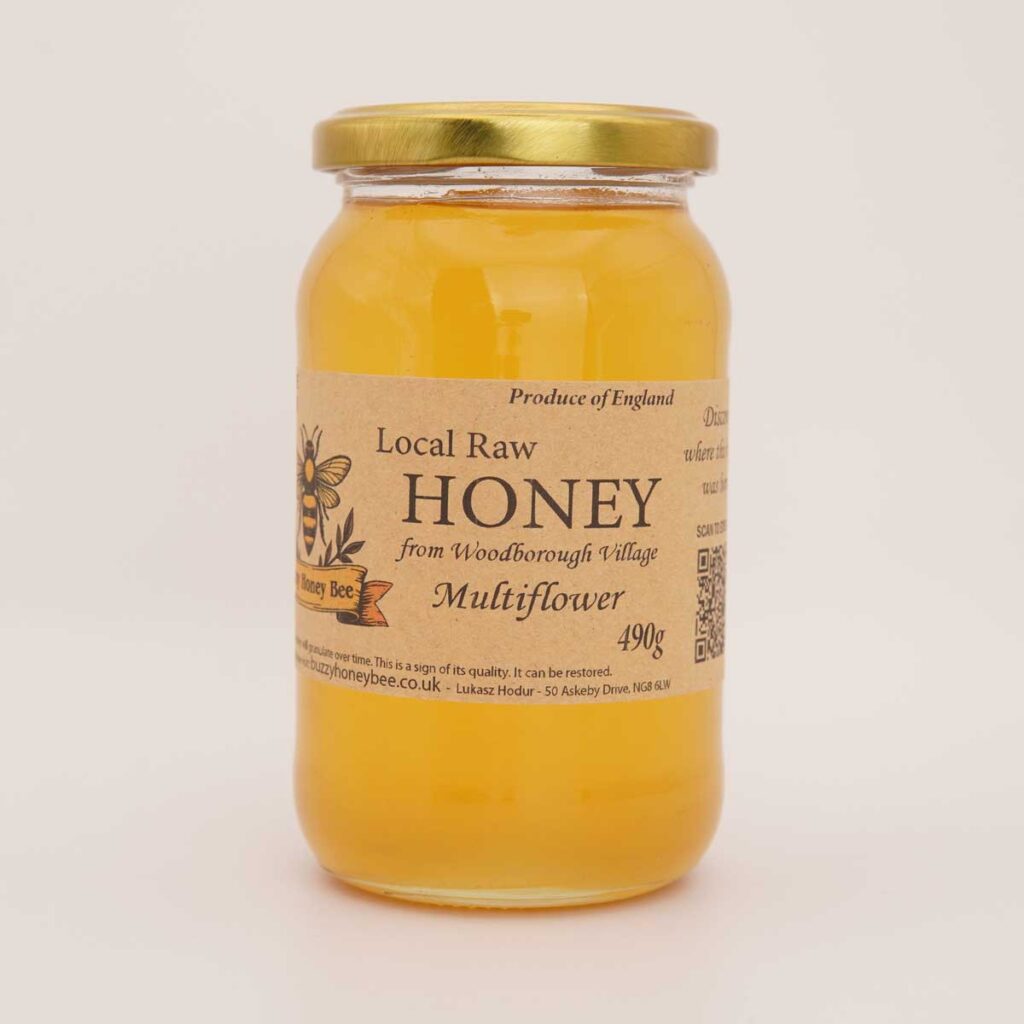
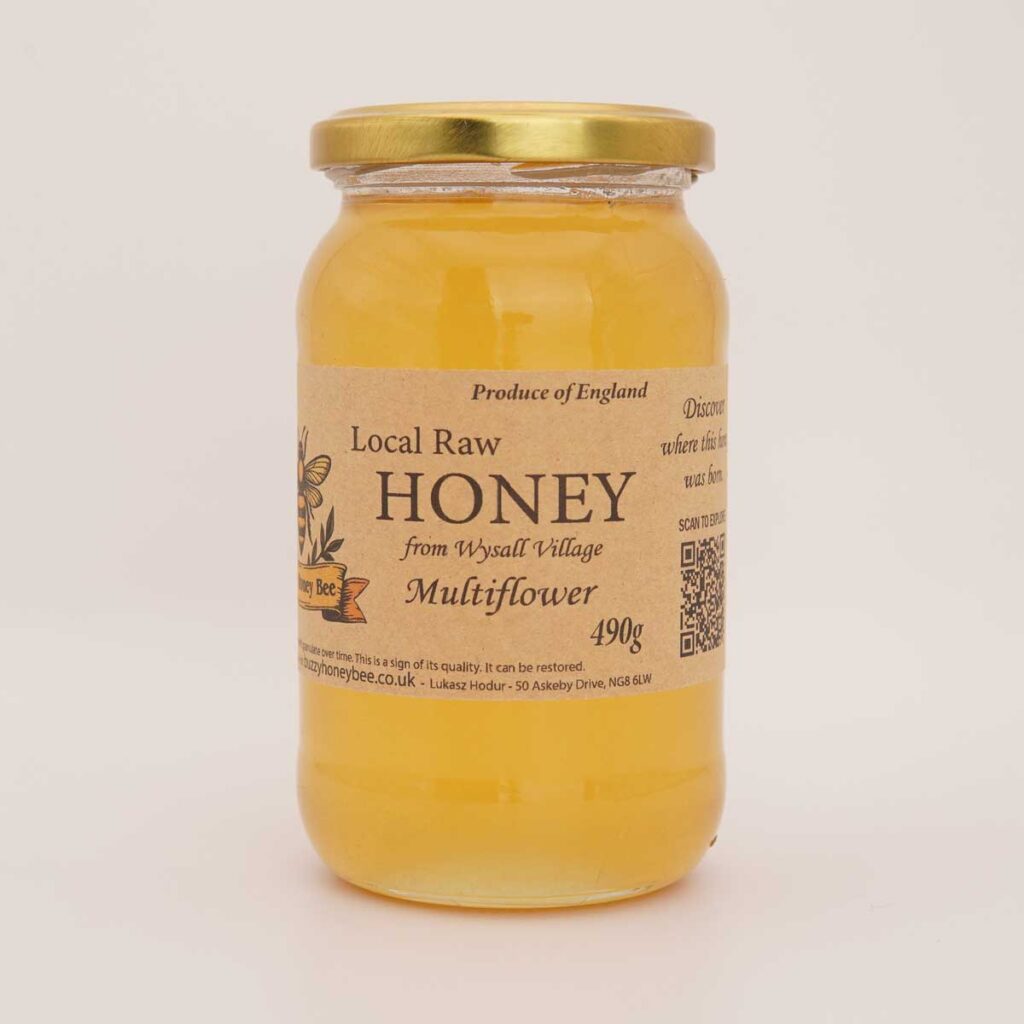
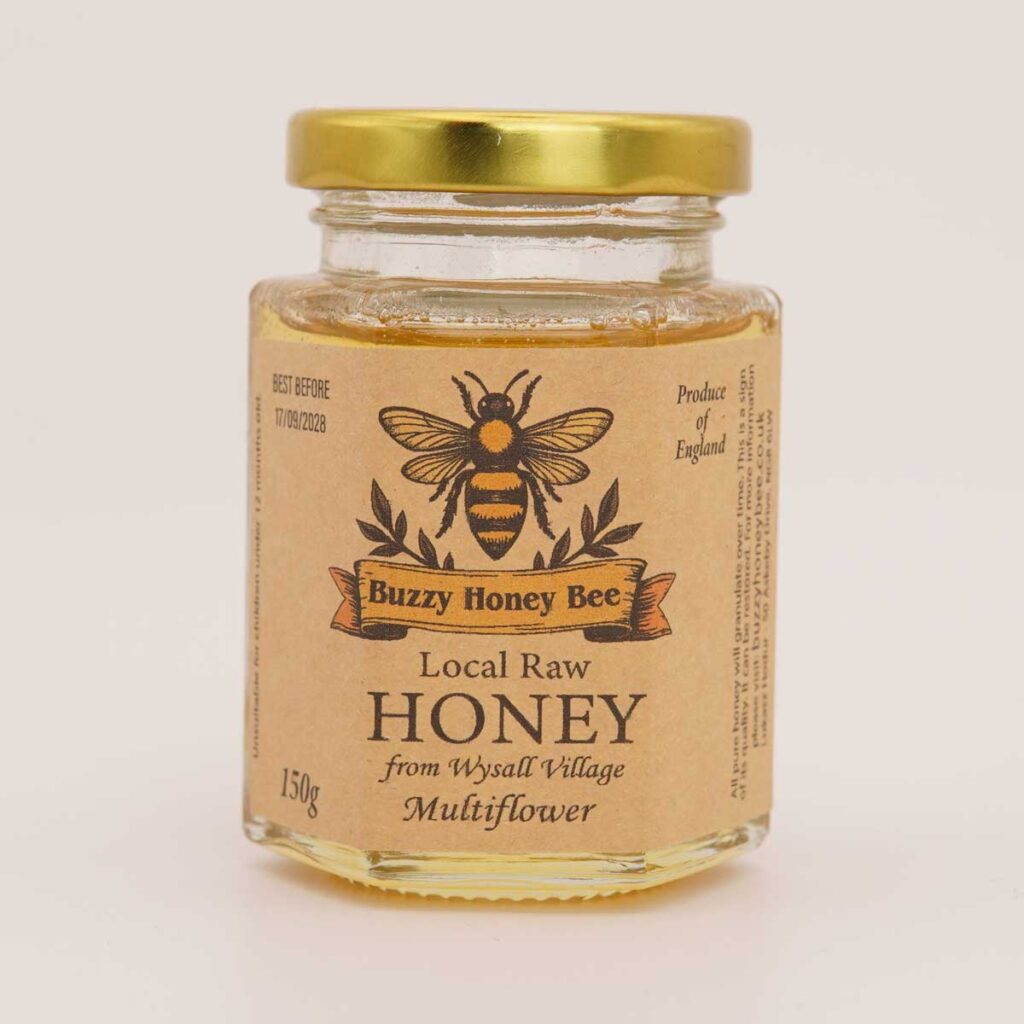
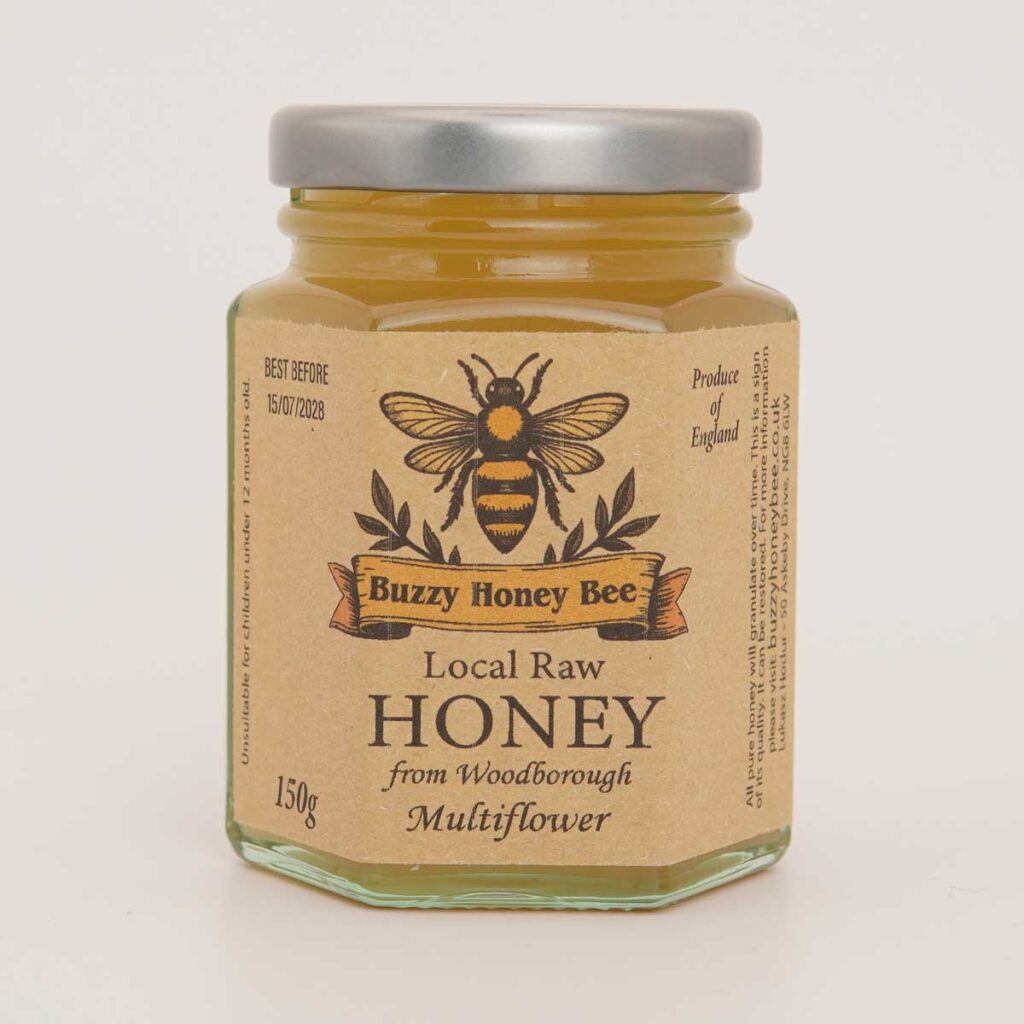
If you are looking for pure British raw honey with that kind of integrity, you can explore the current range of local raw honey from individual villages across Nottinghamshire and Derbyshire. Each jar reflects the flowers the bees were working that season.
Rare Signs That Honey Has Gone Off
- Strong alcoholic, sour or vinegary smell
- Visible froth, bubbles or active fermentation
- Mould on the surface (usually from repeated use of a wet spoon)
- Unusually thin, watery consistency caused by high moisture
If any of these appear, it is best to discard the jar. In practice this is very uncommon when honey is stored with basic care.
FAQ – Does Honey Expire?
Does raw honey go off?
Almost never, provided it was properly ripened and is stored dry and sealed. True spoilage is rare.
Why does honey have a best-before date?
It is a quality and labelling requirement, not a safety deadline. The honey remains safe long after that date.
Is crystallised honey still safe to eat?
Yes — completely safe and still full of its natural character. Simply warm it gently if you prefer it runny.
Should I keep honey in the fridge?
It is better not to. Cold temperatures speed up crystallisation. A cool, dark cupboard is ideal.
Does honey last longer in glass or plastic?
Glass is preferable for long-term storage because it does not interact with the honey and seals more reliably.
What happens if honey absorbs moisture?
It can begin to ferment. Always keep the lid tight and use dry utensils.
Is very old honey still good?
The enzymes and some volatile aromatics slowly decline over many years, but the honey remains safe and still contains its natural sugars, minerals and antioxidants.
Can babies have honey?
No. Honey should never be given to infants under 12 months because of the small risk of botulism spores.
Final Thoughts
So, does honey expire? Properly harvested and carefully stored raw honey effectively does not. It is one of the few foods that can genuinely last a lifetime when treated with a little care.
The next time you open a jar of pure local honey, you are tasting something nature designed to endure. Store it well, use a clean spoon, and that jar will still reward you years from now.
If you would like to try honey that has been produced with exactly this kind of long-term quality in mind, have a look at the local raw honey currently available. And if you have any questions about storage or a particular harvest, feel free to get in touch — I’m always happy to talk about the bees and the honey they produce.
Enjoyed this article? If you’d like to support more honest writing about bees and local honey, you can buy me a coffee here:
Buy Me a Coffee – Buzzy Honey Bee
Your support also helps me continue working with the bees and offering free bee swarm collection.
Of course, the best way to support this small apiary is still by choosing one of the products below.