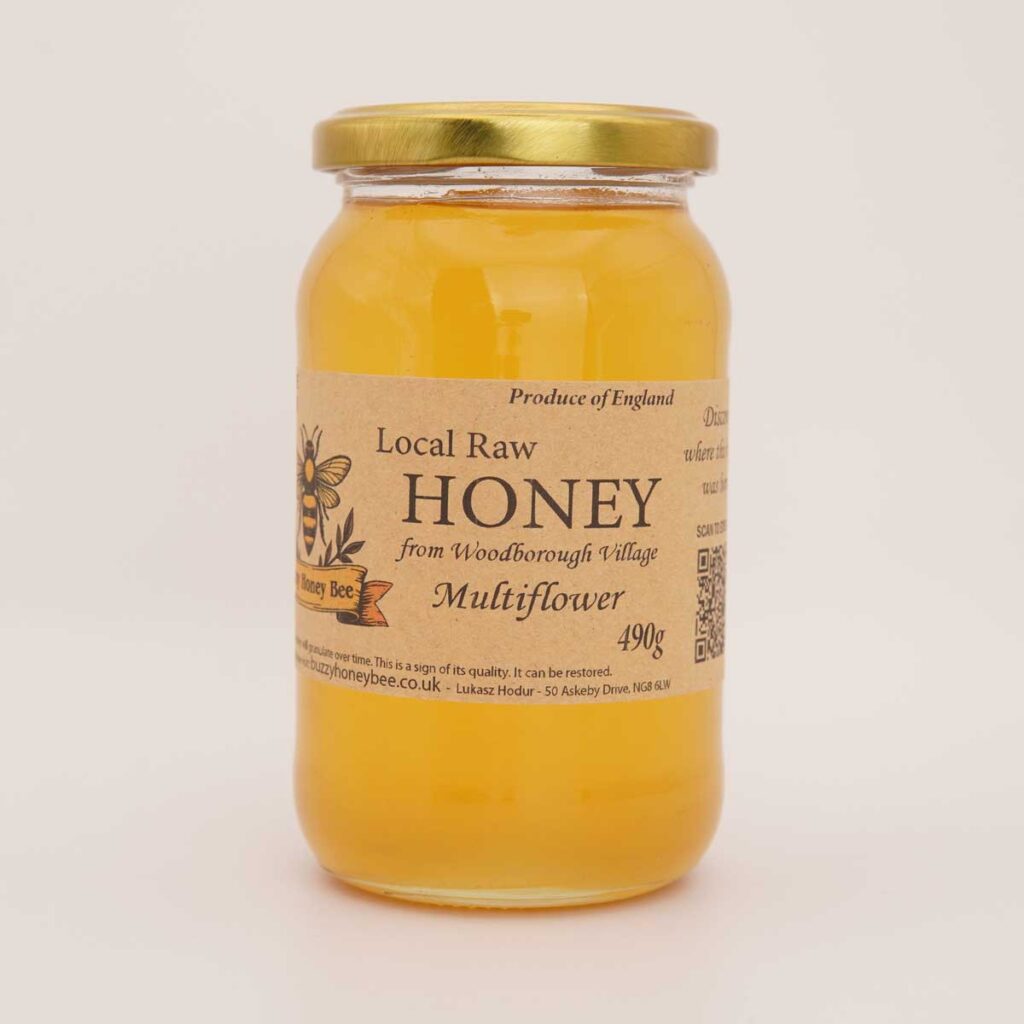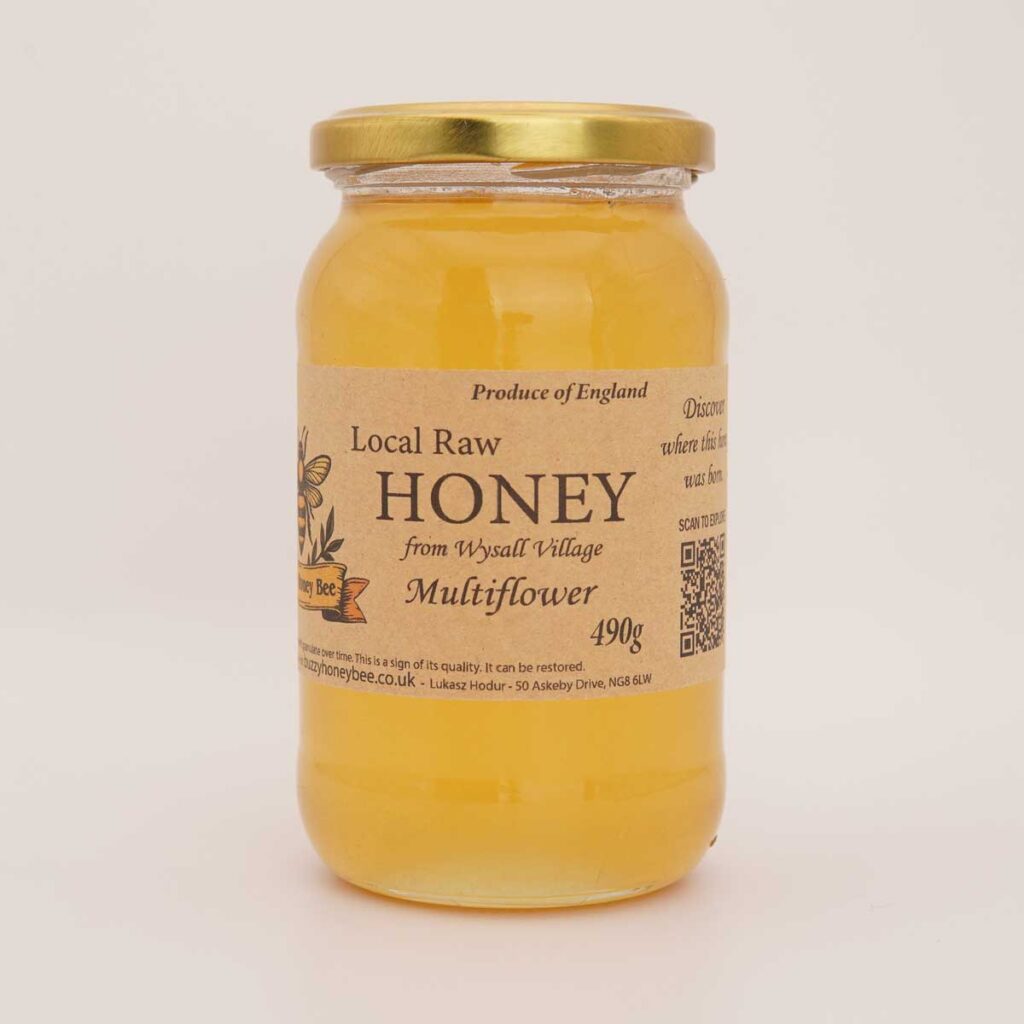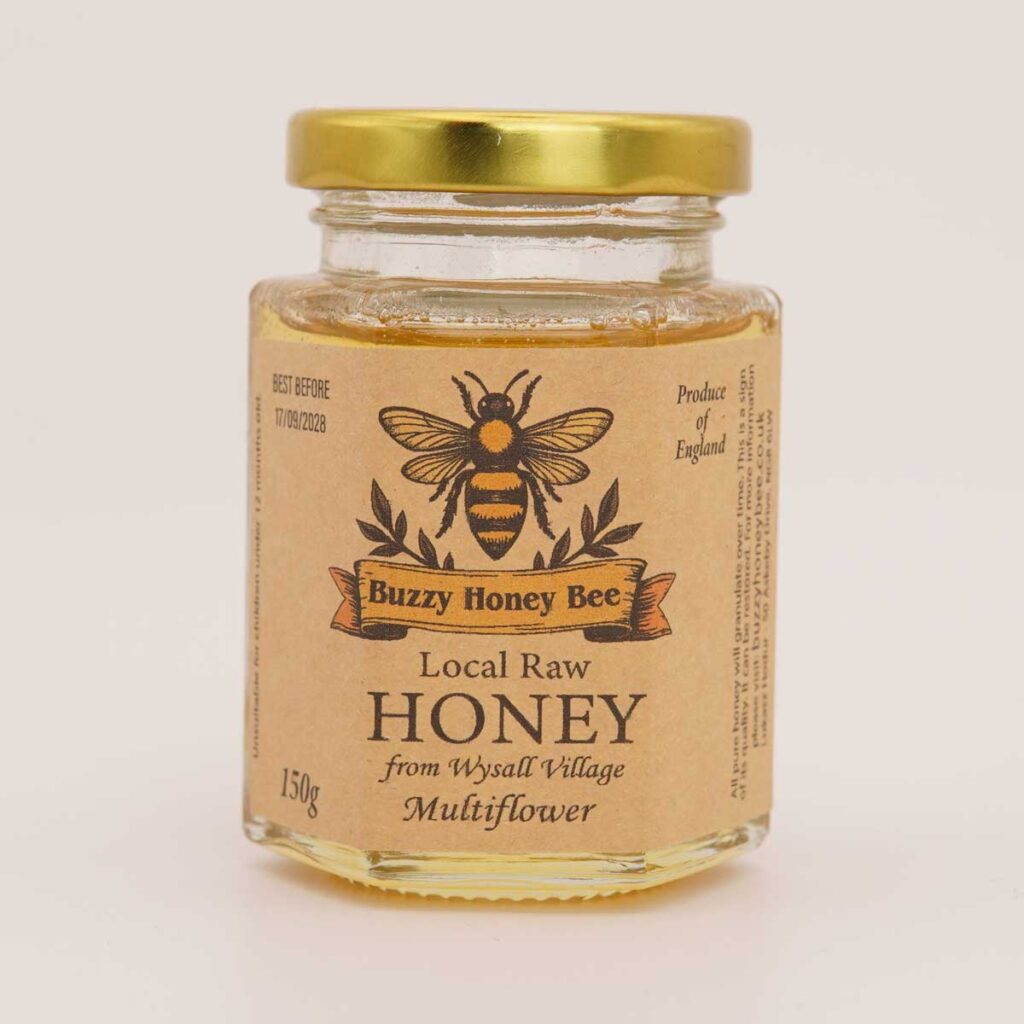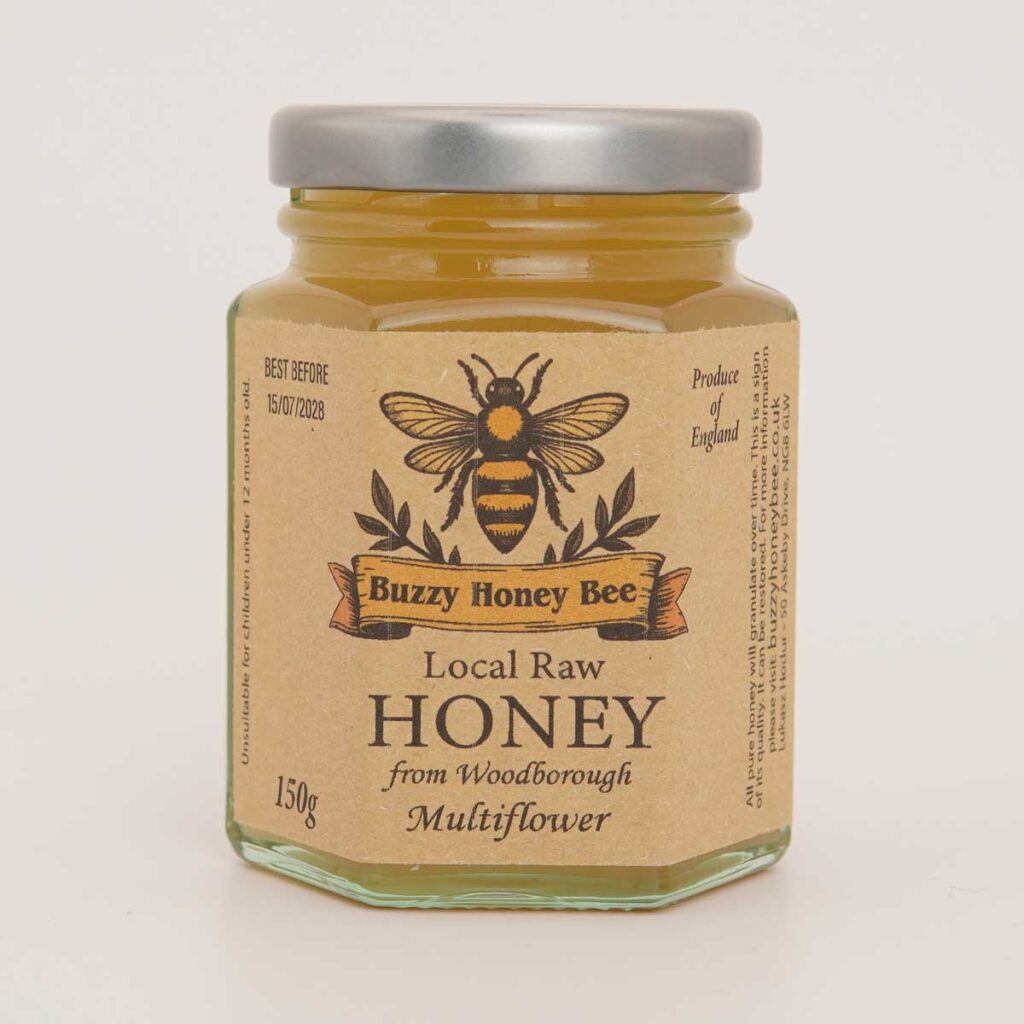
Ever opened a jar of honey only to find it’s gone thick, grainy or strangely dark? You’re not alone. Proper storage is the single biggest factor that decides whether your honey stays golden, pourable and full of flavour for years – or turns into a crystallised brick.
In this guide you’ll learn exactly how to store honey so it keeps its quality, aroma and natural goodness for as long as possible. We’ll cover the ideal temperature, the best containers, what to do when it crystallises, common myths, and practical tips that work in a normal British kitchen. By the end you’ll know how to look after every jar – whether it’s a small 150 g pot or a larger family size.
Why Proper Honey Storage Matters
Honey is one of nature’s most stable foods. Its low moisture content, natural acidity and antimicrobial properties mean pure honey can last for decades (or even centuries) if treated kindly. Archaeologists have found edible honey in ancient Egyptian tombs. That said, modern kitchens aren’t tombs – and everyday mistakes can slowly reduce quality.
Heat, light, moisture and air are the main enemies. Get the storage right and your honey will stay delicious. Get it wrong and you’ll notice darker colour, stronger flavour changes, faster crystallisation or, in rare cases, fermentation.
The Ideal Conditions for Storing Honey
The golden rules are simple:
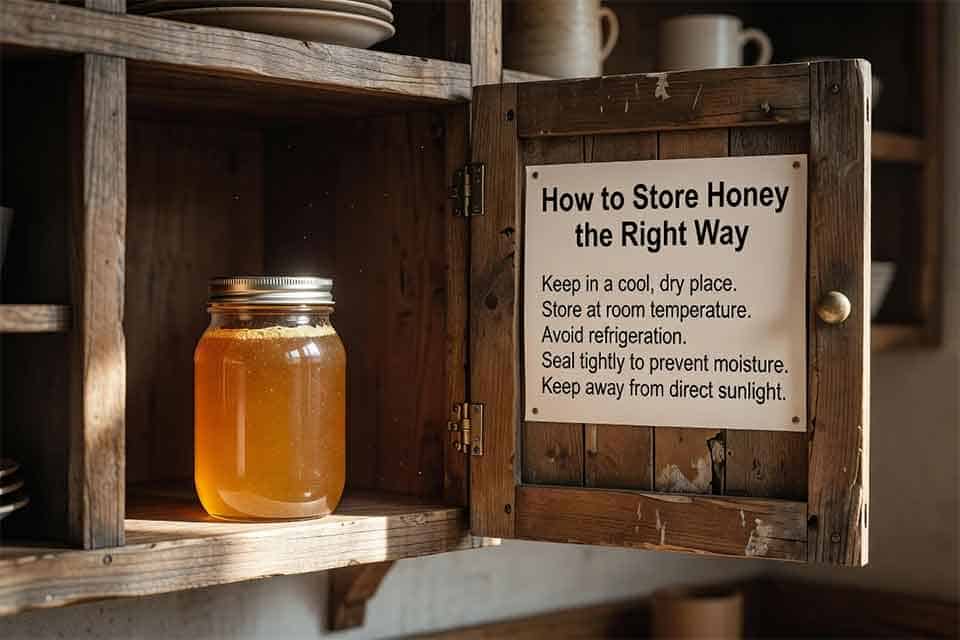
- Temperature: Room temperature is perfect – ideally between 18–24 °C. A consistent, moderate temperature helps preserve enzymes and flavour while keeping crystallisation manageable.
- Light: Keep it in the dark. Direct sunlight or bright artificial light can speed up darkening and flavour loss.
- Moisture: Honey is hygroscopic – it loves to pull water from the air. Extra moisture raises the risk of fermentation.
- Air: An airtight seal is essential.
A kitchen cupboard or pantry away from the oven, hob or sunny window is usually ideal for most UK homes.
Best Containers for Honey Storage
Glass wins every time for long-term storage. It doesn’t react with honey, keeps odours out and creates a reliable airtight seal when the lid is tight. Food-grade plastic is acceptable for shorter periods, but glass is the clear favourite among beekeepers.
Always:
- Wipe the rim clean before sealing
- Make sure the lid is screwed on firmly
- Avoid metal containers (they can react over time)
If you’ve bought a larger jar, consider decanting a smaller amount into a daily-use pot, so the main jar stays sealed most of the time.
Should You Refrigerate Honey?
The fridge will not harm honey. Cold storage can make a set jar firmer than most people like, so a cool cupboard is usually nicer for everyday use. You don’t need the fridge for safety – honey’s natural properties already protect it. The set-honey version is here: How to Store Set Honey Properly.
How to Deal with Crystallised Honey
Crystallisation is completely natural. It happens when the glucose in honey forms crystals – especially in cooler temperatures or with certain floral sources. It does not mean the honey has gone off. That thicker jar is set honey. See also Why Does Honey Crystallise? and Common Myths About Set Honey Debunked.
To return crystallised honey to liquid form:
- Place the sealed jar in a bowl of warm (not boiling) water.
- Let it sit, stirring occasionally, until the crystals dissolve.
- Never microwave or overheat – high temperatures can damage the natural enzymes and flavour.
Once liquefied, store it properly again to slow down the next crystallisation cycle.
Common Myths vs Facts About Storing Honey
| Myth | Fact |
|---|---|
| Honey goes off after the “best before” date | Pure honey lasts indefinitely when stored correctly. The date is more about peak quality. |
| You must keep honey in the fridge | Fridge speeds up crystallisation – room temperature is better. |
| Dark honey is old or spoiled | Colour depends on the flowers the bees visited. Darker honeys are often richer in flavour and minerals. |
| Crystallised honey is bad | It’s a natural process and the honey is still perfectly good. |
| Plastic is just as good as glass | Glass gives a better long-term seal and doesn’t interact with the honey. |
Practical Tips for Everyday Honey Storage in the UK
- Choose a cupboard that stays roughly the same temperature year-round.
- Keep honey away from strong-smelling foods – it can absorb odours.
- If you buy in bulk, portion it into smaller airtight jars.
- Check the lid seal regularly, especially after the jar has been opened many times.
- For creamed or set honeys, the same rules apply – cool, dark and airtight.
How Long Does Honey Last When Stored Properly?
When kept in an airtight container at stable room temperature, pure honey remains safe and enjoyable for many years – often decades. Over a very long time the colour may darken slightly and the flavour can mellow, but it doesn’t “go bad” in the way most foods do.
The main risks come from moisture getting in (which can lead to fermentation) or contamination from dirty spoons. Always use a clean, dry utensil.
FAQ – Your Honey Storage Questions Answered
Does honey go off?
Pure honey stored correctly does not go off. It can last indefinitely. Signs of a problem (rare) include a sour or alcoholic smell, frothing or visible mould – usually caused by excess moisture.
Can I store honey in the fridge?
It’s not recommended. Refrigeration speeds up crystallisation and makes the honey hard to use.
What’s the best temperature to store honey?
18–24 °C is ideal for most households. Avoid extremes of heat or cold.
How do I stop honey from crystallising?
You can’t prevent it completely, but storing it at a consistent room temperature in a tightly sealed jar slows the process.
Is it safe to eat crystallised honey?
Yes – it’s perfectly safe and still delicious. Simply warm it gently if you prefer it runny.
Should I keep honey in the original jar?
Yes, as long as the lid seals well. Glass is preferable for long-term storage.
How should I store opened honey?
Exactly the same way as unopened – cool, dark, airtight. Just make sure the lid is always replaced firmly.
Final Thoughts and Next Steps
Knowing how to store honey properly is one of the easiest ways to protect a beautiful natural product. Keep it cool (but not cold), dark, dry and sealed, and your jars will reward you with great flavour for years to come.
Ready to put these tips into practice? Choose a high-quality local raw honey that starts life in the best possible condition. Browse our full honey range or treat yourself to one of our gift collections. And if you’d like more expert advice on bees, honey and natural living, the Bee Knowledge Hub is always open.
Store it well – and enjoy every spoonful.
Enjoyed this article? If you’d like to support more honest writing about bees and local honey, you can buy me a coffee here:
Buy Me a Coffee – Buzzy Honey Bee
Your support also helps me continue working with the bees and offering free bee swarm collection.
Of course, the best way to support this small apiary is still by choosing one of the products below.