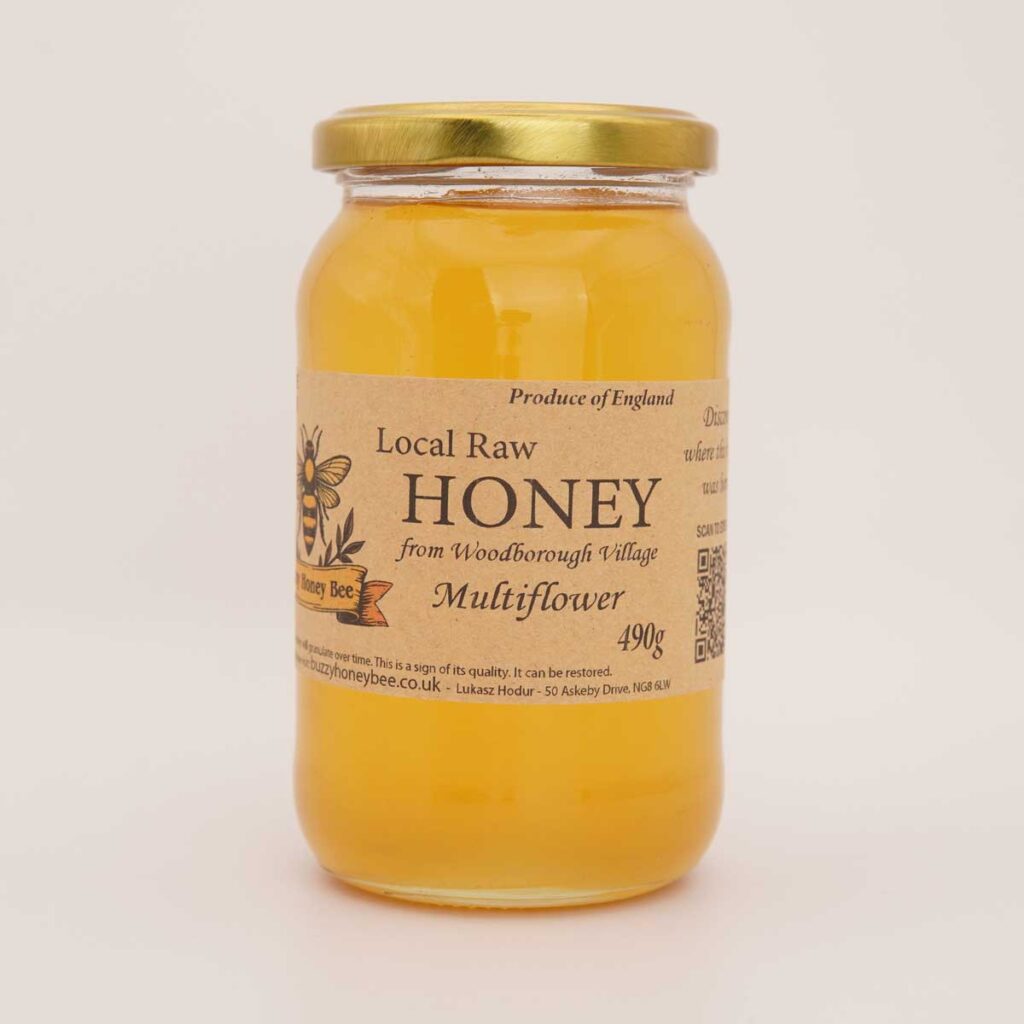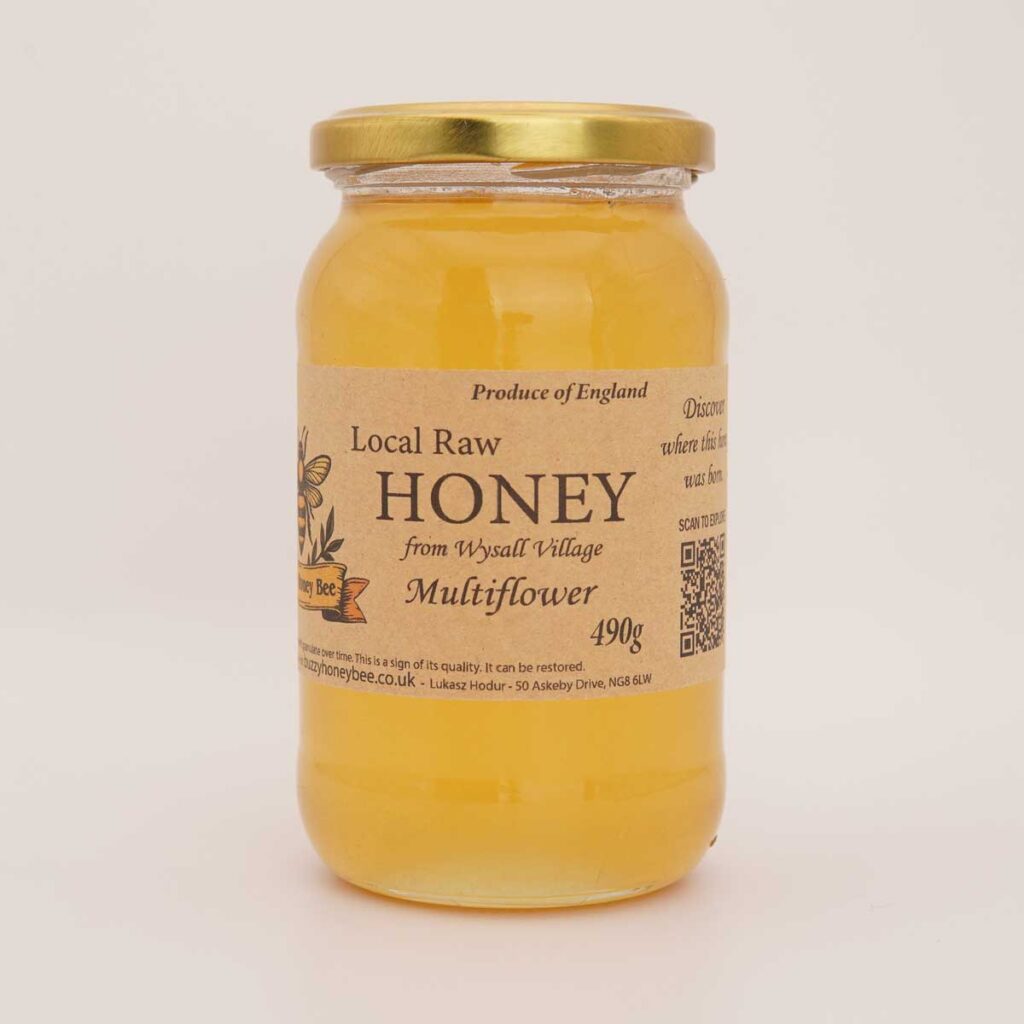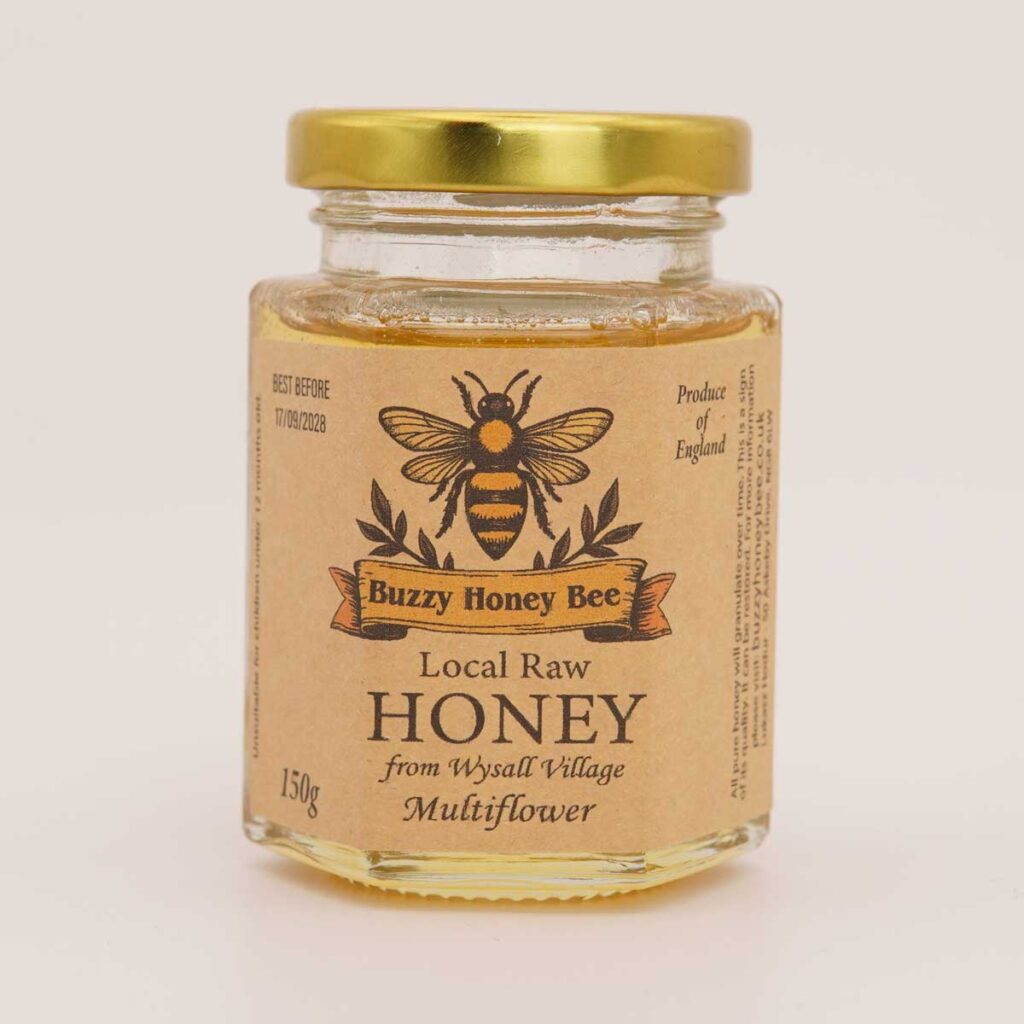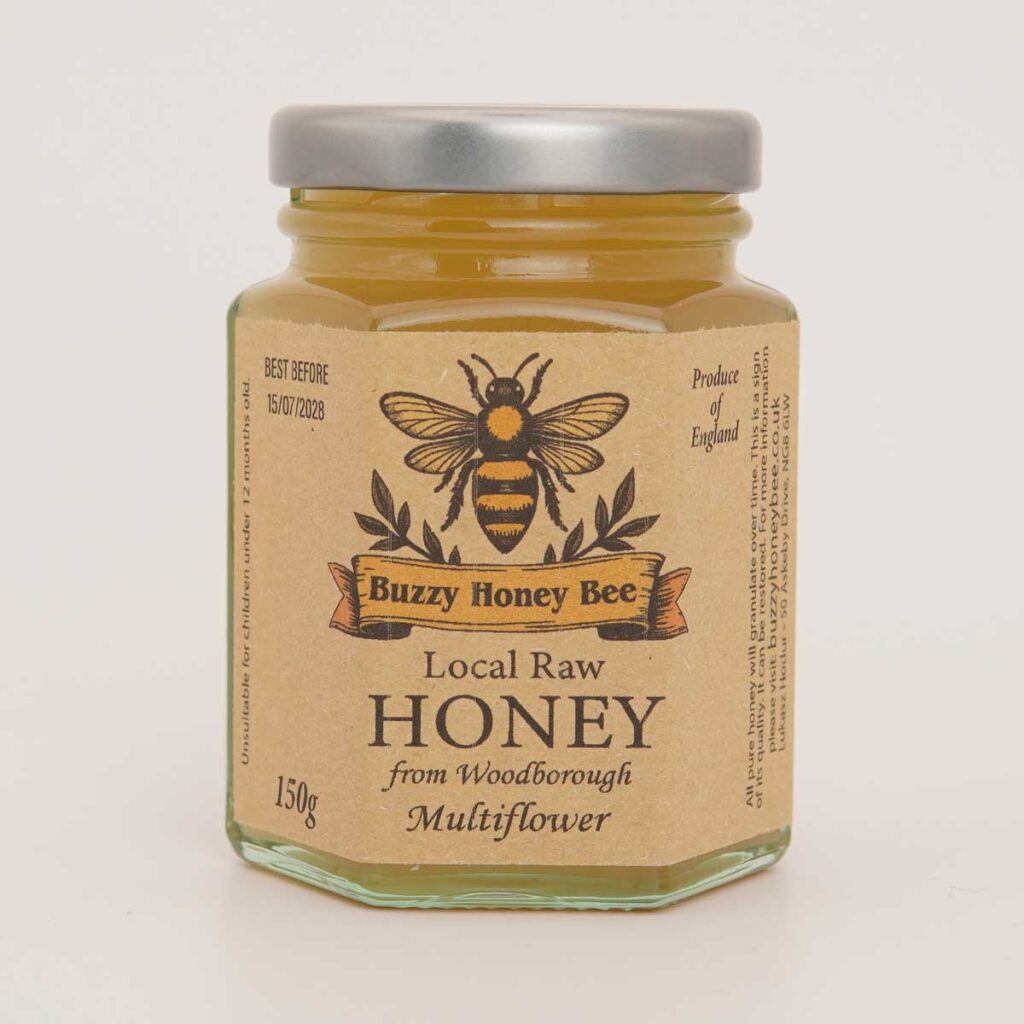
Scan the QR code on your jar and discover the full story behind this batch of Whatton Village multiflower honey. Harvested on 23 May 2026 from our apiary in Whatton Village, Nottinghamshire, this honey captures the gentle early spring forage right around the hives.
The bees collected nectar primarily from early spring wildflowers and countryside blossoms, with a meaningful contribution from a rapeseed field located just 800 metres away. This combination creates a light, floral, and delicately sweet honey that carries soft meadow notes alongside the characteristic mild creaminess of rapeseed.
Because this batch contains a good proportion of rapeseed nectar, it naturally crystallises quite rapidly into a beautiful, fine-grained texture – perfect for spreading. This is completely natural and a wonderful sign of its purity and local origin.
The Early Spring Flowers and Forage Around Our Whatton Village Apiary
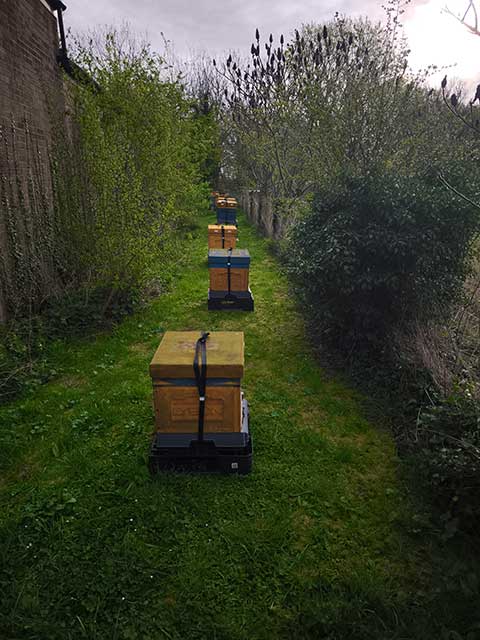
One of the joys of keeping bees at our single apiary in Whatton Village is the lovely mix of plants growing right on the doorstep. The village sits in classic rural Nottinghamshire countryside – tree-lined lanes, traditional hedgerows, village gardens, paddocks and open fields.
In early spring the bees have plenty of forage close by. Dandelions are one of the most common and important sources, carpeting verges and field edges from March onwards with bright yellow flowers full of nectar and pollen. Hedgerows provide another key contribution, with willow catkins early in the season and blackthorn blossom appearing in clouds of white.
Just 800 metres from the apiary lies the rapeseed field, which comes into bloom from April and adds its characteristic mild, creamy note to this batch.
Alongside these, the bees also collect from primroses, violets and many other early spring wildflowers and blossoms in local gardens, verges and the surrounding countryside. This rich but gentle mix of common local plants creates the light, floral and delicately sweet character of our Whatton Village multiflower honey.
Because the bees forage within a small radius of our single apiary, every jar truly reflects what grows here in central England in the weeks leading up to the 23 May 2026 harvest.
From Hive to Jar – 23 May 2026 Harvest
We extracted this honey gently on 23 May 2026 using traditional methods from our apiary. It remains completely raw and unheated, preserving all its natural enzymes, pollen traces and delicate aromatics. No blending from other locations – this is pure Whatton Village honey.
The rapeseed influence (from the field just 800 metres away) gives this batch its characteristic quicker crystallisation. Many people prefer it this way, as it develops a smooth, spoonable texture naturally.
Tasting and Using Your Whatton Village Multiflower Honey
This honey shines when you let its natural character come through:
- Spread on warm toast or fresh bread – the fine crystallisation makes it ideal for spreading
- Stir into porridge, yoghurt or overnight oats
- Sweeten herbal or black tea (add once the drink has cooled slightly)
- Use in baking for cakes, biscuits or granola where a mild sweetness works well
- Enjoy straight from the spoon for a quick natural energy boost
Its delicate profile suits the whole family (children over one year old). The natural setting texture is simply part of what makes this batch unique to Whatton Village and its local forage.
Why Local Traceability Matters
When you buy this honey you know exactly where it comes from: our apiary in Whatton Village, Nottinghamshire. The bees foraged on dandelions, hedgerow shrubs, garden blossoms, wildflowers and that rapeseed crop just 800 metres away. This traceability is central to what we do.
We believe in honest, small-batch honey that reflects its true origin. No large-scale blending, no unnecessary processing – just pure honey from our hives to your table.
Discover more of our village-specific honeys in the honey collection. You may also enjoy our Local Creamed Honey from Whatton Village, which shares the same local roots.
Frequently Asked Questions
What makes this Whatton Village multiflower honey special? It comes from our apiary and reflects early spring wildflowers (including abundant dandelions), hedgerow blossoms and rapeseed from a field just 800 metres away. Light, floral and delicately sweet, with natural quick crystallisation.
Why does it crystallise so quickly? The rapeseed nectar content is the main reason. This is completely natural for honeys with rapeseed influence and creates a lovely fine-grained texture.
Is the honey raw? Yes – extracted on 23 May 2026 and never heated or ultra-filtered.
How should I store it? In a cool, dark cupboard with the lid sealed. No need to refrigerate.
Can I use it once it has set? Absolutely. The natural set texture makes it excellent for spreading. If you prefer it softer, gently warm the jar in warm water.
Where exactly does it come from? Our apiary in Whatton Village, Nottinghamshire. The QR code on your jar links directly to this detailed information.
Is it suitable for children? Yes for children over 12 months. Never give honey to babies under one year old.
A Jar Full of Whatton Village Spring
This Whatton Village multiflower honey is a genuine reflection of one place and one moment in the season. From our apiary in Whatton Village, with forage from dandelions, hedgerows, local gardens, wildflowers and rapeseed just 800 metres away, it delivers a light, floral, delicately sweet taste that sets naturally into a beautiful texture.
Thank you for choosing traceable local honey. We hope you enjoy every spoonful and that scanning the QR code helps you feel connected to the bees and the exact countryside where it was made.
Explore more of our range and other harvests in the Bee Knowledge Hub or the shop.
Enjoyed this article? If you’d like to support more honest writing about bees and local honey, you can buy me a coffee here:
Buy Me a Coffee – Buzzy Honey Bee
Your support also helps me continue working with the bees and offering free bee swarm collection.
Of course, the best way to support this small apiary is still by choosing one of the products below.