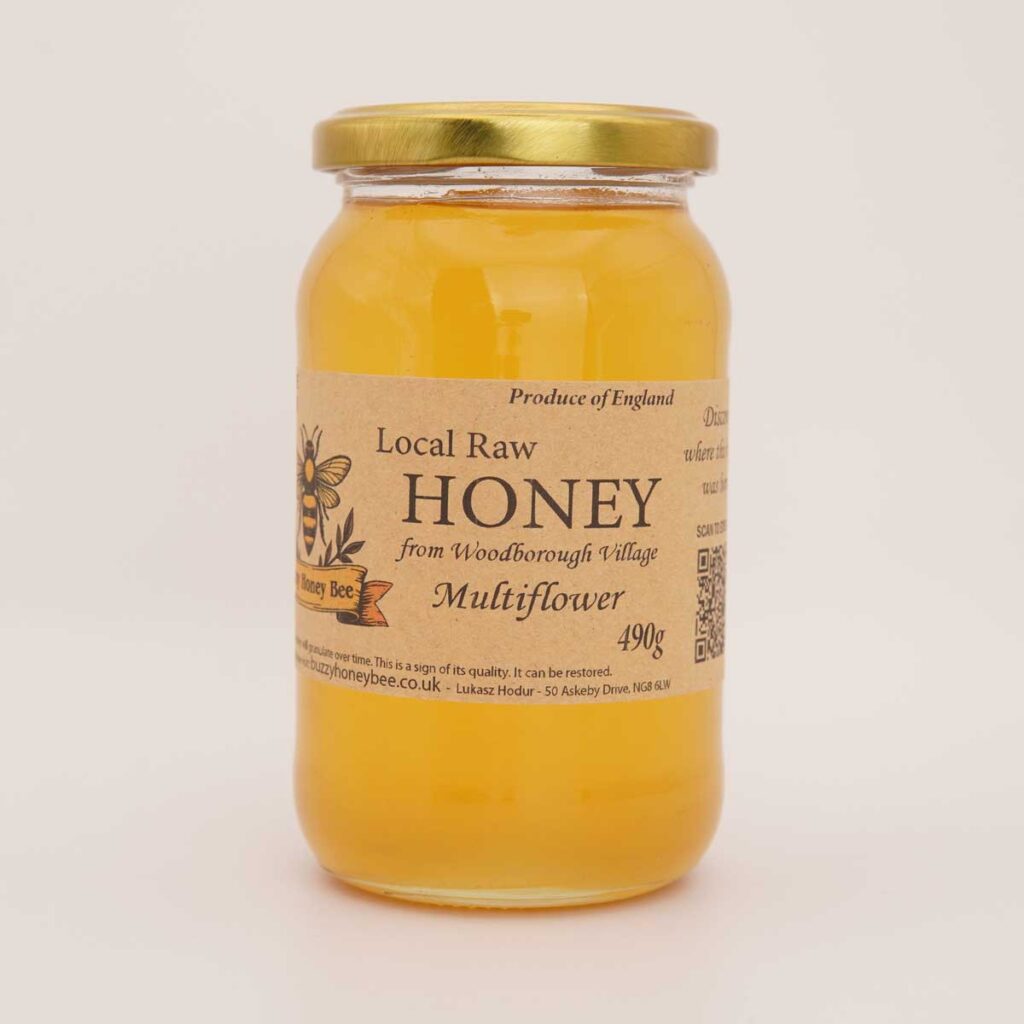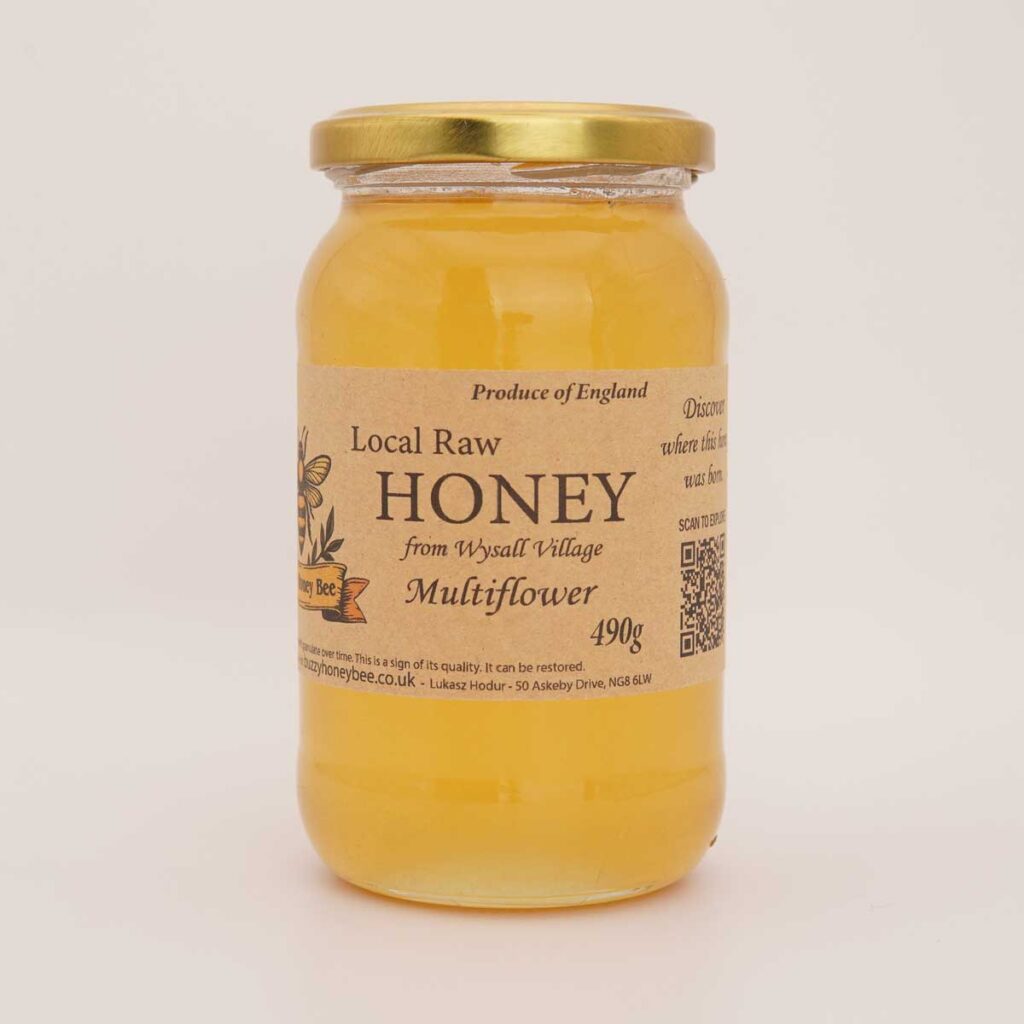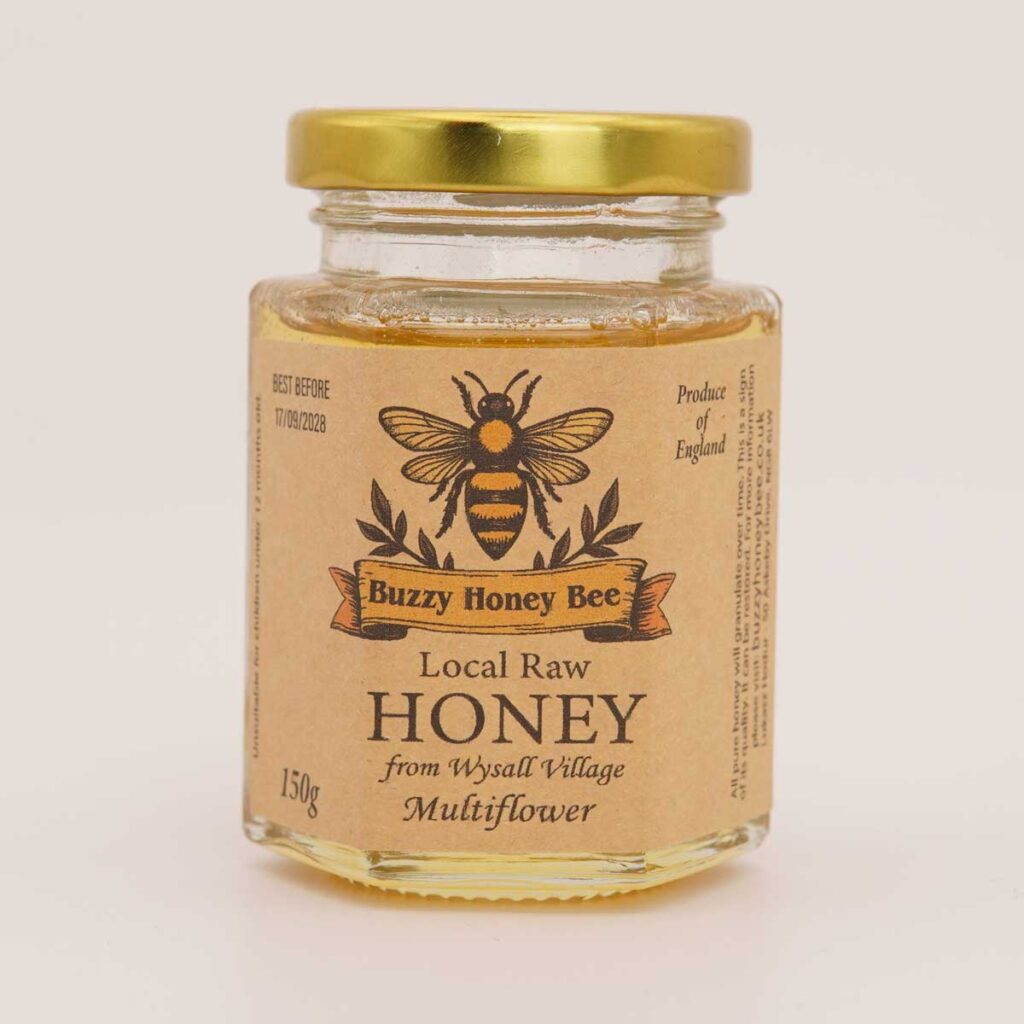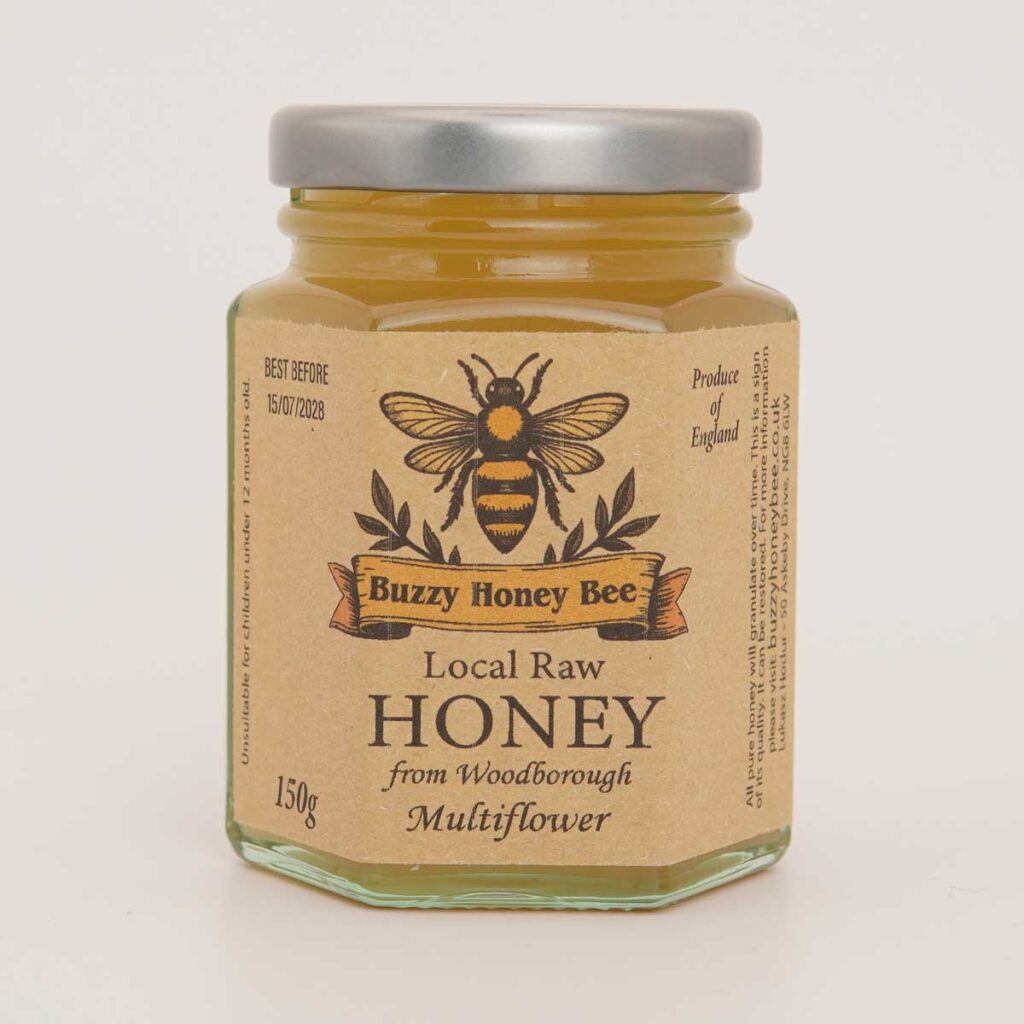
Have you opened a jar of beautiful local honey, only to find it’s gone thick, cloudy or grainy? A lot of people assume something’s gone wrong. They think the honey’s off, old, or “turned to sugar”.
It hasn’t.
Honey crystallises because it’s real. That’s the short version. The longer version is a bit more interesting — and once you understand it, you’ll stop worrying about set jars and start seeing them as a good sign.
In this guide we’ll explain why honey crystallises, what affects the speed, why raw honey sets faster than supermarket honey, and what you should (and shouldn’t) do next.
What Does It Mean When Honey Crystallises?
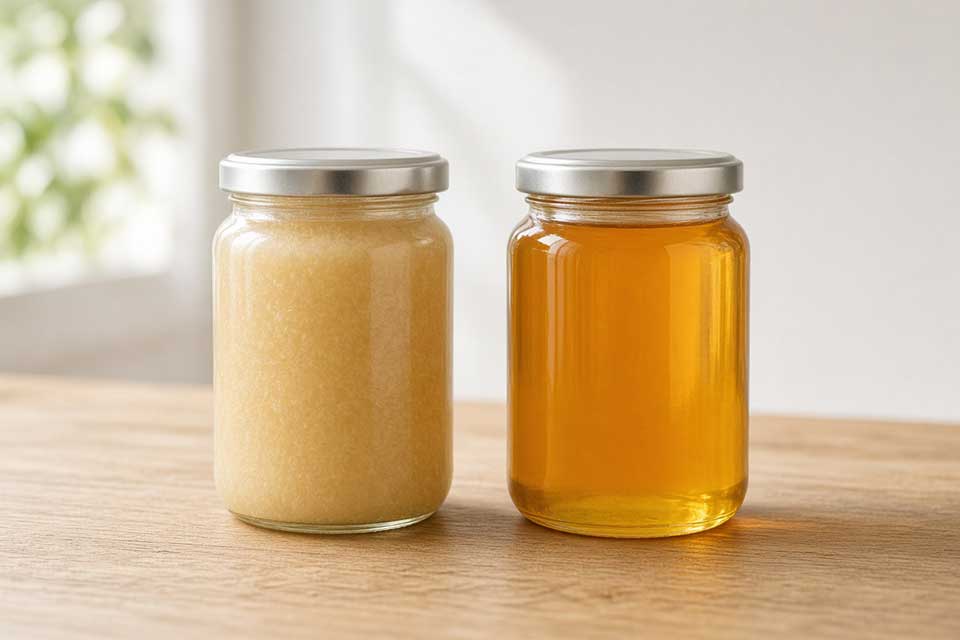
Crystallisation is the natural process that turns liquid honey into a thicker, more solid texture. You’ll hear it called set honey, granulated honey or crystallised honey. They’re all describing the same thing.
The honey hasn’t spoiled. The flavour is still there. The enzymes, pollen and natural character are still there. All that’s changed is the texture.
If you want a full explanation of that finished texture, read our guide: What Is Set Honey?
Why Does Honey Crystallise in the First Place?
Honey is a supersaturated sugar solution. In plain English, that means it contains more sugar than the small amount of water in the jar can comfortably hold forever.
Most honey is roughly:
- about 70–80% natural sugars
- about 17–20% water
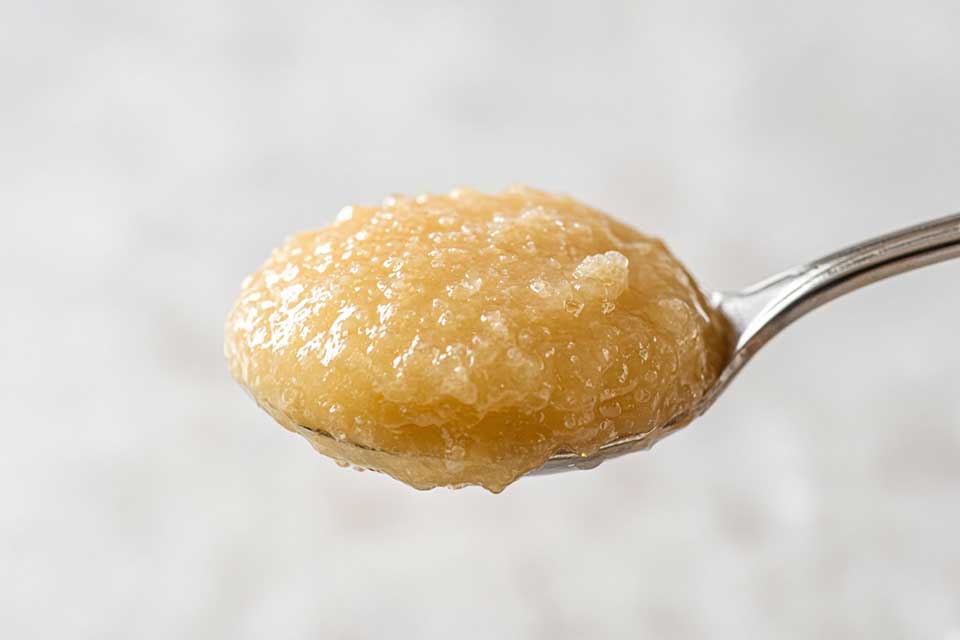
Those sugars are mainly glucose and fructose. Glucose is less soluble than fructose. Over time, glucose starts to come out of the liquid and form tiny crystals. Once a few crystals appear, more follow. That’s how a runny jar slowly becomes set honey.
It’s the same basic idea as sugar crystals forming in a concentrated syrup. Honey just does it more slowly, and more beautifully.
The Three Things That Speed It Up
Not every jar sets at the same speed. Three things matter most.
1. The glucose-to-fructose balance
This is the big one. It depends on the flowers the bees visited. Honey with more glucose tends to set faster. Honey with more fructose can stay runny for much longer. That’s why some jars from the same beekeeper look completely different a few months later.
Local multiflower honey from Nottinghamshire and Derbyshire often sets fairly readily, because the mix of wildflowers, gardens and countryside forage is rich enough in glucose to get the process going.
2. Temperature
Honey crystallises fastest at cool room temperatures, especially around 10–15°C. A chilly cupboard can speed things up. A warmer kitchen can slow them down.
The fridge will not harm honey. A well-sealed jar is perfectly safe in cold storage. The real issue is texture. Fridge temperatures often make set honey firmer and harder to spread. If you want a softer jar, a cool kitchen cupboard is usually the better everyday choice.
3. Tiny natural particles
Raw honey still contains microscopic bits of pollen, wax and other natural matter. Those particles give glucose crystals somewhere to start forming.
That’s one reason raw, coarsely strained honey often sets sooner than heavily filtered supermarket honey. The particles haven’t been stripped out.
Why Some Supermarket Honey Stays Runny for Years
If crystallisation is natural, why do so many cheap supermarket jars stay perfectly liquid for so long?
Not every supermarket honey is the same. Some is still honey that has been heavily processed for appearance. Some raises a bigger question: whether what you’re buying has ever really lived in the comb in the way people imagine.
A lot of supermarket honey is:
- heated
- finely filtered
- blended from many sources, often labelled only as a “blend of EU and non-EU honeys”
Heating and fine filtering can strip out the tiny natural particles that help crystals form. The jar stays clear and pourable. It looks tidy on the shelf. What you lose is much of the character of raw honey: aroma, texture and the sense that it came from a real place.
There’s another reason some cheap jars barely crystallise at all. Investigations and independent tests over recent years have raised serious concerns about adulterated honey on UK supermarket shelves — honey stretched or mixed with cheap sugar syrups. Products like that may look like honey and pour like honey, but they don’t behave like honey that has come straight from the comb. They often stay runny because they were never a simple, raw hive product in the first place.
That’s why a local raw jar can set, while a bargain squeezy bottle stays liquid for years. It doesn’t mean the supermarket jar is “better”. It usually means it has been processed more — or that it isn’t the same kind of product at all.
If you want the full picture of what you’re really buying in those cheap supermarket jars, read this next: Supermarket Honey in the UK: What Are You Really Buying? Once you’ve read that, choosing raw local honey becomes a much easier decision.
Is Crystallised Honey Safe to Eat?
Yes. Completely.
Crystallisation is not mould. It is not fermentation. It is not a sign that the honey has expired. A properly stored jar of raw honey lasts indefinitely.
You should only worry if the honey:
- smells sour or fermented
- has started to foam in an unusual way
- shows signs of moisture getting into the jar
A firm, creamy or grainy set on its own is normal. If you want to know how long raw honey lasts and how to keep it in good condition, read our guide: Does Honey Expire? Shelf Life of Raw Honey.
What Crystallised Honey Should Look and Feel Like
Not all set honey feels the same.
A good natural set can be:
- smooth and creamy
- softly spreadable
- lightly textured
A less even set can feel:
- firmer
- a bit grainy
- harder at the bottom of the jar
That variation is normal in raw honey. If you want a consistently silky texture, that’s where creamed (soft-set) honey comes in. We compare the two here: Set Honey vs Creamed Honey: Which One Is Right for You?
Set Honey vs Runny Honey: Does Crystallisation Change the Taste?
Not in the way people think. The honey is still the same honey. The floral character doesn’t disappear when it sets. What changes is mouthfeel. Set honey often tastes a little creamier and more rounded. Runny honey can feel brighter because the liquid coats the tongue differently.
If you’re choosing between textures, this guide helps: Set Honey vs Runny Honey: What’s the Real Difference?
Can You Stop Honey from Crystallising?
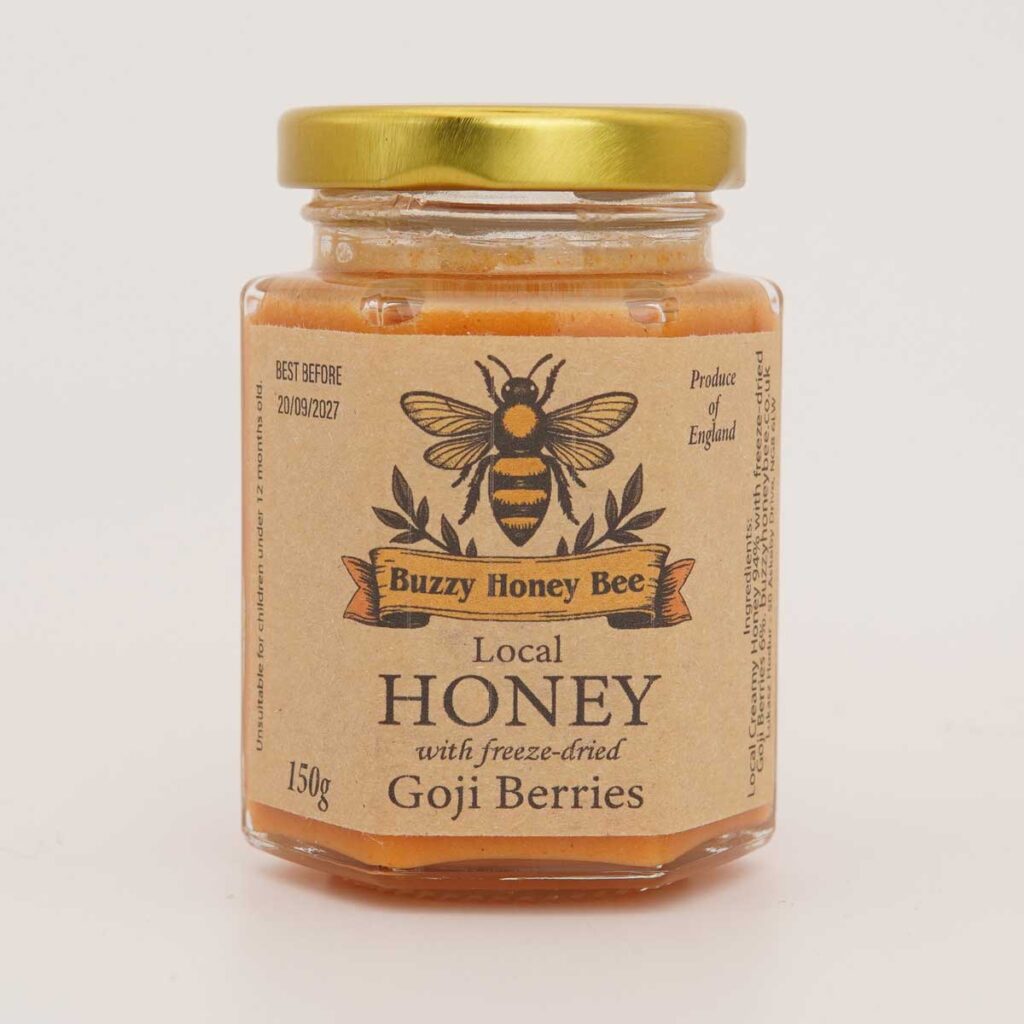
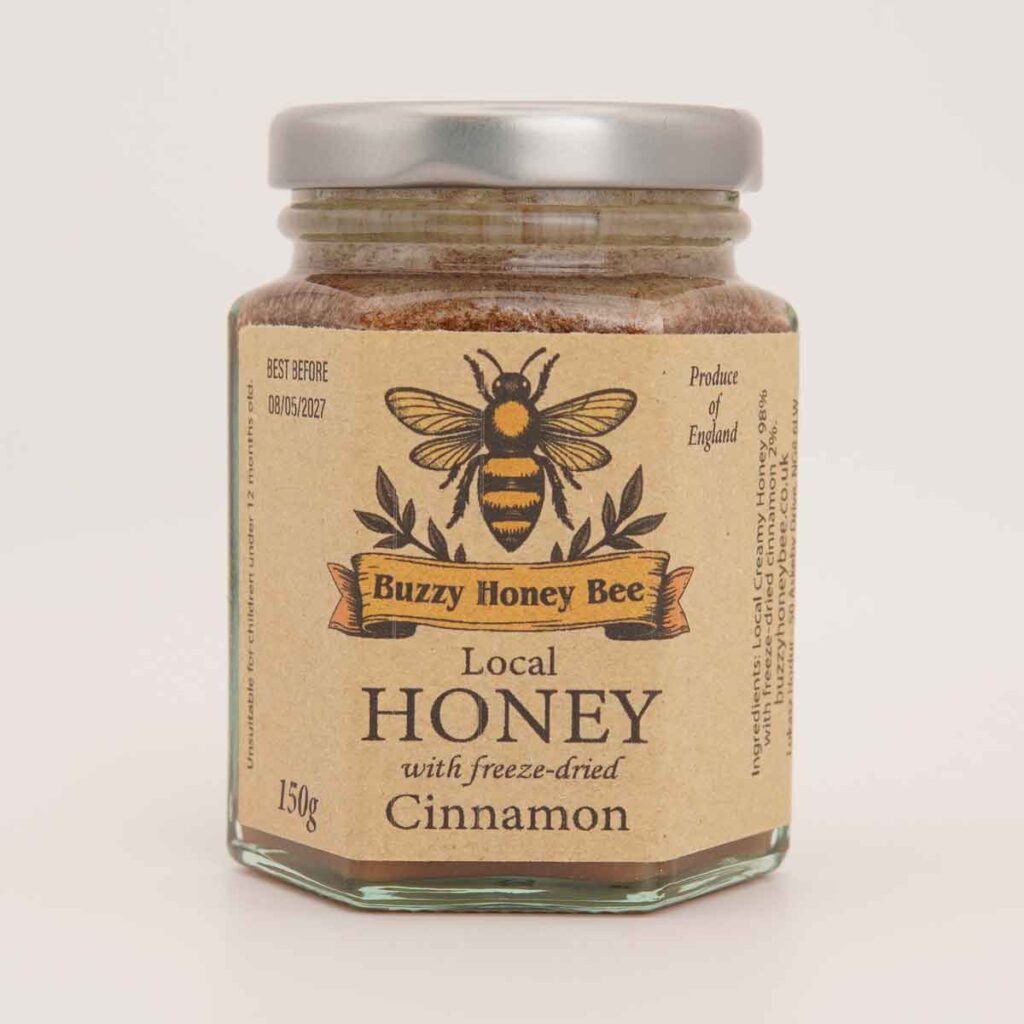
You can slow it down. You can’t honestly promise to stop it forever if the honey is raw and genuine. Our honey from Buzzy Honey Bee is exactly that: raw, local and left with its natural character, so it will often set over time.
The simplest way to look after raw honey is to keep the jar in a cool, dry cupboard, with the lid on tightly, and always use a clean, dry spoon. That protects the honey and helps slow crystallisation. The fridge will not harm it, but it can make set honey firmer than most people like. Even then, some raw honeys simply want to set. Fighting that too hard usually means heating the honey more than you should.
What If You Prefer It Runny Again?
You can gently warm set honey to loosen it. The key word is gently. High heat damages aroma and the delicate qualities that make raw honey worth buying in the first place.
The safest method is a warm water bath, not a microwave blast and not a hot hob.
We already have a practical de-crystallisation guide on the site. Use that for the step-by-step method. The next article in this cluster will focus specifically on softening set honey without damaging it.
Until then, remember this rule: warm water, patience, no boiling.
Why Local Honey from Nottingham and Derby Often Sets
Our honey comes from village apiaries around Nottinghamshire and Derbyshire. The bees forage on a mix of wildflowers, gardens, hedgerows and seasonal countryside plants. That local mix often produces honey that crystallises naturally.
That’s not a flaw in the batch. It’s one of the reasons the honey tastes of a real place, not a factory blend.
If you want honey that stays exactly as it set on its own, look at our raw set honey collection.
If you prefer a smoother, more buttery spread, our creamed honey is the better match: Discover the Finest Creamed Honey from Buzzy Honey Bee in Nottingham.
Both start as raw local honey. The difference is texture, not authenticity.
Common Myths About Crystallised Honey
Has my honey gone off because it has set?
No. Setting is a natural change in texture, not a sign that the honey has spoiled.
Have extra sugars been added to the jar?
No. The crystals come from the honey’s own glucose as it slowly comes out of solution.
Should raw honey stay runny forever?
No. The opposite is true. Raw honey is more likely to crystallise because it still contains the natural particles that help crystals form.
Should I throw crystallised honey away?
Please don’t. A set jar is still good honey, and it is still perfectly safe to eat.
We’ll go deeper into these myths here: Common Myths About Set Honey Debunked. For now, the useful takeaway is simple: crystals are information, not a warning light.
How to Use Honey Once It Has Set
Set honey is often easier in daily life than people expect.
It’s excellent for:
- spreading on toast, crumpets and bread
- stirring into porridge
- baking
- adding to yoghurt
- using in cooking where you don’t need a thin drizzle
If you want something that won’t drip off a child’s sandwich, a thicker set or creamed honey is usually more practical than runny honey. That’s one reason families often prefer a soft, spreadable jar.
For runny uses — tea, dressings, a quick drizzle — either choose a naturally runny jar or warm a little set honey as you need it.
Frequently Asked Questions
Why did only the bottom of my jar go hard?
Crystals often form at the bottom first. The jar is still fine. You can stir it, warm it gently, or just use the firmer honey as a spread.
Does crystallised honey last as long as runny honey?
Yes. Both last indefinitely if kept clean, dry and well sealed.
Can honey crystallise in the hive?
In some conditions, yes, especially with high-glucose nectars. Most of the setting you see happens after extraction, in the jar.
Is grainy honey lower quality?
Not necessarily. Graininess usually means the crystals grew a little larger. The honey can still be excellent.
Does creamed honey crystallise too?
Creamed honey is already crystallised — just in a controlled, fine way. That’s why it stays smooth and spreadable.
Should I keep honey in the fridge to stop it setting?
No. The fridge often makes it set faster.
Is set honey the same as raw honey?
Set honey can be raw, and in our case it is. “Set” describes texture. “Raw” describes how little the honey has been processed.
Can I cook with crystallised honey?
Yes. It works very well in baking and glazes. Warm it slightly if you need it to mix more easily.
Final Thoughts
Honey crystallises because it is a natural, sugar-rich food that was never designed to stay permanently liquid. When a raw local jar sets, it’s doing what good honey often does.
You don’t need to panic. You don’t need to throw it away. You just need to decide whether you like it set, prefer it creamed, or want to warm a little back to a pourable texture.
Once it has set, keep it well: How to Store Set Honey Properly. If you have been told to throw the jar away, read Common Myths About Set Honey Debunked.
If you’d like to taste honey that has set naturally from our village apiaries around Nottingham and Derby, start here: Raw Set Honey.
And if you’re still choosing between textures, these two guides will help:
Enjoyed this article? If you’d like to support more honest writing about bees and local honey, you can buy me a coffee here:
Buy Me a Coffee – Buzzy Honey Bee
Your support also helps me continue working with the bees and offering free bee swarm collection.
Of course, the best way to support this small apiary is still by choosing one of the products below.