If you’ve been looking at local honey jars and seen both “set honey” and “creamed honey” on the labels, you’re probably wondering what the actual difference is. They both look thick. They both spread. So are they the same thing?
Set honey and creamed honey are related, but they’re not identical. One happens naturally. The other is guided. Understanding the difference helps you choose the texture you’ll actually enjoy using every day.
In this guide we’ll clearly explain set honey vs creamed honey, how each one is made, what the texture feels like, and which one suits different uses best.
What Is Set Honey?
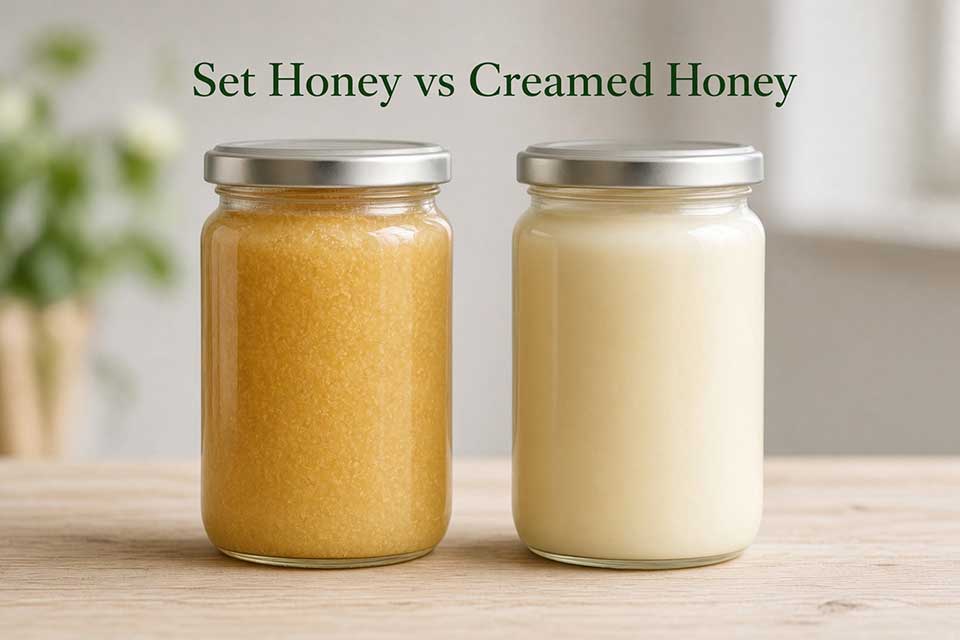
Set honey is raw honey that has crystallised naturally over time. The glucose in the honey forms crystals, turning the liquid into a thicker, more solid consistency. When this happens slowly and evenly, you get a pleasant, spreadable set. Sometimes the crystals can be a little more noticeable, giving a lightly grainy texture.
You can read the full explanation here: What Is Set Honey?
What Is Creamed Honey?
Creamed honey (also called soft-set honey) is raw honey that has been carefully controlled during crystallisation, so the crystals stay extremely fine. The result is a very smooth, buttery, almost whipped texture that stays soft and spreadable.
We already have a detailed article about how we make our creamed honey and why it’s special: Discover the Finest Creamed Honey from Buzzy Honey Bee in Nottingham
In short: creamed honey starts as liquid raw honey. A small amount of already finely crystallised honey is mixed in, and the batch is kept at a steady cool temperature while being gently stirred. This encourages millions of tiny crystals instead of larger ones.
Set Honey vs Creamed Honey: Side-by-Side Comparison
| Feature | Set Honey | Creamed Honey (Soft-Set) |
|---|---|---|
| How it forms | Natural crystallisation | Controlled crystallisation |
| Crystal size | Can be medium to fine | Very fine and uniform |
| Texture | Firm to creamy, sometimes slightly grainy | Very smooth, buttery, spreadable |
| Appearance | Opaque, can look more solid | Creamy, often lighter in colour |
| Spreadability | Good | Excellent |
| Stability over time | Can firm up further | Stays soft for longer |
| Best for | Everyday spreading, baking | Toast, crumpets, precise spreading |
Which Texture Do Most People Prefer?
It depends on personal taste.
Many people prefer creamed honey because:
- It spreads like soft butter straight from the jar
- There are no noticeable crystals on the tongue
- It looks very appealing and “finished”
- It stays consistently soft
Some people prefer natural set honey because:
- It feels more “as nature intended”
- They like a slightly firmer texture
- They enjoy the traditional crystallised character of raw local honey
There’s no right or wrong answer. Both are 100% raw honey from the same local bees.
Taste Difference
The flavour itself is almost identical because both start as the same raw honey. The difference is in mouthfeel. Creamed honey releases flavour more evenly and feels smoother. Natural set honey can sometimes have a more pronounced crystal sensation, which some people enjoy and others don’t.
How We Make Both at Buzzy Honey Bee
All our honey comes from the same apiaries around Nottingham and Derby villages (Oakwood, Strelley, Whatton and others).
- Our set honey is allowed to crystallise naturally after extraction.
- Our creamed honey goes through a gentle, controlled process so the crystals stay fine and the texture stays soft.
We never pasteurise or ultra-filter. Both versions remain raw and full of natural enzymes and pollen.
You can browse current jars here:
Raw Set Honey collection
Creamed Honey collection (or relevant creamed category)
Which One Should You Buy?
Here’s a simple guide:
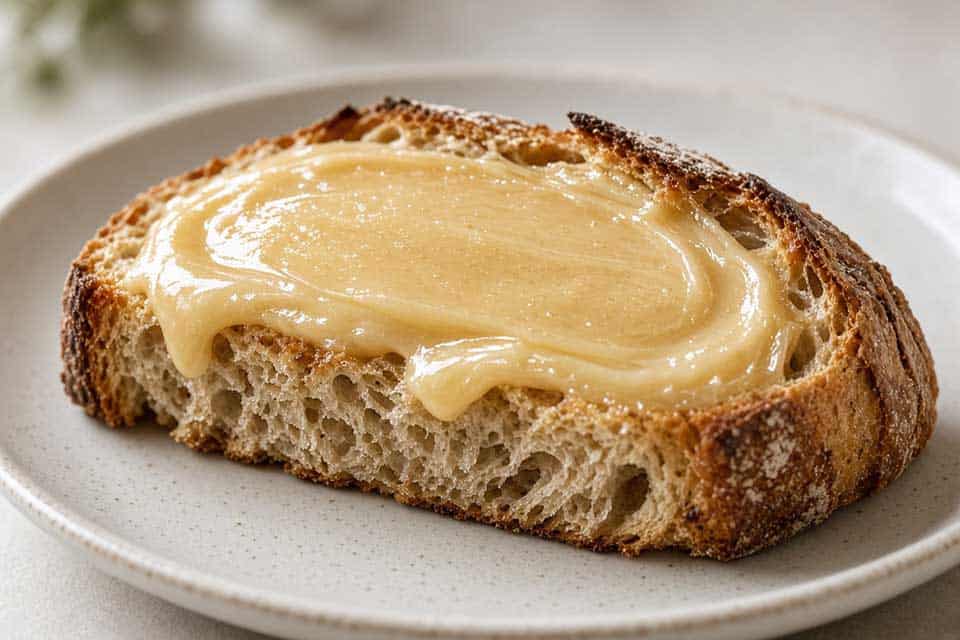
Choose creamed honey if you:
- Want the smoothest possible spread
- Dislike any graininess
- Use honey mainly on toast, bread, or crumpets
- Prefer a consistent, soft texture every time
- Especially practical for families with children: Creamed honey is frequently the preferred choice for families with young children. Because it has a thick, soft-set texture, it stays put on bread or toast instead of dripping. Runny honey can easily slide off a sandwich and create sticky messes — especially when children are walking or running around the house with their snack. Creamed honey spreads evenly and holds its place, making it far more practical and less messy for little ones.
Choose set honey if you:
- Prefer a more traditional, natural crystallised honey
- Don’t mind a slightly firmer or lightly textured feel
- Want the honey exactly as it set on its own
- Like using it in cooking and baking as well as spreading
Many customers buy one of each and decide which they reach for more often.
Can You Turn One into the Other?
You can gently warm set honey to make it runnier again (see our guide on softening set honey).
Turning runny or set honey into proper creamed honey at home is possible but needs the right seed crystals and temperature control — most people prefer to leave that to the beekeeper.
Frequently Asked Questions
Is creamed honey the same as whipped honey?
Yes, the terms creamed, soft-set and whipped honey are often used interchangeably. They all refer to honey with controlled fine crystallisation.
Does creamed honey contain cream or dairy?
No. The name comes only from the creamy texture. It is 100% pure honey.
Is set honey less processed than creamed honey?
Natural set honey has less human intervention. Creamed honey has a controlled process, but both remain raw and unpasteurised when made properly.
Which one lasts longer?
Both last indefinitely when stored correctly. Creamed honey often keeps its soft texture for longer.
Can I use creamed honey in tea?
Yes, though it takes a little more stirring than runny honey. Both work well.
Why do some set honey feel grainy and some feel smooth?
It depends on how quickly and at what temperature the crystals formed. Faster or uncontrolled crystallisation can produce larger crystals.
Final Thoughts
Set honey and creamed honey are two excellent versions of the same raw local honey. One is left to crystallise naturally. The other is carefully guided to create a silky-smooth spread.
If you want maximum creaminess and effortless spreading, go for creamed.
If you prefer a more traditional set texture, choose natural set honey.
The best way to decide is to try both. Most people quickly discover which texture they reach for every morning.
If you have been told set honey is just creamed honey with another name, or that a set jar has gone off, read Common Myths About Set Honey Debunked.
Explore our current range of local set and creamed honey from the Nottingham and Derby area and taste the difference for yourself.
Enjoyed this article? If you’d like to support more honest writing about bees and local honey, you can buy me a coffee here:
Buy Me a Coffee – Buzzy Honey Bee
Your support also helps me continue working with the bees and offering free bee swarm collection.
Of course, the best way to support this small apiary is still by choosing one of the products below.