Have you ever stood in the supermarket honey aisle and wondered whether any of those jars actually came from bees near you? The honest version of that shelf is here: Supermarket Honey in the UK: What Are You Really Buying?
Most of us have. The label might say “British honey” or even “local”, yet the contents often travel hundreds of miles – or further. Real local honey is something quite different. Its honey harvested from hives within a short distance of where you live (or, in our case, from our own apiaries in the villages of Nottinghamshire and Derbyshire), bottled with minimal interference, and full of the character of the surrounding landscape.
In this guide you’ll discover exactly what local honey means in the UK, why it tastes and behaves differently from supermarket blends, how to spot the genuine article, and how to choose a jar you’ll actually enjoy. Along the way I’ll show you the honeys we produce from our own hives – each one traceable back to a specific village and harvest.
What Does “Local Honey” Actually Mean?
There’s no single legal definition of “local honey” in the UK. The British Beekeepers Association has long encouraged people to buy from beekeepers in their own community, and many associations consider honey local when the hives are within roughly 20–50 miles of the point of sale.
In practice, the best local honey comes from a named place – a village, a farm, or a clearly defined area – and is produced by a beekeeper who can tell you exactly where the bees foraged that season.
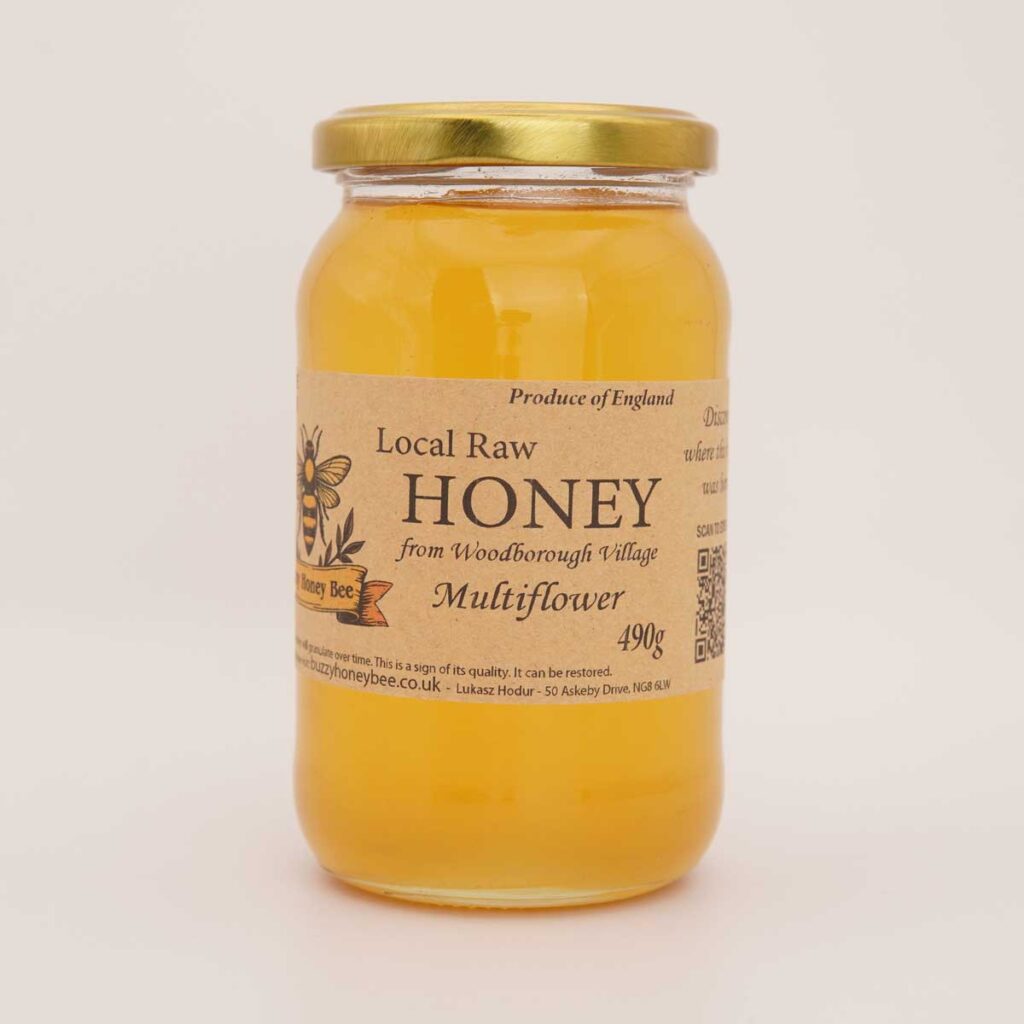
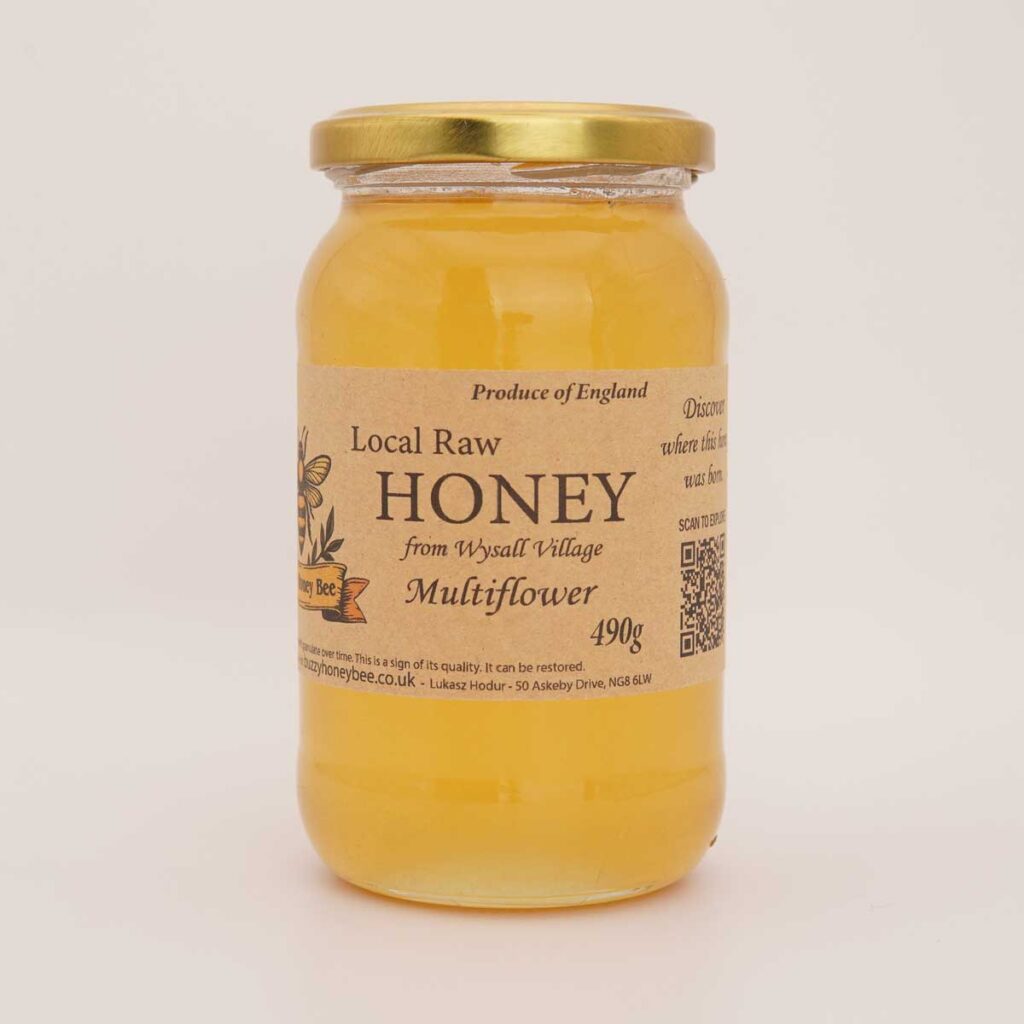
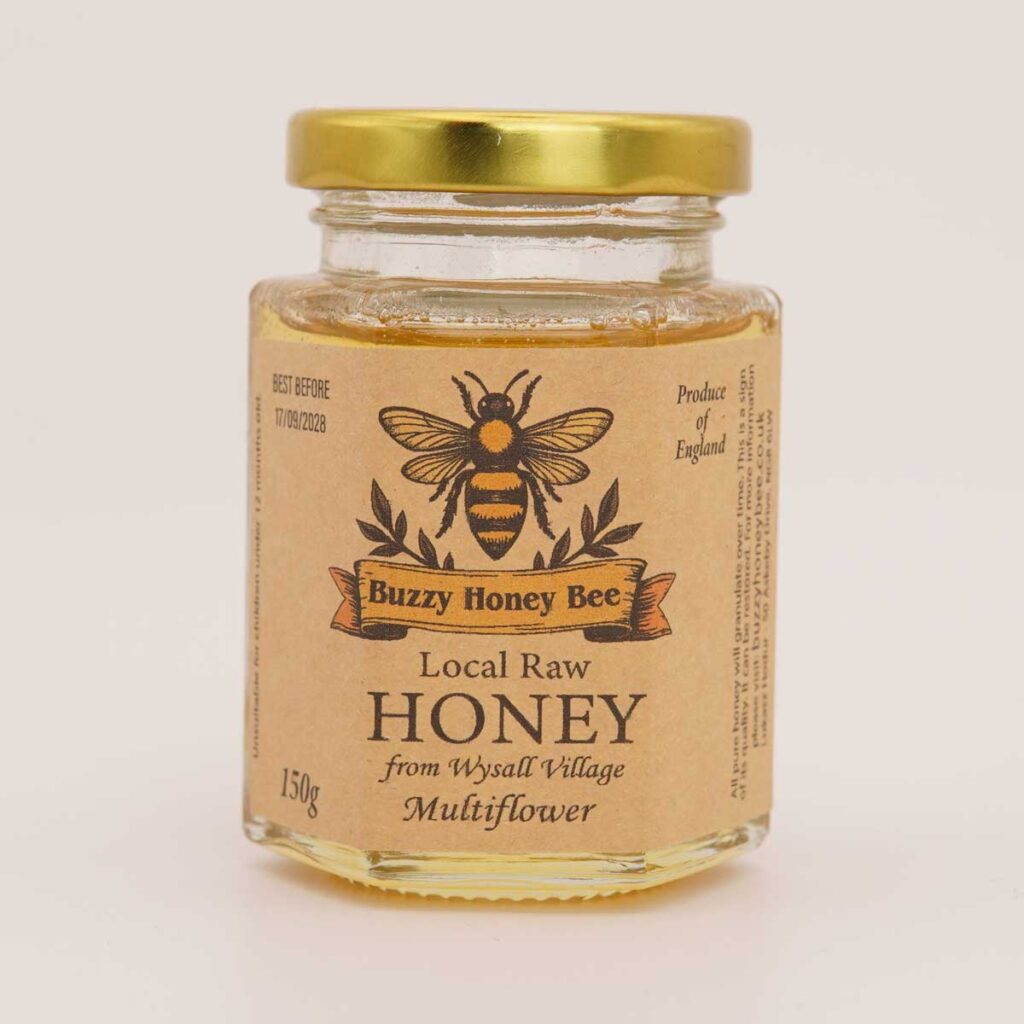
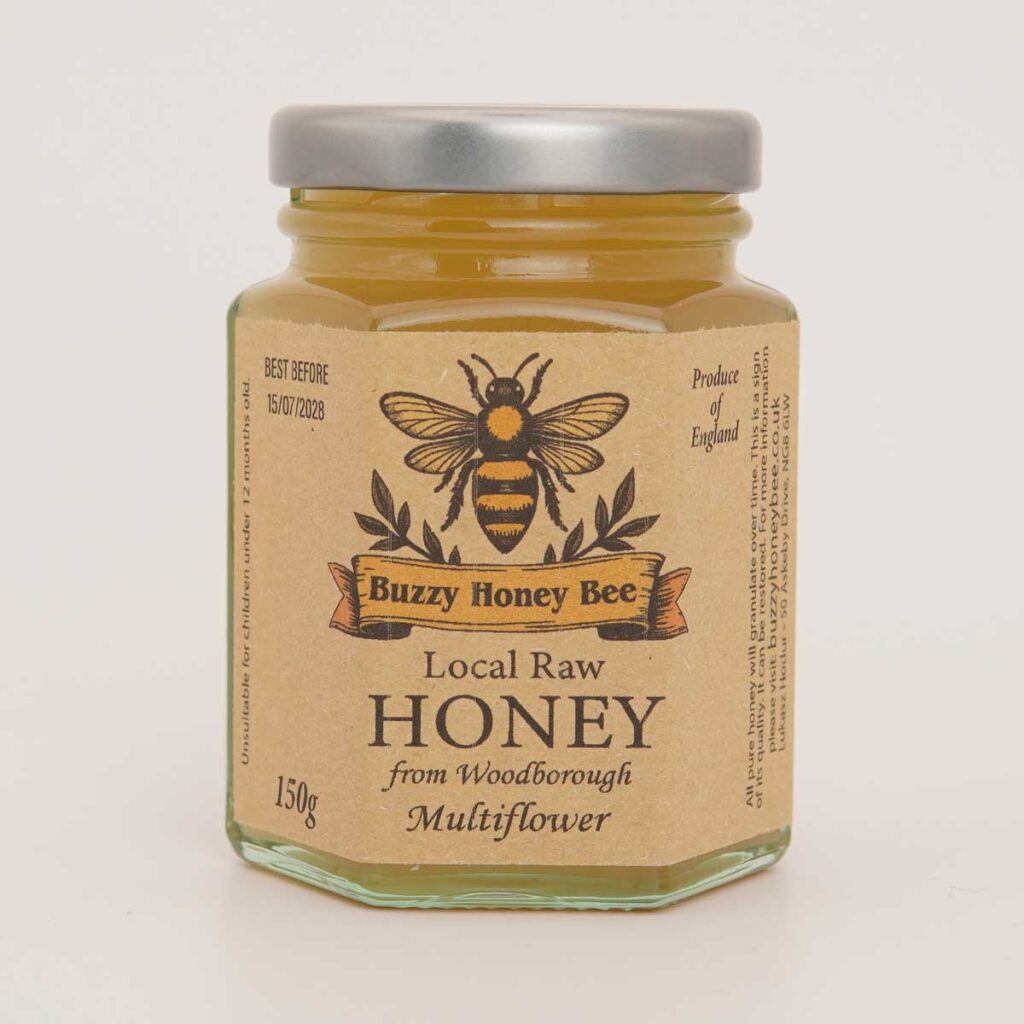
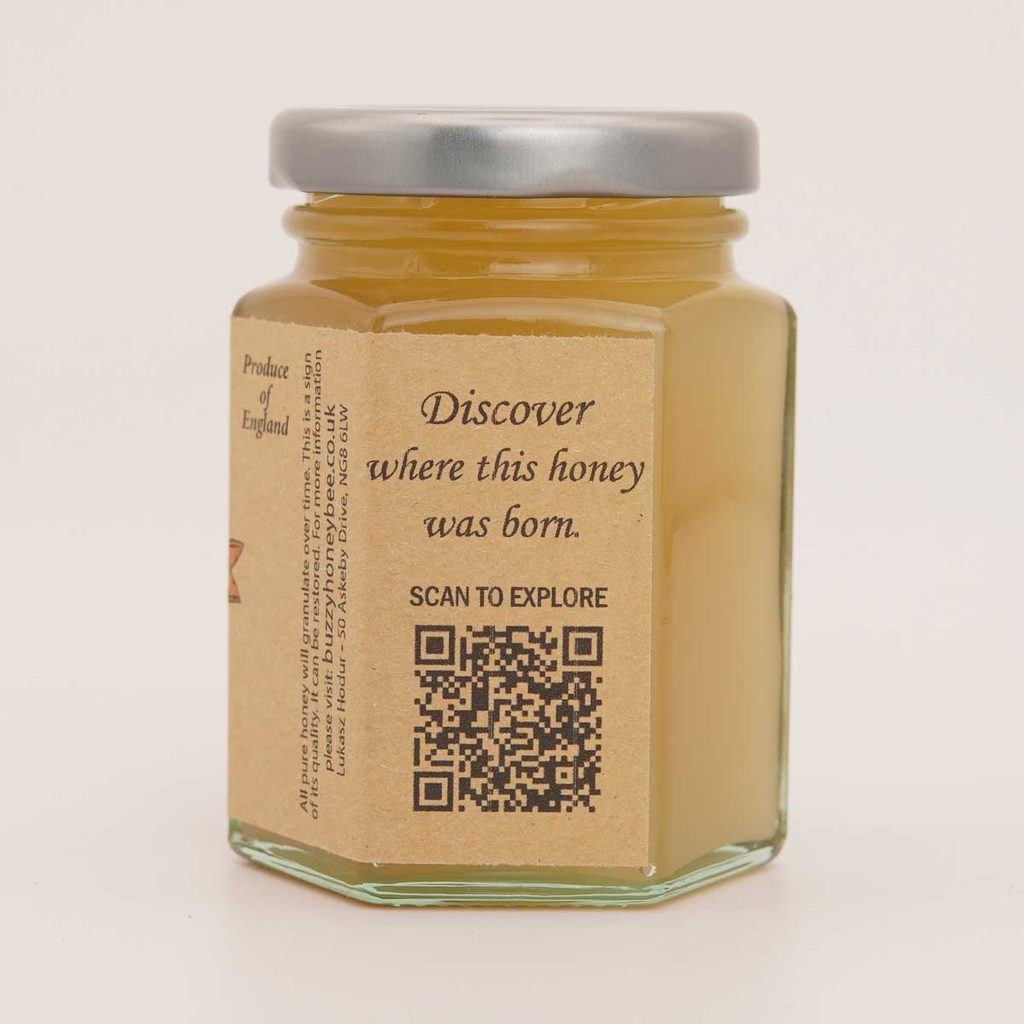
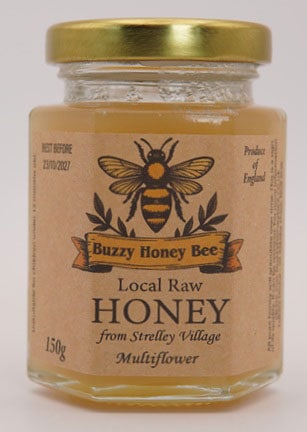
At Buzzy Honey Bee every jar is labelled with the name of the village (Woodborough, Bingham, Oakwood, Strelley, Whatton, Wysall and others) and a clear Best Before date. The set jars from those apiaries are explained here: Raw Local Set Honey from Nottinghamshire and Derbyshire. Simply scan the QR code on the jar, or match the date and location on our website, and you’ll see exactly when that honey was harvested, which flowers were blooming in that place at the time, and the full story behind the batch. That’s the level of transparency that turns “local” from a marketing word into a verifiable fact.
Local Honey vs Supermarket Honey – The Real Differences
| Feature | Genuine Local Honey | Typical Supermarket Honey |
|---|---|---|
| Origin | Named UK villages / counties | Often blended from multiple countries |
| Processing | Coarsely strained, unpasteurised | Fine-filtered, heat-treated |
| Flavour | Changes with the season and local forage | Uniform, mild, predictable |
| Texture | May crystallise naturally | Stays liquid for long periods |
| Traceability | Village + harvest date + QR code | Rarely more than “Produce of UK” or blend |
| Support | Directly helps local bees and beekeepers | Large-scale commercial supply chains |
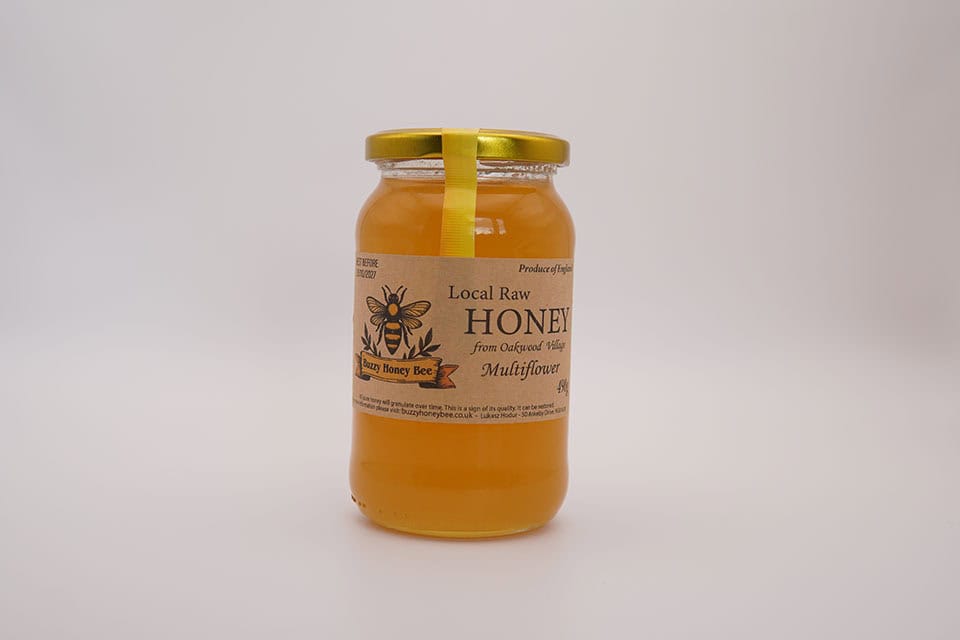
When you open a jar of our Raw Multiflower Honey from Oakwood Village, you’re tasting the exact mix of lime, clover, wildflowers and garden plants that the bees found that summer. No two seasons are identical – and that’s the beauty of it.
Why Choose Local Honey?
Taste that actually changes
Local honey reflects the weather, and plants of a particular place. Depending on which flowers are blooming and which plants the bees collect nectar from that season, the honey’s flavour, colour and even texture can change noticeably. One year it might be rich in lime blossom or clover; the next it could be dominated by willowherb or a diverse mix of wildflowers and hedgerow plants. That natural variation is something mass-produced honey deliberately removes.
Fresher and less processed
Because the honey travels only a short distance from hive to jar, it doesn’t need heavy filtration or pasteurisation to keep it stable. The natural enzymes, pollen grains and delicate aromas stay intact.
Supports British bees and beekeepers
Every jar of true local honey helps keep hives in the landscape. Healthy local bee populations mean better pollination for gardens, orchards and wild plants.
Complete transparency
At Buzzy Honey Bee you can check the exact origin of your jar on our Where My Honey Comes From page. No mystery blends, no imported fillers.
Many customers also tell us they prefer local multifloral honey during the hay-fever season because it contains pollen from the surrounding plants.
How to Spot Real Local Honey
- Look for a specific place name (village, farm, or county) rather than just “British” or “UK”.
- Check the country-of-origin statement – it must say where the honey was harvested.
- Prefer jars that crystallise over time. Natural granulation is a good sign the honey hasn’t been over-processed.
- Ask about the beekeeper. Can they tell you which flowers were flowering when the honey was collected?
- Scan any QR code or batch number if one is provided.
If the jar simply says “a blend of EU and non-EU honeys”, it is not local honey.
Our Local Honey from Nottinghamshire & Derbyshire Villages
We keep our own bees in quiet countryside villages across Nottinghamshire and Derbyshire. Every batch is harvested, coarsely strained and bottled by us – nothing added, nothing taken away beyond the larger bits of wax.
Popular choices include:
- Raw Multiflower Honey from Oakwood Village – light, floral, perfect on toast or in tea
- Raw Multiflower Set Honey from Whatton Village – naturally set, rich and spreadable
- Local Creamed Honey with Bee Pollen – smooth texture with a gentle pollen boost
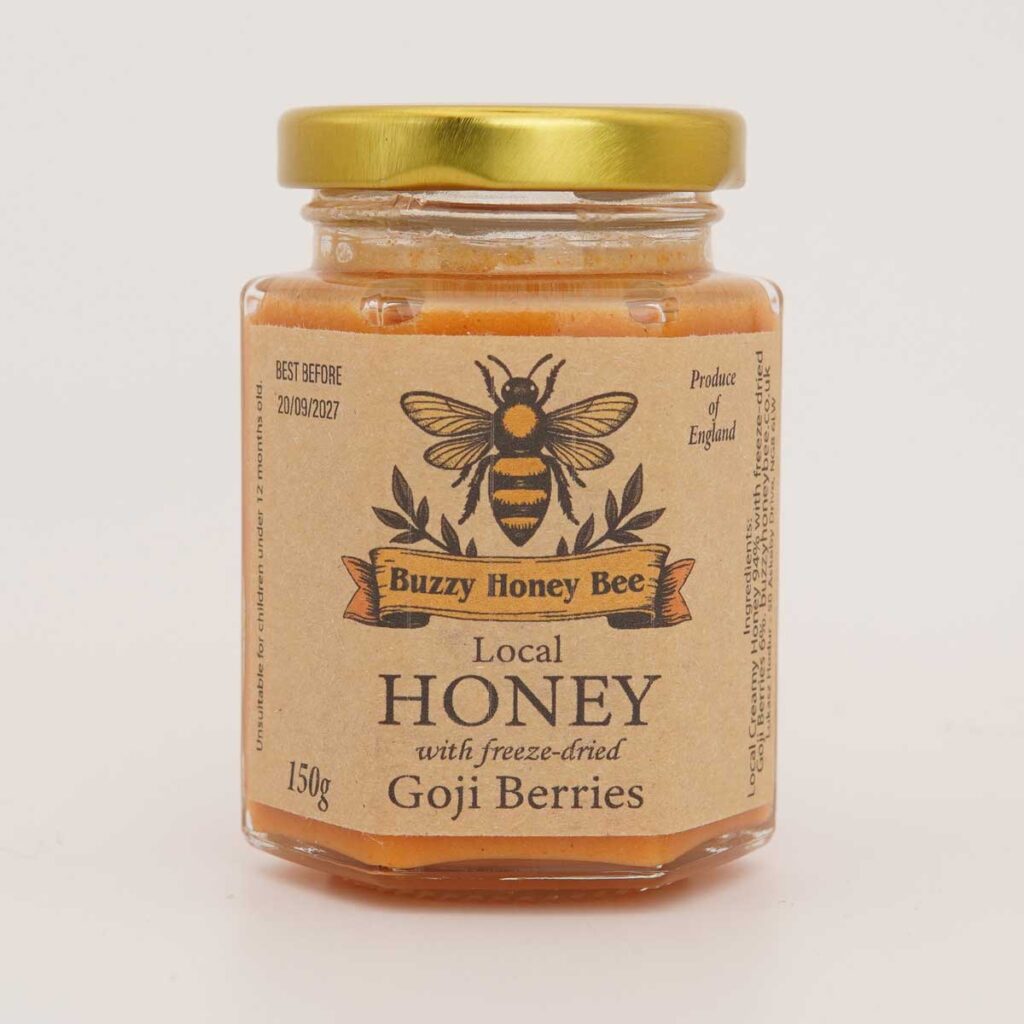
- Fruit-infused local honeys – blueberry, raspberry, passion fruit and more, made with our own creamed base. What that jar actually is: fruit-infused honey.
You can explore the full range in our Local Honey category.
How to Use Local Honey Every Day
- Stir a spoonful into porridge or yoghurt (add it after cooking, so the heat doesn’t damage the enzymes).
- Sweeten herbal tea once it has cooled a little.
- Spread on warm sourdough or crumpets.
- Use in salad dressings or marinades for a touch of local sweetness.
- Simply take a teaspoon straight from the jar when you fancy something pure.
Because the flavour changes with the season, many of our regular customers keep two or three different village jars on the go so they can match the honey to the dish.
Frequently Asked Questions about Local Honey
Is local honey the same as raw honey?
Not always. Local refers to geography; raw refers to processing. The best jars are both – local and raw. All our Buzzy Honey Bee honey is unpasteurised and only coarsely strained.
Does local honey help with hay fever?
Many people report that regular small amounts of local multifloral honey seem to help them through the pollen season. The scientific evidence remains limited and mixed, so we treat it as a pleasant traditional practice rather than a medical treatment.
Why does my local honey go solid?
That’s normal. Pure, unheated honey naturally crystallises. You can gently warm the jar in warm water (never boiling) to return it to a runny state.
How far do the bees travel?
Honey bees typically forage within 2–3 miles of the hive, occasionally further when forage is scarce. That’s why a village name on the jar is meaningful – the nectar really did come from that landscape.
Can I buy truly local honey online?
Yes. We post nationwide from our Nottinghamshire base, and every jar still carries its exact village origin and harvest details.
Is more expensive local honey worth it?
You’re paying for smaller-scale production, full traceability and a flavour that actually reflects the landscape. I’ve lost count of the people I’ve met at local shows and car boot sales who told me they “don’t really like honey”. After a short conversation it usually turned out they’d only ever tried supermarket jars. Once they tasted proper local honey from Buzzy Honey Bee, most of them were genuinely surprised by the difference – and left with several jars, saying they finally understood what real local honey should taste like.
Ready to Taste Real Local Honey?
The next time you reach for a jar, choose one that can tell you exactly where it came from.
Browse our full range of local raw and creamed honeys or start with a single village jar and see the difference for yourself. Every purchase helps keep bees flying over the fields and hedgerows of Nottinghamshire and Derbyshire.
If you’d like to know the precise flowers behind your jar, visit Where My Honey Comes From – the QR code on the lid will take you straight there.
Pure, local, and honestly produced. That’s what we mean by local honey.
Enjoyed this article? If you’d like to support more honest writing about bees and local honey, you can buy me a coffee here:
Buy Me a Coffee – Buzzy Honey Bee
Your support also helps me continue working with the bees and offering free bee swarm collection.
Of course, the best way to support this small apiary is still by choosing one of the products below.