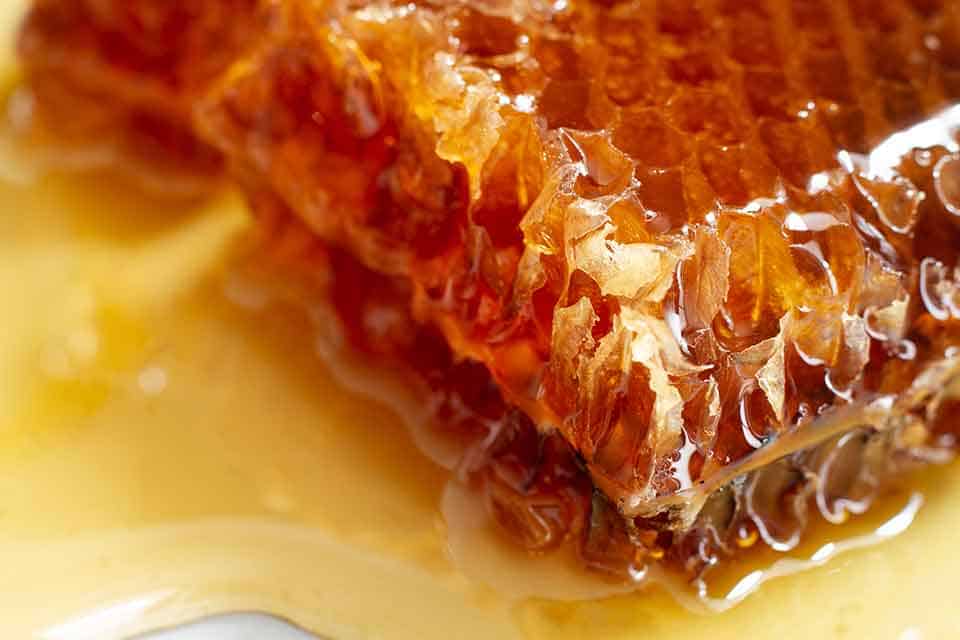
Have you ever wondered what honey looks like the moment it leaves the honeycomb – before anyone strains, filters or bottles it? That’s crude honey.
Crude honey is the most natural, unprocessed state of honey you can get. It’s the sticky, golden substance bees have carefully stored in the comb, extracted by the beekeeper and left almost exactly as the colony produced it. Bits of beeswax, pollen grains, traces of propolis and the full suite of natural enzymes are still present. Nothing has been heated, finely filtered or “cleaned up” for supermarket shelves.
Understanding crude honey helps you see why so many of us at Buzzy Honey Bee are passionate about keeping our local Nottinghamshire and Derbyshire honey as close to this state as possible. In this guide you’ll discover exactly what crude honey is, how it differs from the jars you usually buy, the benefits it retains, and how to choose genuine British versions that still carry the character of the countryside.
What Exactly Is Crude Honey?
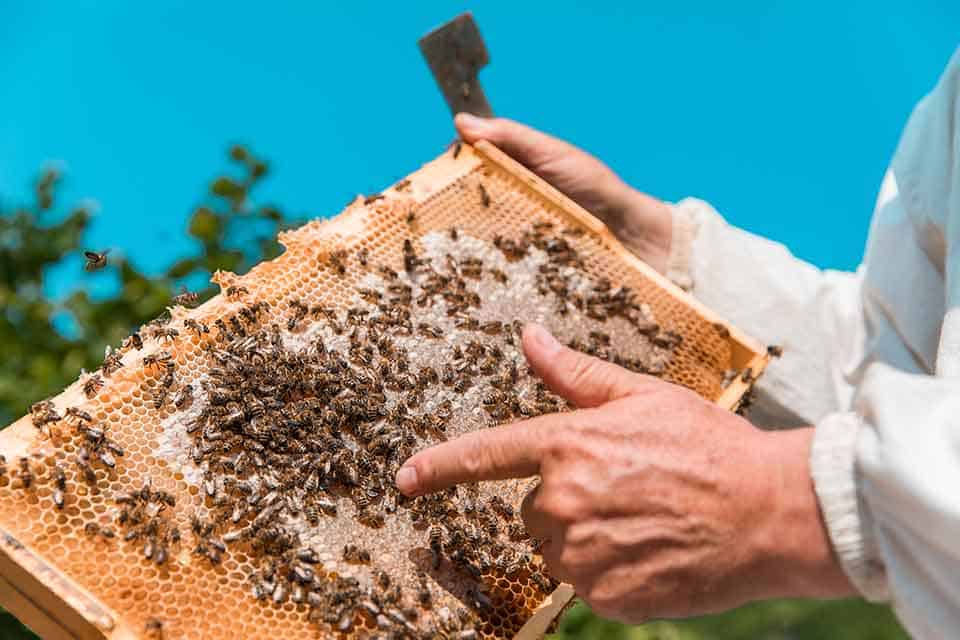
In beekeeping terms, crude honey is the honey taken straight from the cells of the honeycomb after extraction. It has not yet been strained beyond the most basic removal of large debris, nor heated, nor subjected to fine filtration.
Think of it as honey “as it exists in the beehive.” Bees have already reduced the water content, added enzymes and sealed the cells with wax. When the frames are spun or crushed, the liquid that runs out is crude honey. It often looks cloudy or opaque, may contain tiny wax particles, and can hold visible pollen and the occasional fragment of comb.
This is the starting point for every other form of honey. From here, a careful beekeeper may decide only light straining (to produce what is commonly sold as raw honey) or go further with heat and micro-filtration (creating the clear, long-shelf-life honey found in many shops).
How Is Crude Honey Produced?
The process begins in the apiary. Once frames are heavy with capped honey, they are removed from the hive. The wax cappings are sliced off, and the frames are placed in an extractor (or, in traditional methods, the comb is crushed). Centrifugal force or gentle pressure releases the honey.
At this stage the liquid is still warm from the hive and full of natural particles. No pasteurisation has occurred, and no fine filters have been used. What you have is crude honey – rich in the very compounds many people seek when they look for “unprocessed” or “raw” honey.
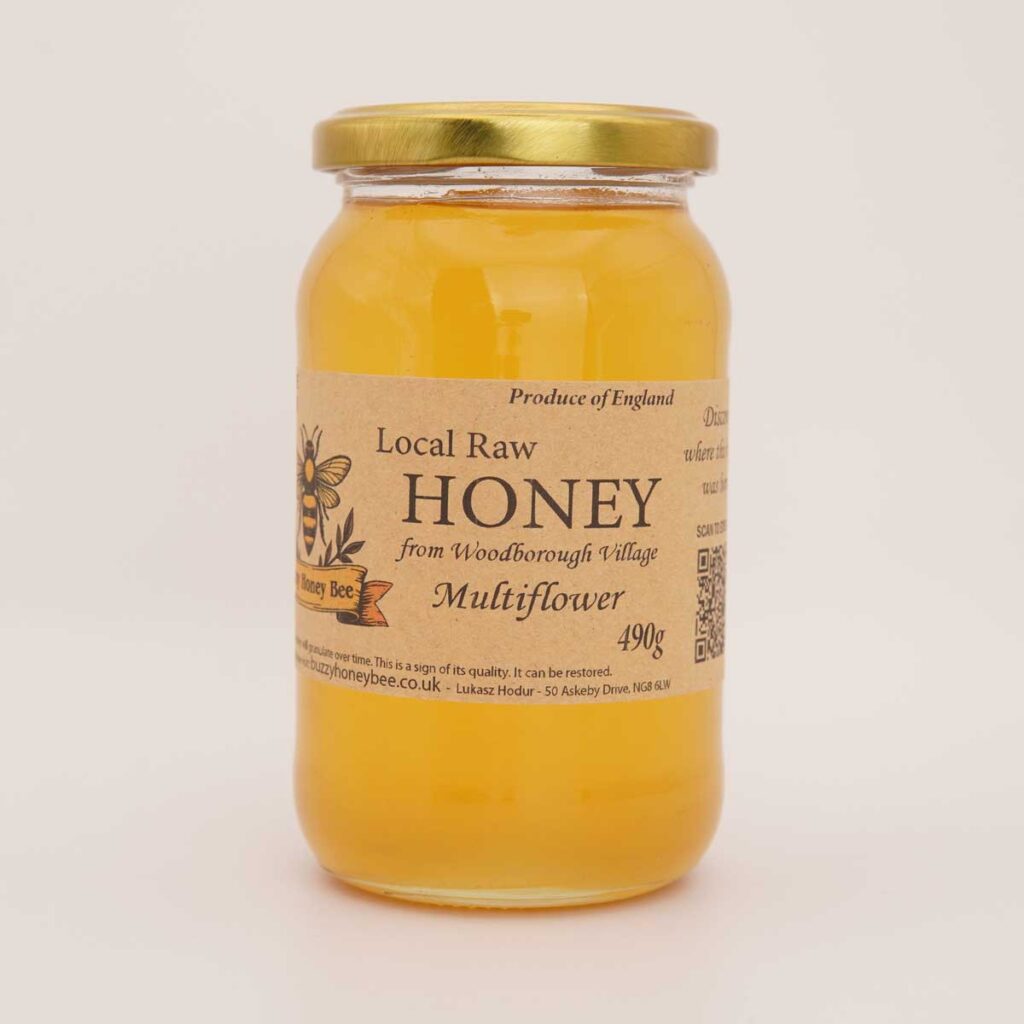
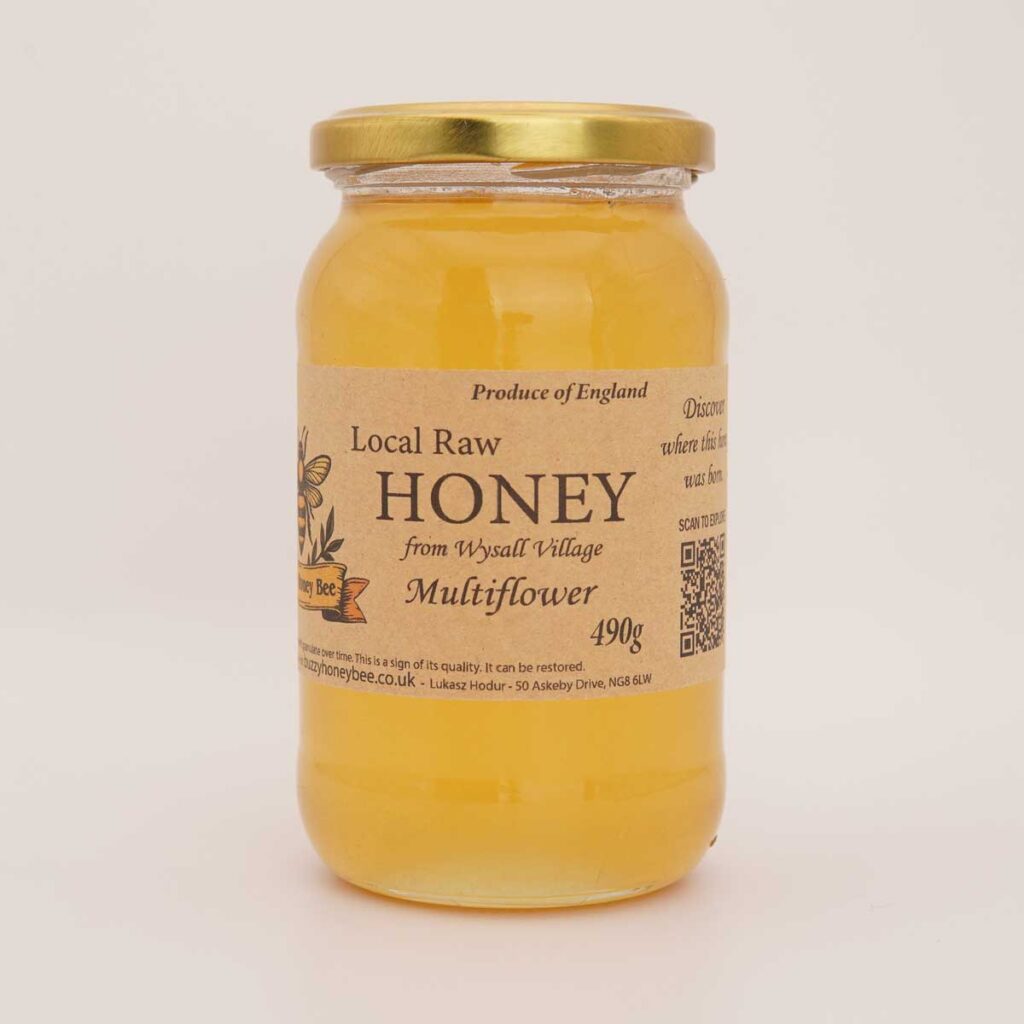
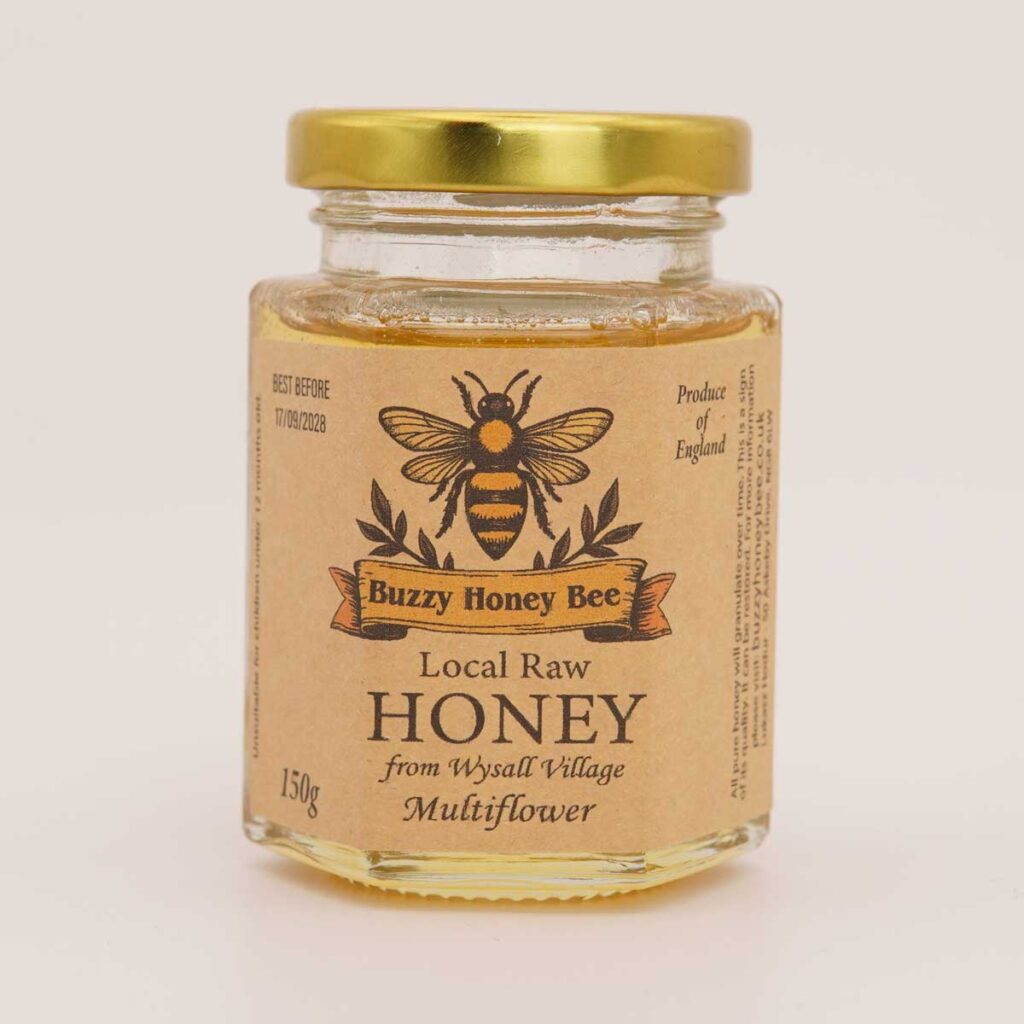
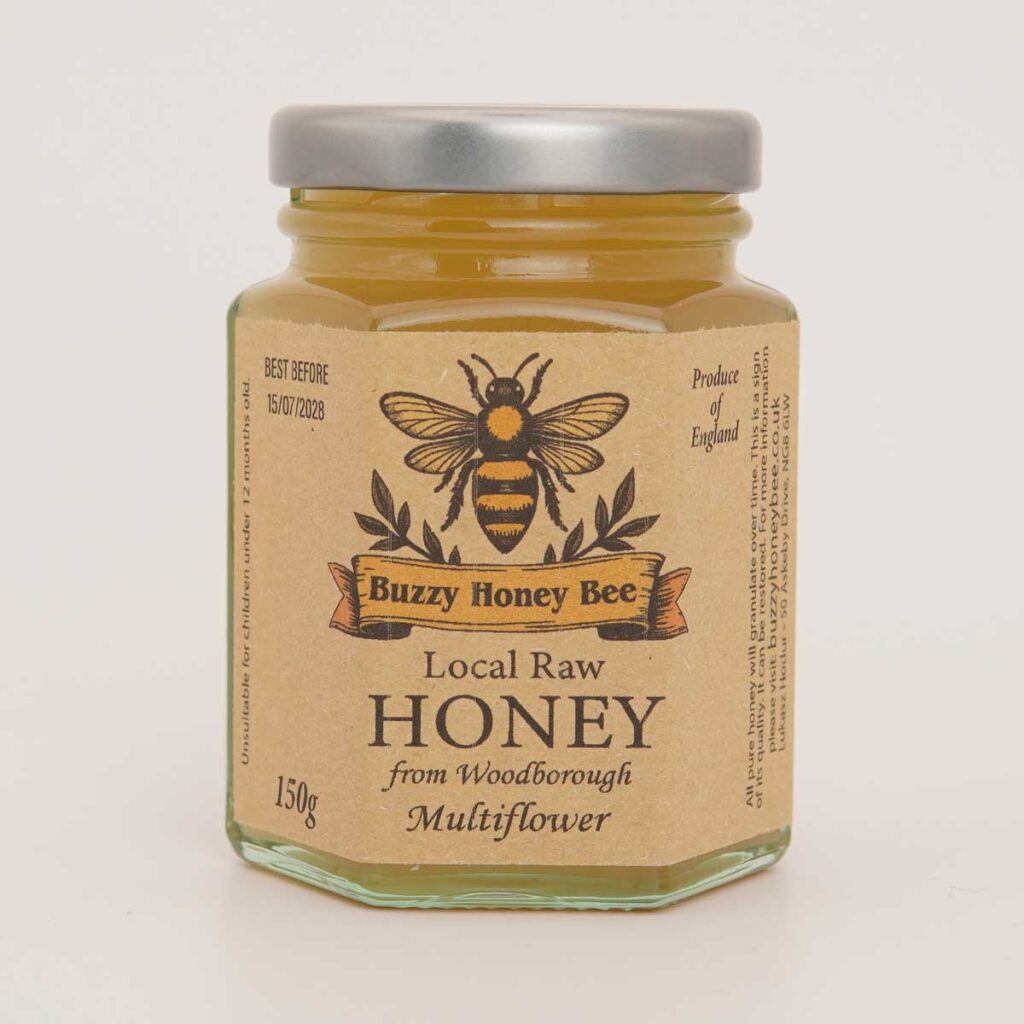
Responsible producers then decide how much further to go. At Buzzy Honey Bee we stop at coarse straining. This removes larger pieces of wax and bee debris while leaving the pollen, enzymes and full flavour intact. The result is the raw, unfiltered, unpasteurised honey you see in our jars – still recognisably close to the crude state.
Crude Honey vs Raw Honey vs Processed Honey
Here’s a clear comparison:
| Feature | Crude Honey | Raw Honey (as sold by careful beekeepers) | Processed / Supermarket Honey |
|---|---|---|---|
| Heating | None | None or very minimal | Often pasteurised |
| Filtration | None or very coarse | Coarse straining only | Fine filtration |
| Pollen & enzymes | Fully present | Largely retained | Mostly removed |
| Appearance | Cloudy, may contain particles | Cloudy to translucent, natural | Clear, bright |
| Crystallisation | Happens naturally | Happens naturally | Delayed or prevented |
| Flavour | Full, complex, floral | Full, complex, floral | Milder, more uniform |
Crude honey sits at the purest end of the spectrum. The raw honey we bottle is simply that same honey after sensible, light straining so it’s pleasant and safe to use every day.
Why Crude Honey (and True Raw Honey) Matters
Because crude honey has never been heated above hive temperature, it keeps the natural enzymes bees add during ripening – particularly invertase and glucose oxidase. These contribute to honey’s gentle antibacterial activity and its ability to support the body’s own processes.
It also retains bee pollen and small amounts of propolis. Local pollen is one reason many people in the UK prefer honey from their own region. The antioxidants and trace minerals stay intact too. Once honey is heavily heated or finely filtered, many of these delicate components are reduced or lost.
That is why we never heat our honey and why we only coarsely strain it. Our Raw Multiflower Honey from Oakwood Village and the other village-specific jars are as close as practical to the crude form while still being clean and enjoyable on toast or in tea.
The Taste, Texture, and Appearance of Crude Honey
Crude honey often looks less “perfect” than shop honey. It can be cloudy, slightly grainy or contain tiny flecks of wax. The colour varies with the flowers the bees visited – pale gold from spring blossom, deeper amber from summer multiflower forage.
The flavour is deeper and more complex. You taste the landscape: the lime trees, the willowherb, the mixed wildflowers of Nottinghamshire and Derbyshire villages. Local set jars from those villages are here: Raw Local Set Honey from Nottinghamshire and Derbyshire. Once crystallised (a completely natural process), it becomes thick and spreadable – exactly as nature intended. That texture is set honey. See Why Does Honey Crystallise? and Common Myths About Set Honey Debunked.
Is Crude Honey Safe to Eat?
Yes, for most people. Like all honey, it should never be given to infants under 12 months because of the risk of botulism spores that can occasionally be present in any raw product. For everyone else, crude or properly handled raw honey is a traditional food that has been eaten for thousands of years.
The key is trust in the beekeeper. You want honey that has been harvested hygienically, stored correctly and never contaminated. That’s exactly why, at Buzzy Honey Bee, we make complete transparency a non-negotiable part of every jar. Each batch is clearly labelled with the specific Nottinghamshire or Derbyshire village it comes from, and every single jar carries its own unique QR code. Simply scan it and you’ll see the exact flowers the bees foraged on that season – real, verifiable traceability straight from our own apiaries to your kitchen.
How to Use Crude Honey and True Raw Honey
Because it has never been heated, treat it gently:
- Stir a spoonful into warm (not boiling) drinks.
- Spread on bread or porridge.
- Use in dressings and marinades after cooking is finished.
- Enjoy it by the spoonful when you want the full natural character.
If your honey crystallises (a completely natural process and a sign of purity), you can gently return it to liquid form by standing the sealed jar in warm water below 40 °C – never microwave it. For the complete step-by-step method that protects the enzymes and flavour, see our detailed guide: How to Turn Crystallised Honey Back Into Liquid.
Choosing Quality Crude or Raw Honey in the UK
Look for:
- Clear origin (village or county, not just “Product of UK” or blended).
- “Unpasteurised”, “unfiltered” or “raw” on the label.
- A beekeeper who can tell you about the forage.
- Natural crystallisation over time (a good sign).
Avoid jars that stay permanently liquid and crystal-clear for years – that usually indicates heavy processing.
Our range of local raw honey is produced exactly this way: harvested from our own apiaries, coarsely strained, never heated, and packed in small batches. You can taste the difference between Oakwood, Strelley, Whatton and Wysall villages.
For more on spotting genuine honey, see our guide: How to Tell If Honey Is Real in the UK.
Practical Tips from the Apiary
- Store jars in a cool, dry cupboard away from direct sunlight.
- Once opened, keep the lid tightly closed.
- If you want the pollen benefits associated with local honey, choose honey produced within a reasonable distance of where you live.
You can also explore our Creamed Honey with Bee Pollen if you prefer a smoother texture while still retaining the natural goodness.
Common Myths About Crude and Raw Honey
Myth: Cloudy honey has gone off.
Fact: Cloudiness usually means pollen and fine particles are still present – a good sign.
Myth: Real honey never crystallises.
Fact: Pure, unprocessed honey almost always crystallises eventually. It’s natural.
Myth: All “raw” honey is the same.
Fact: Some products labelled raw have still been heated or finely filtered. Ask the producer.
Frequently Asked Questions
What is the difference between crude honey and raw honey?
Crude honey is the completely unprocessed extract. Raw honey (as sold by careful beekeepers) is usually the same product after light straining to remove large debris while keeping enzymes and pollen.
Is crude honey the same as unfiltered honey?
Very similar. Unfiltered generally means no fine filtration has taken place. Crude is the stage before any intentional cleaning.
Can I buy true crude honey in the UK?
Most producers strain lightly for safety and customer preference. The closest widely available form is genuine local raw, unpasteurised, coarsely strained honey such as ours.
Does crude honey contain more nutrients?
It retains the full natural complement of enzymes, pollen and antioxidants that processing can reduce.
Why does some honey stay liquid for years?
Heavy heating and fine filtration remove the particles that trigger natural crystallisation.
Is local crude or raw honey better for hay fever?
Many people find local pollen-containing honey helpful as part of a broader approach. See our article Honey for Hay Fever for a balanced look.
How should I store it?
Cool, dark and dry. It will keep for years if the moisture content is correct.
Can I cook with crude or raw honey?
Yes, but add it at the end of cooking to preserve the heat-sensitive compounds.
Conclusion – Bring the Hive Closer to Your Table
Crude honey is the purest expression of what bees create. When you choose carefully handled local raw honey, you get as close as possible to that original state – enzymes intact, flavour true to the landscape, and the quiet satisfaction of supporting British bees and beekeepers.
Explore our village-specific raw honeys and taste the difference for yourself. Every jar carries the story of the flowers and the care that went into it.
Ready to try real, unprocessed British honey? Visit the shop today or browse more guides in our Bee Knowledge Hub.
Enjoyed this article? If you’d like to support more honest writing about bees and local honey, you can buy me a coffee here:
Buy Me a Coffee – Buzzy Honey Bee
Your support also helps me continue working with the bees and offering free bee swarm collection.
Of course, the best way to support this small apiary is still by choosing one of the products below.