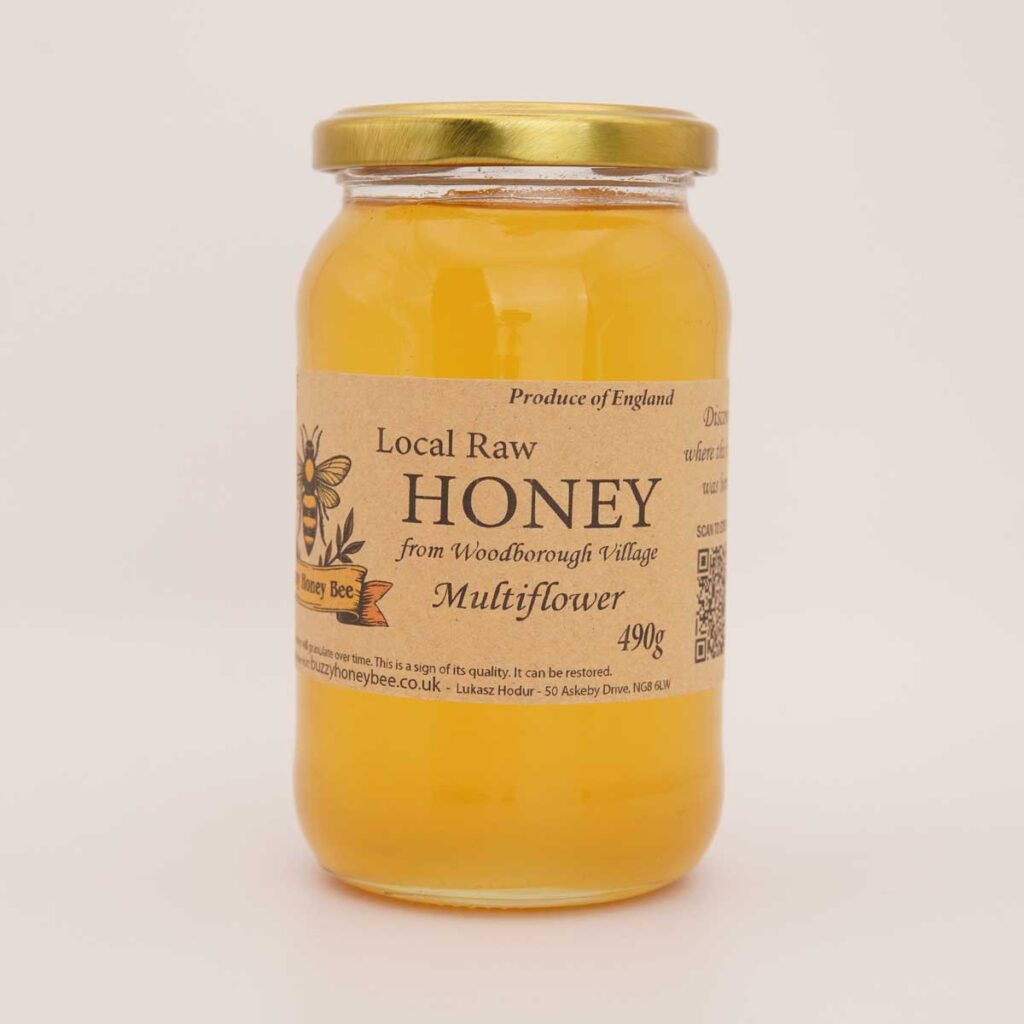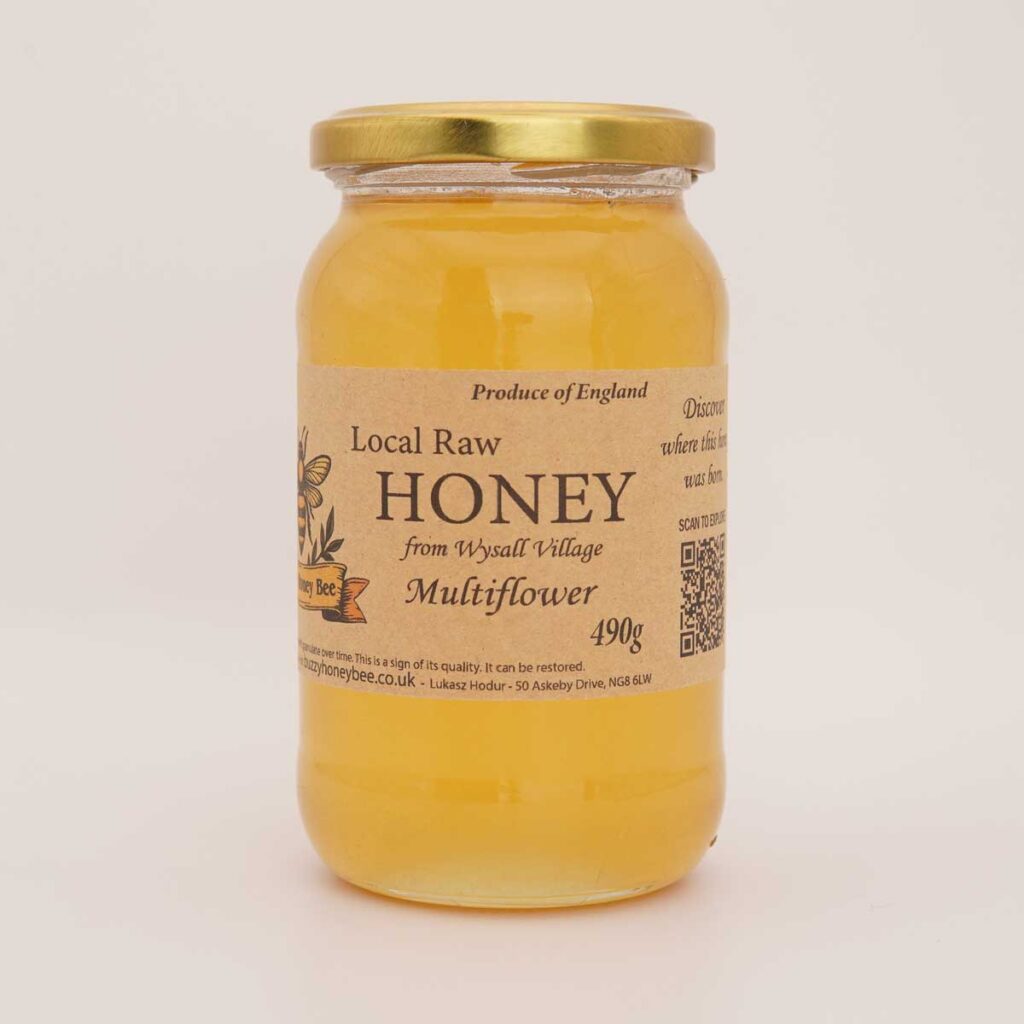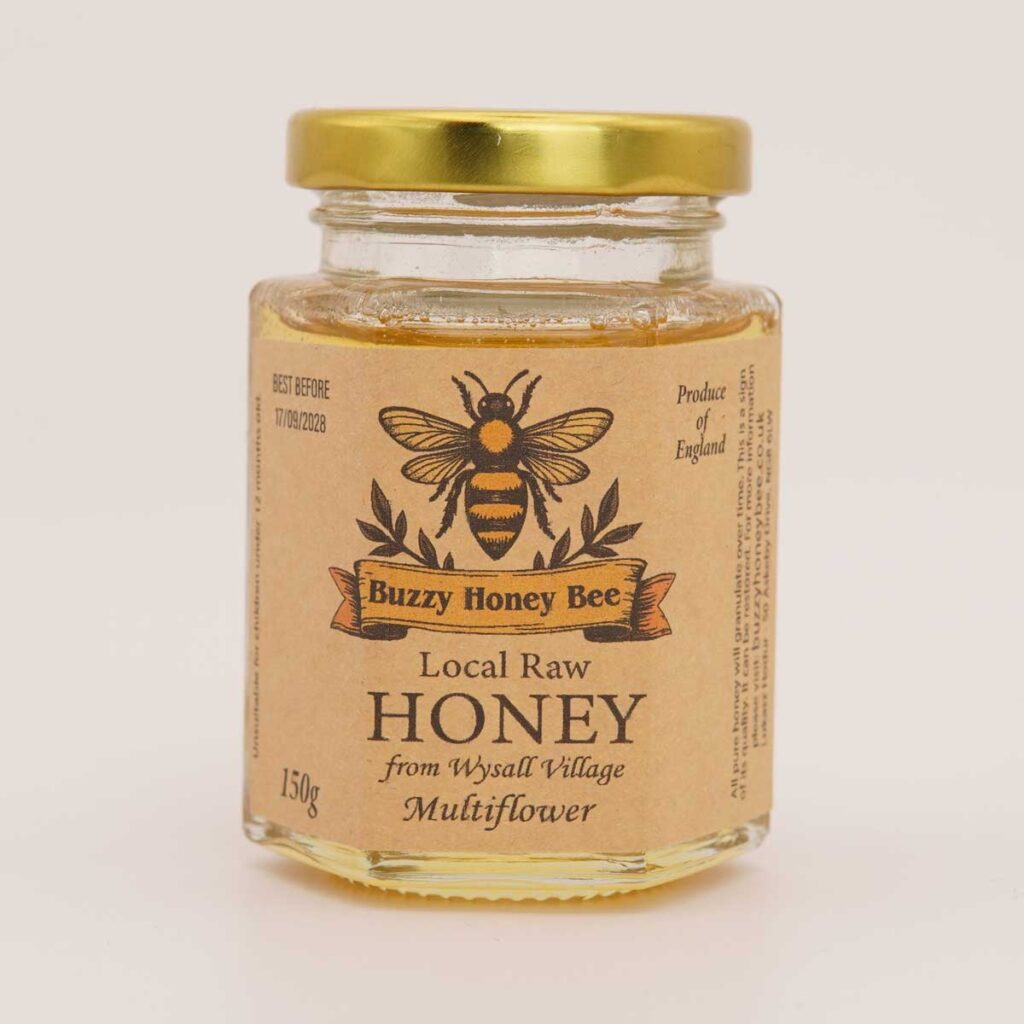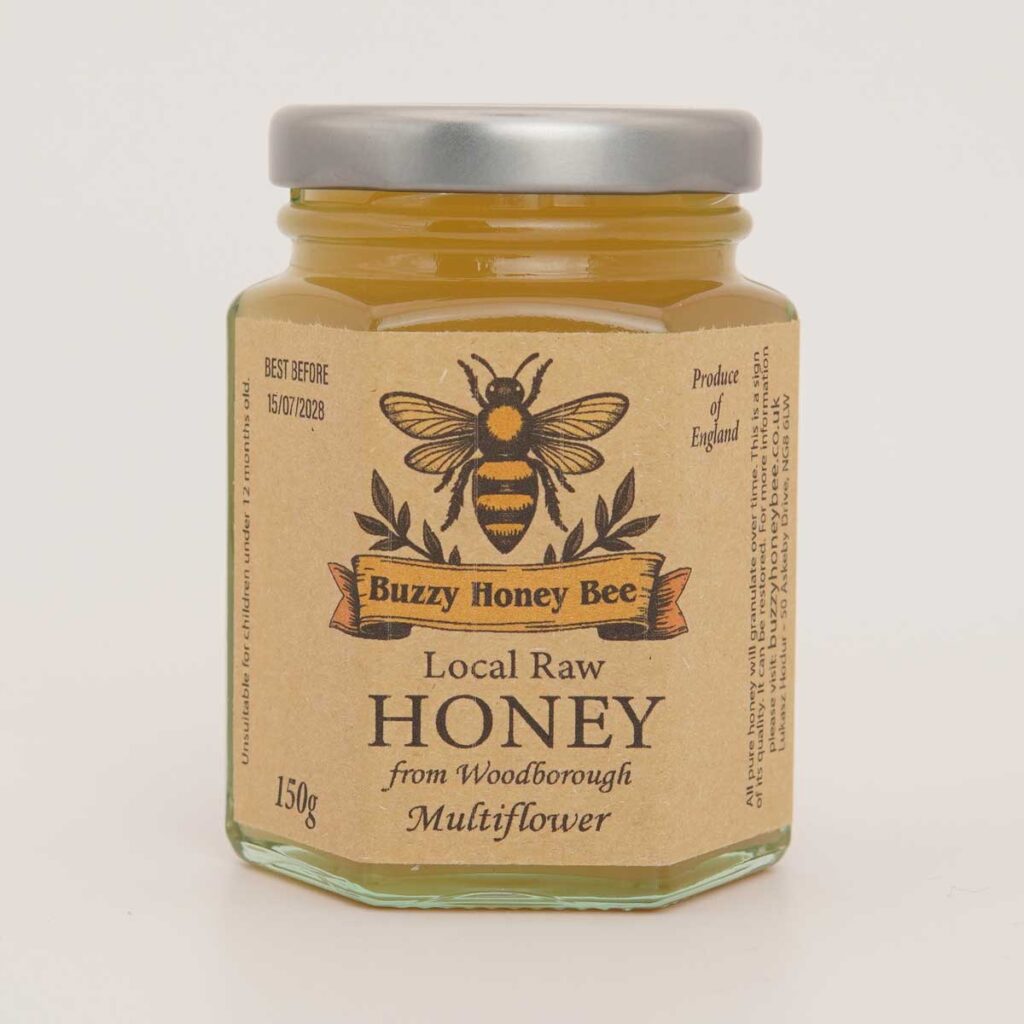
When you scan the QR code on your jar or enter the Best Before date, you land here. This is the full, transparent story of your exact batch of raw honey: single-origin, unblended, and straight from the field behind Riseholme Country Store in Wysall Village, Nottinghamshire.
Harvest Details
- Location: Wysall Village, Nottinghamshire – the field behind Riseholme Country Store
- Type: Premium Raw Multifloral Honey
- Body: Light to medium, with a quicker set than the clover-field jar
- Main forage: Crimson clover and lime, small-flowered sunflower, with a trace of rapeseed.
What the Bees Foraged On
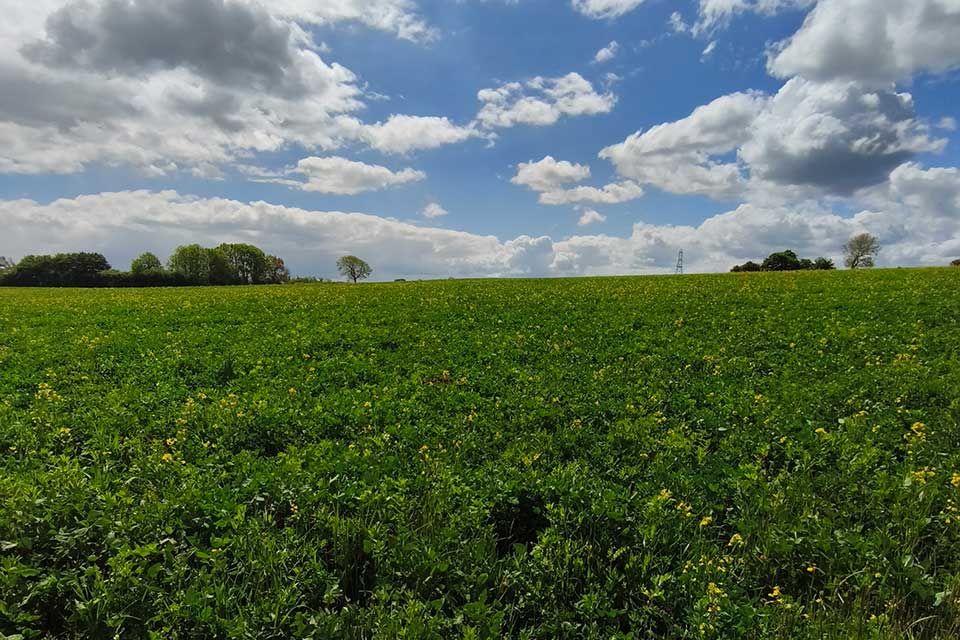
The hives worked a field of green crop sown behind the shop in Wysall. The photographs shown here are of the crop the bees were foraging on. Unfortunately, I no longer have the photographs I took of the hives themselves. I had several photos of the apiary at the time, but they were lost from my phone. I’m sorry I can’t share them with you as part of this story. These three photographs are all I have left, but I still wanted to include them so you can see the field and the surroundings where this honey was produced.
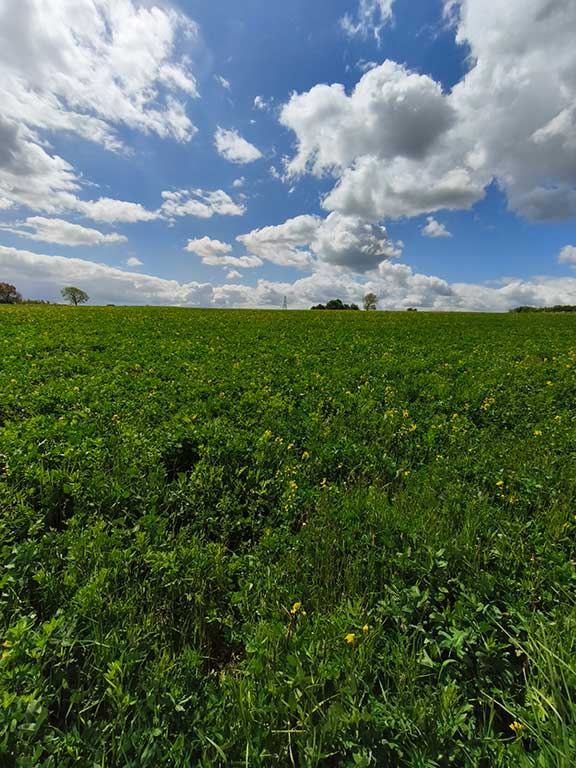
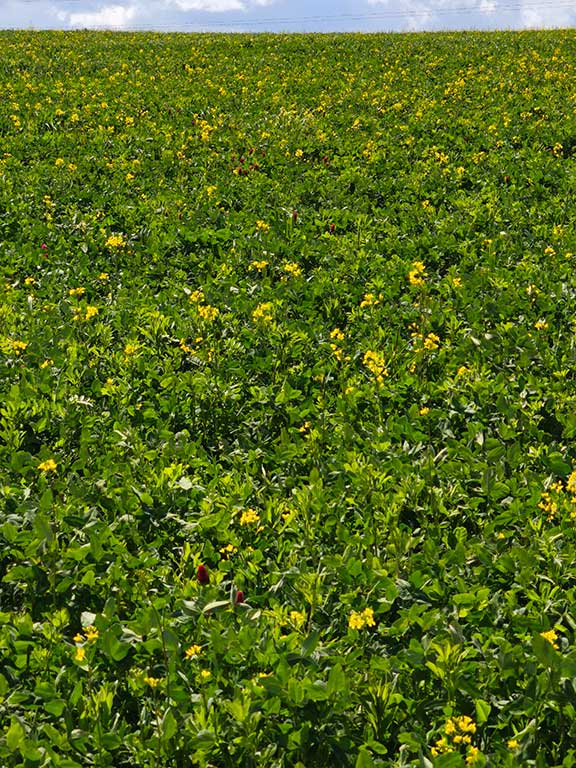
- Crimson clover (Trifolium incarnatum) – dark red, elongated flower heads in the green crop on this field. A nectar source, and the plant the photographs show.
- Lime / linden trees – in flower nearby, not on the field itself. A nectar flow, and part of the character of this jar.
- Rapeseed (Brassica napus) – yellow flowers from an earlier sowing, coming through the crop. Not a field of rape. The farmer cut it soon after, so the bees had only a short spell on it. A trace in the jar, not the main flow. That trace is why this honey started to crystallise a little sooner than the clover-field jar.
- Small-flowered sunflower – on the field the other side of the shop, not in this crop. Smaller heads than a tall crop sunflower. Bees could work it from here. A part of the mix, not the whole jar.
- Wild plants, hedgerows and garden flowers – whatever else was open around the fields and on the nearby plots.
This mix made a multifloral honey: crimson clover from the field behind the shop, lime from the trees nearby, a trace of rapeseed, and the sunflower field on the other side, with the wild and garden flowers around them.
Tasting Notes
- Aroma: Light and green, with a fresher note from the lime.
- Flavour: Mild and sweet from the clover, a cleaner edge from the lime, and a faint rapeseed note. Not a rapeseed honey.
- Texture: Sets a little sooner than the Wysall clover-field jar. That is the rapeseed trace, and it is normal. The honey is still raw.
100% Raw & Natural — unpasteurised, coarsely strained only. All enzymes, pollen and natural goodness preserved.
Why Customers Love This Wysall Village Honey
- Full traceability to the field behind Riseholme Country Store, not a blend of the village.
- A different jar from the clover field.
- Small-batch, family-produced in the UK.
How to Enjoy This Wysall Harvest
- Thickly spread on fresh toast, crumpets or bread.
- Stir into warm (not boiling) tea, herbal infusions or porridge.
- Drizzle over Greek yogurt, granola, or mature cheese.
- Straight from the spoon for a taste of the field behind the shop.
Limited Edition – This harvest is available while stocks last.
Other harvests are on where my honey comes from.
Frequently Asked Questions
Is this the same as the other Wysall multiflower?
No. This jar is from the field behind Riseholme Country Store. The other is from the clover field. Same village, different ground, different flowers, different flavour.
Why did this one set sooner?
A short spell of rapeseed in the mix. Rapeseed sets quickly. Here it was only a trace, so the jar firms a little earlier. It is still raw honey.
Is this raw honey unpasteurised?
Yes. Our honey is never heated or pasteurised. It is only coarsely strained to preserve all enzymes, pollen and beneficial properties.
How should raw honey be stored?
Store in a cool, dark place at room temperature (ideally 18–21 °C) in its original jar with a tight lid. A fridge is fine, but the honey will crystallise faster. A cool cupboard keeps it easier to use. Avoid direct sunlight and heat sources. The method is here: how to store honey.
Why does raw honey crystallize?
Crystallisation is a natural process and a sign of true raw honey. It happens because glucose in the honey forms crystals over time. This jar can firm a little sooner because of the rapeseed trace. It is perfectly safe and easy to decrystallise gently in warm water. Why it happens: why honey crystallises. The method is here: how to decrystallise honey safely.
Enjoyed this article? If you’d like to support more honest writing about bees and local honey, you can buy me a coffee here:
Buy Me a Coffee – Buzzy Honey Bee
Your support also helps me continue working with the bees and offering free bee swarm collection.
Of course, the best way to support this small apiary is still by choosing one of the products below.