Honey is one of nature’s most remarkable foods: a complex, bioactive substance produced by bees from nectar and pollen. In the UK and worldwide, many people try to heat honey especially in the microwave, on the stove, or in boiling liquids, to decrystallise it or make it easier to pour. But scientific evidence and food chemistry tell us that heating honey, especially rapidly or to high temperatures, is damaging to its intrinsic quality and benefits.
Raw Honey’s Natural Composition Is Heat Sensitive
Raw honey contains:
- Enzymes such as glucose oxidase, diastase, invertase,
- Antioxidants phenolic acids, flavonoids,
- Antibacterial components e.g., hydrogen peroxide,
- Trace nutrients, aroma, and flavour compounds.
These are thermolabile, meaning they break down or deactivate when exposed to heat.
When honey is heated above relatively modest temperatures over 40°C, many of these beneficial enzymes and antioxidants begin to degrade. At higher temperatures, the changes accelerate, meaning honey loses much of what makes it nutritionally valuable and distinctive.
Microwaving Honey Destroys Its Beneficial Properties
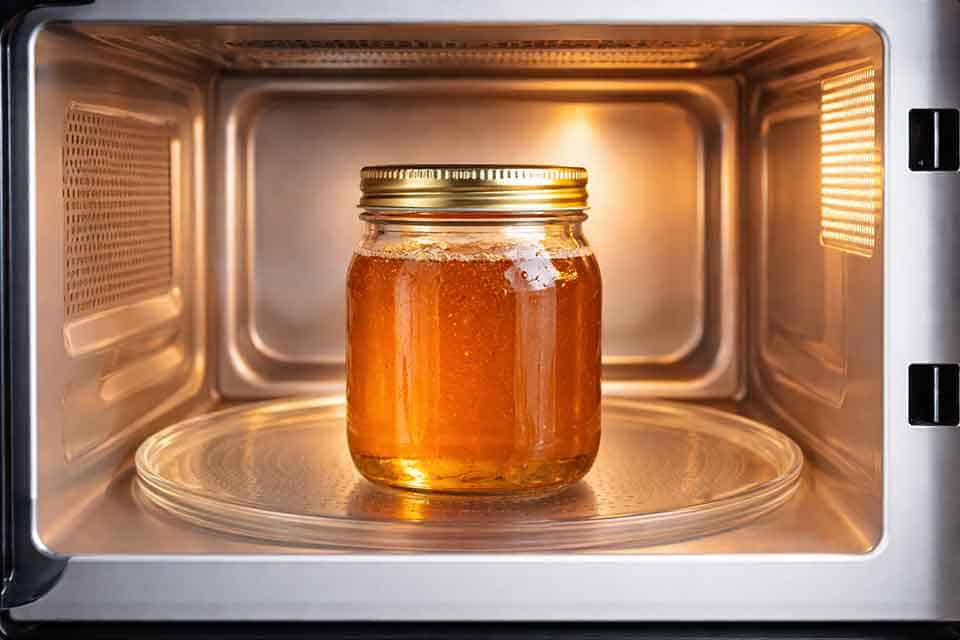
Microwaves heat unevenly. Honey’s dense, viscous nature means hotspots form, which can:
- inactivate enzymes that give raw honey antibacterial and antioxidant activity;
- degrade glucose oxidase and defensin-1 — key compounds in honey’s microbial suppression;
- reduce medicinal activity dramatically.
Research has shown that microwave treatment abolishes the antibacterial activity of honey, something that conventional gentle heating (approx 40 °C water baths) does not do.
Heat Promotes Chemical Changes (Including HMF Formation)
Heating sugars changes their chemistry. One well studied compound that forms when honey is heated is 5-hydroxymethylfurfural (HMF), a breakdown product of fructose and glucose. Higher levels of HMF are used as a quality marker for overheated or aged honey in international food standards.
Although small amounts of HMF are found in many foods including coffee, heat-induced increases in HMF in honey signal degradation, and too much can be undesirable.
Crystallisation Is Natural — and Melting It Harshly Is Unnecessary
Crystallisation, also called setting, is a natural phenomenon in pure honey, caused by glucose forming crystals as the solution becomes supersaturated with sugars. It’s a sign of quality, not spoilage. That thicker jar is set honey. We explain why it happens here: Why Does Honey Crystallise?
Rather than forcing honey liquid again with rapid, high heat methods like microwaving:
- use a warm water bath around ~40°C to gently restore flow without extreme heat,
- avoid direct boiling or microwave pulses,
- remove only the amount you need at one time.
If your honey has set, it does not need aggressive heating. We explain the safe and proper method of gentle decrystallisation in our detailed guide: How to Turn Crystallised Honey Back Into Liquid. For keeping the jar in good condition instead of melting the whole pot, see How to Store Set Honey Properly.
Heating Alters Flavour, Aroma and Texture
Heating honey changes more than just enzymes. The delicate floral aroma profile built from volatile compounds bees create begins to fade as temperatures rise. The flavour becomes more flat, and the subtle taste nuances of UK local honeys (e.g., wildflower, clover or meadow honeys) are lost quickly.
Food Safety vs Quality — Heating Isn’t Needed
Many people think they need to heat honey for safety but honey is naturally low moisture and acidic, which inhibits most bacterial growth. Outside of very specialised commercial pasteurisation done under controlled conditions, raw honey does not need heating to be safe for adult consumption.
Practical UK Tips for Honey Lovers
To preserve the maximum natural quality of your honey (raw, creamed, local UK honey, etc.):
- Add honey when beverages are warm, not scalding hot, ideally below ~40°C (kitchen thermometers or letting tea cool slightly help);
- Avoid microwaving entire jars or repeatedly heating honey;
- Use gentle warming only if needed (warm water bath);
- Embrace crystallisation — it’s a sign your honey is pure.
Preserve the True Value of Honey
In summary, while you can physically heat honey, doing so especially with a microwave, boiling water, or rapid high heat significantly reduces its natural benefits and alters its chemistry. Raw honey’s enzymes, antioxidants and unique bioactive properties are best preserved by avoiding unnecessary heat. For UK customers and honey enthusiasts seeking real quality and health support, gentle handling, warm but not hot use, and appreciation of natural crystallisation are key.
Enjoyed this article? If you’d like to support more honest writing about bees and local honey, you can buy me a coffee here:
Buy Me a Coffee – Buzzy Honey Bee
Your support also helps me continue working with the bees and offering free bee swarm collection.
Of course, the best way to support this small apiary is still by choosing one of the products below.