Give me a bare strip and eight weeks and I would sow this before most catalogue perennials. The bees find it. They stay on it. On a warm morning the blue-purple coils look dusted with movement.
That is phacelia for bees in a British garden: a fast annual, a green manure you actually let flower, and one of the most reliable nectar plants you can put in from a packet.
This is not a native wildflower and it is not a tidy edging plant. It is Phacelia tanacetifolia — lacy phacelia, sometimes sold as purple tansy. The job is simple. Cover ground. Open a mass of bloom. Feed honey bees and wild bees while the border is still thinking about it.
I keep hives on village forage in the East Midlands. Phacelia shows up in the mix, not as its own village label. At Oakwood it sits with buckwheat, clover and wild radish. At Woodborough it runs with lime. There is no separate phacelia honey on the shelf. The plant still earns the seed.
How to recognise phacelia
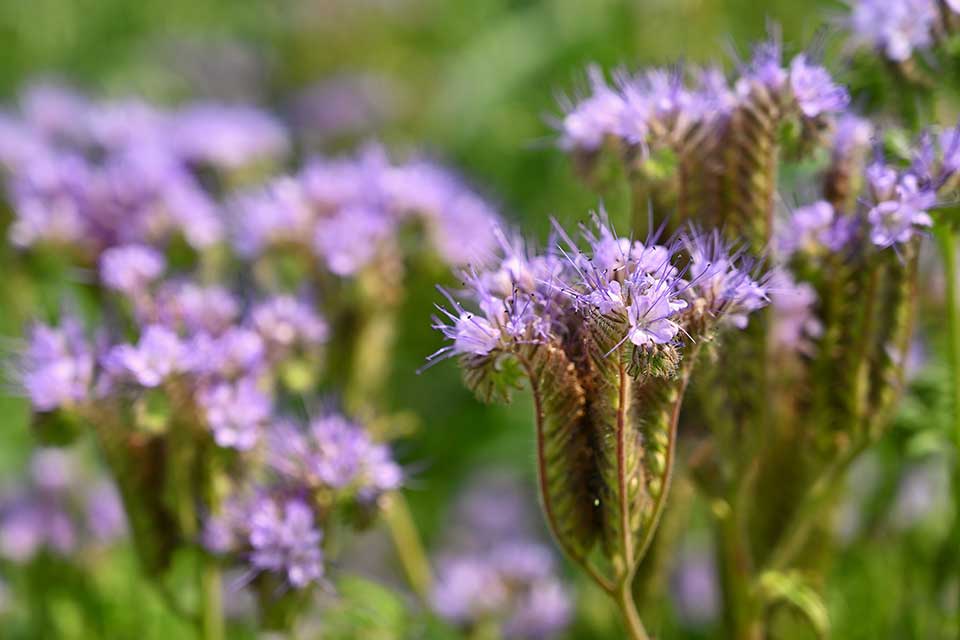
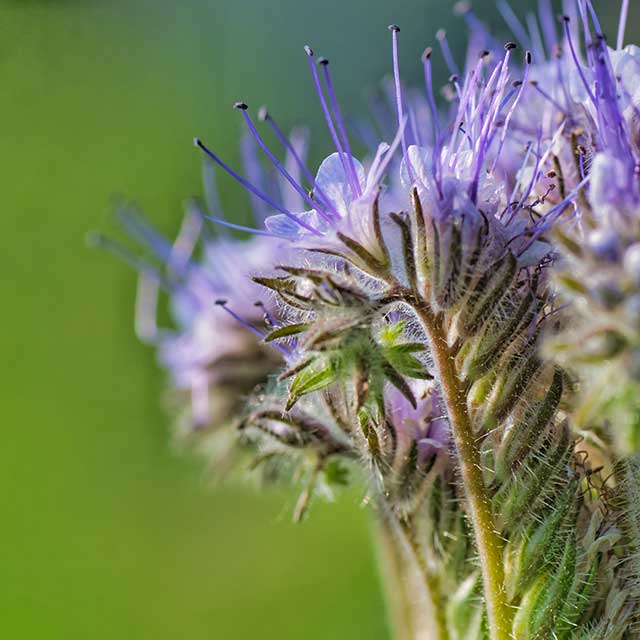
Look for the coil. New flowers are tucked in a fiddlehead at the tip. They unroll as they open, so the spike is always working — buds at one end, open blue-purple bells at the other.
The colour is lavender-blue more than true purple. Stamens stick out. From a pace away the plant looks misty. Up close it is a brush of stamens that bees can land on without a fight.
Leaves are finely cut, almost ferny. Soft to the touch. The plant branches if it has space and makes a low, busy mound rather than a single spike. Height is usually knee to thigh on decent soil. On poor ground it stays shorter and still flowers.
Do not confuse it with lavender. Lavender is woody, grey-leaved, and stays for years. Phacelia is an annual. It comes from seed, blooms, sets seed, and is gone. Do not confuse the ferny leaf with cosmos either. Cosmos has open daisy faces. Phacelia has those coiled racemes.
If the packet says Phacelia tanacetifolia, you have the right one. Other phacelias exist. This is the forage plant.
When phacelia flowers in the UK
Count weeks from sowing, not from a bank holiday.
In most of England you can sow from March or April once the soil has some warmth, through to July. Flowering often starts six to eight weeks later. An April sowing is in bloom by early summer. A June sowing covers the gap when the first flush of perennials has gone over.
It does not like a sitting-wet winter as a plant you keep. Treat it as a hardy annual. A late sowing may still flower into autumn on a mild year. The first hard frost finishes it.
Succession is the useful trick. Sow a strip in April. Sow another in June. You get two waves instead of one short burst. That is how you use phacelia for bees through the summer, not as a single weekend job.
It will not replace willow catkins in March. It will not replace flowering ivy in October. It fills the middle. The rest of the year still belongs on the flowers for bees hub.
| Sowing | Typical bloom in a UK garden | Notes |
|---|---|---|
| March–April | Late May–July | Main summer strip |
| May–June | July–September | Covers the midsummer dip |
| July | Late summer, if the frost holds off | Gamble on a mild autumn |
| Autumn | Unreliable as a standing plant | Fine as a green-manure sowing to dig |
Why bees work phacelia
Honey bees treat a block of phacelia like a trough.
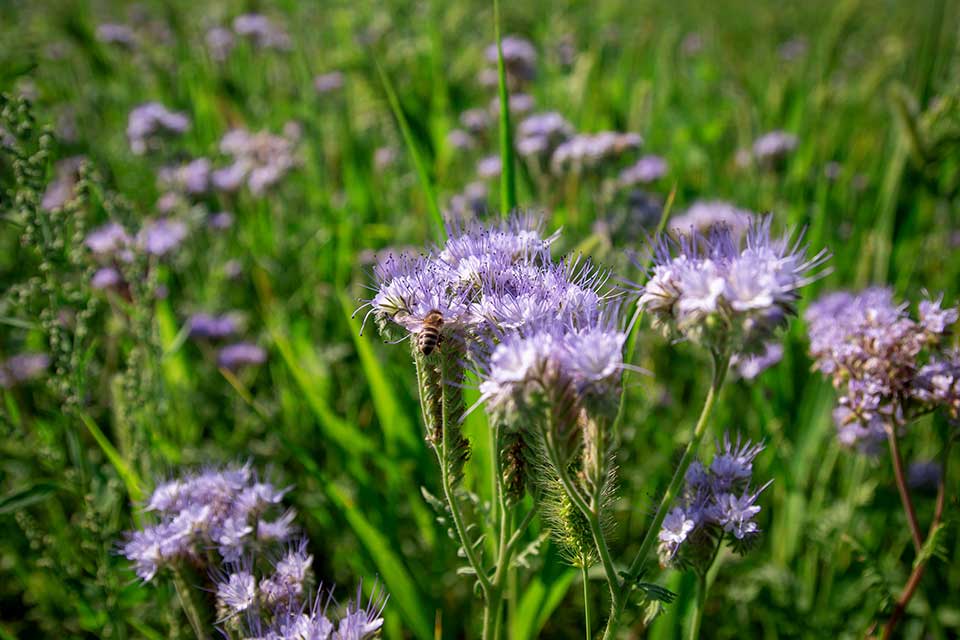
The flowers are easy to land on. Nectar is there on a warm day. Pollen comes too — you will see the baskets colour up when a strip is in full roll. Bumblebees use it. Hoverflies turn up. This page is still about bees.
Quantity is the point. One plant in a pot is a snack. A square metre from a packet is forage. Honey bees lock on and work it. That is the same rule as a bee friendly garden anywhere: plant in a block, not a dot.
It earns the “super bee” nickname in seed aisles because the traffic is obvious. You do not need a clipboard. Stand by the strip at noon.
Short-tongued bees can use it. Long-tongued bumblebees use it as well. You are not choosing a specialist flower. You are putting out a mass of open bloom at the height of the season.
Let it flower. That sounds obvious until someone grows it only as green manure and digs the lot in before the first coil opens. The soil gets a crop. The bees get nothing. If you sowed it for bees, leave the flowers on.
How to grow phacelia for bees
Seed. Sun. Bare soil. Water if it cakes.
Rake a strip. Sow thinly. Cover lightly. Keep the birds off for a week if they are greedy. Thinning is optional. A slightly tight row still blooms.
Full sun is best. Light shade will flower with less nectar. Do not bury it in a wet clay hollow. It will sulk.
You do not need feed. It is often used to improve soil. For bees, the soil can stay ordinary.
Cut a path if the strip is wide. Leave the rest. Deadheading is not required for a forage patch. If you want less self-sowing next year, cut after the main bloom and before the seed rattles. If you want it back, let some seed drop.
Pots work. A deep trough of phacelia on a sunny balcony will draw bees if you group it with other open flowers. One thin pot on a table will not. Water containers. Dry phacelia stops paying.
Do not spray it. There is no point sowing a bee plant and then running a systemic through the same soil.
Herbs on the path edge still help the same garden. That list is on the best herbs for bees. Phacelia is the fast annual in the gap between them.
What the honey tastes like — and what it is not
When the stand is heavy enough, the bees can make a distinct honey from it. On our ground that has not meant a village jar labelled “phacelia honey”.
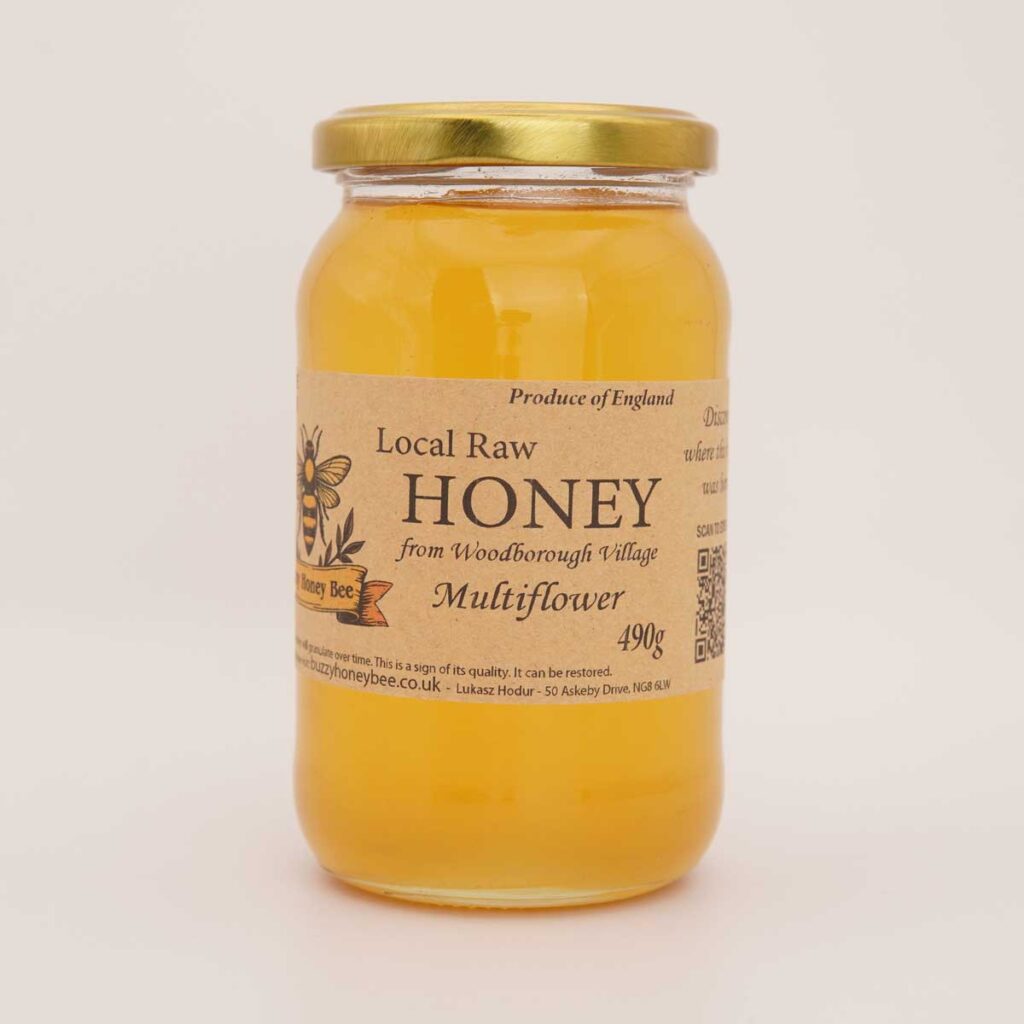
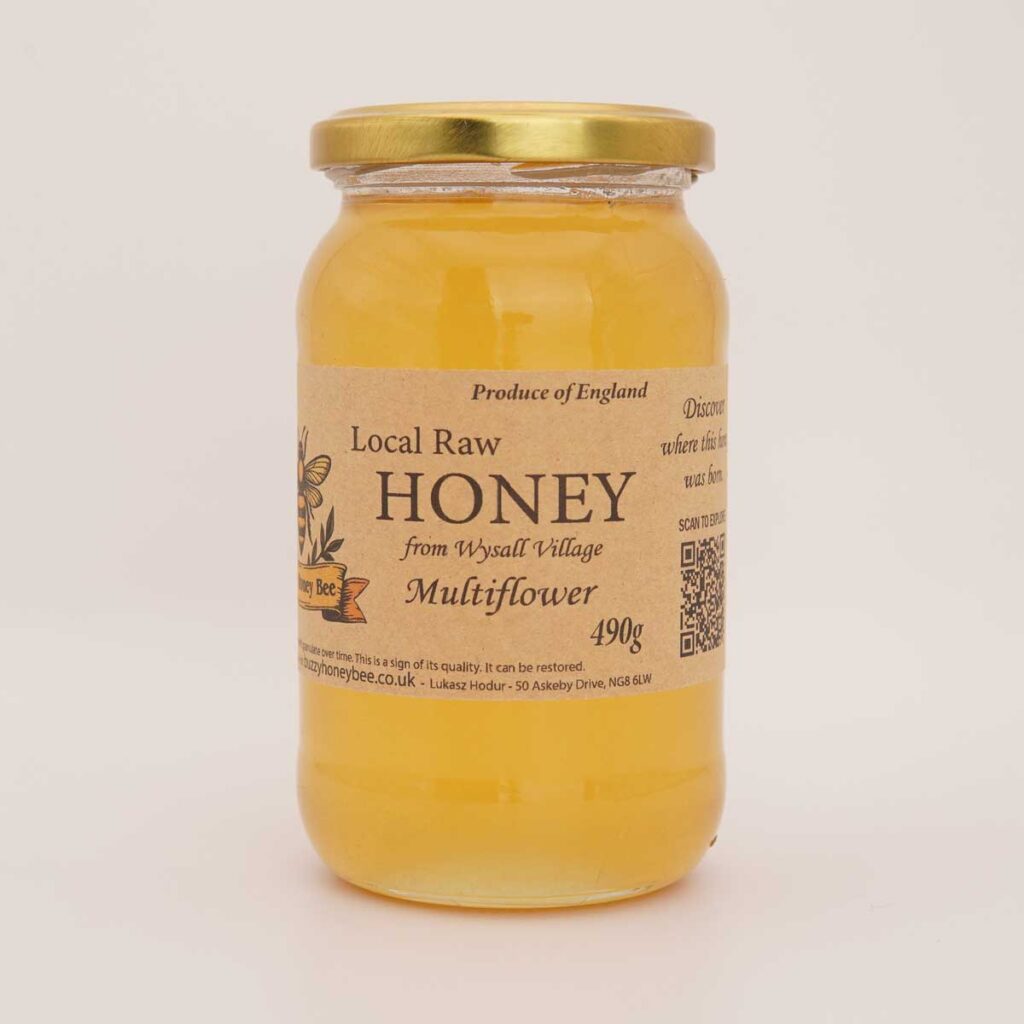
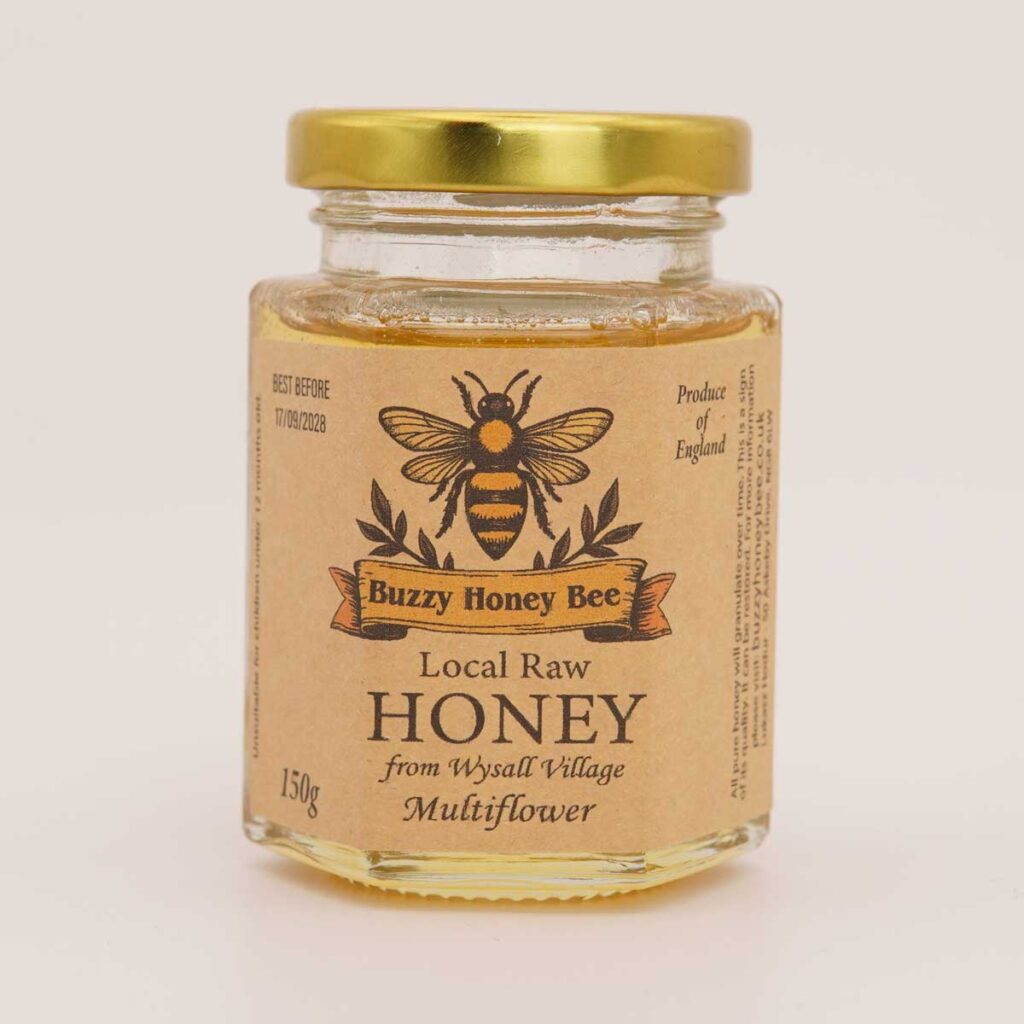
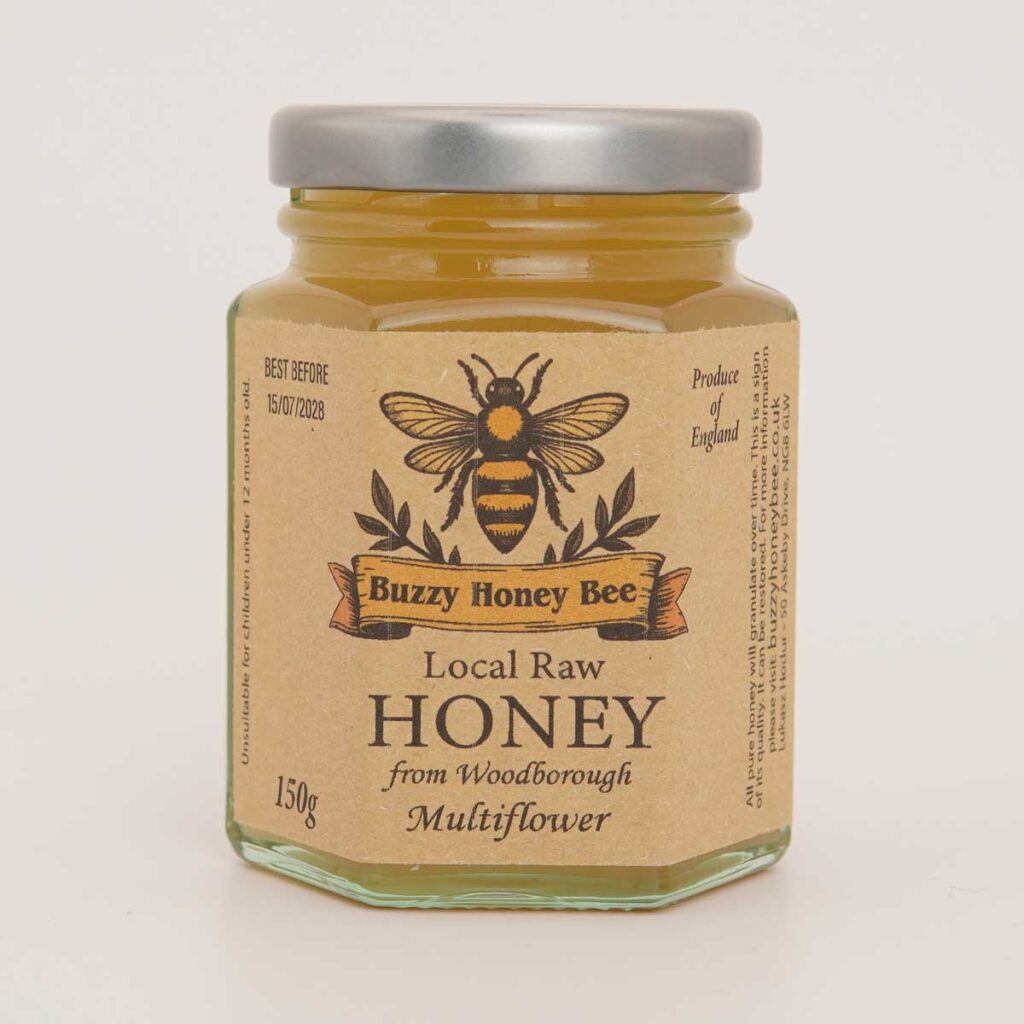
Oakwood multiflower is the honest place it shows: phacelia with buckwheat, clover and wild radish. That is raw multiflower honey from Oakwood Village. Woodborough multiflower is lime with phacelia — raw multiflower honey from Woodborough Village, and the larger 490g Woodborough jar when you want the same forage in a bigger pot.
A gift box has, at times, named a phacelia honey among the tasting set. That box is not on the shelf as I write this, and it is not a farm-gate SKU you can add to the trolley as its own village jar. Do not hunt a label we do not sell.
The taste, when phacelia is in the mix, is mild and smooth rather than dark and heavy. You are tasting a season, not a single laboratory flower. For the map behind those jars, use where my honey comes from and what local honey actually is. The rest of the year sits on the raw local honey shelf.
Common mistakes
Digging it in as green manure two days before it would have flowered, then saying phacelia does nothing for bees.
Sowing a pinch in a mixed pot and expecting hive-level traffic.
Buying a “super bee” packet and planting it in deep shade.
Spraying the strip because something else in the bed had greenfly.
Waiting for it to come back as a perennial. It will not. Sow again, or let seed fall.
Looking for a jar that says only “phacelia honey” from these apiaries. The mix is the honest label.
Treating it as a replacement for a wild stand of willowherb or a lime tree. Different weeks. Different jobs.
Frequently asked questions
Is phacelia good for bees?
Yes. A block in flower is one of the busiest annual strips you can grow in a UK garden. Honey bees and bumblebees both work it.
When do I sow phacelia in the UK?
From spring once the soil has warmed, through to July. Expect bloom roughly six to eight weeks later. Sow twice if you want two waves.
Is phacelia a wildflower?
Not a British native. It is a hardy annual grown as forage and as green manure. Bees do not mind the passport.
Can I grow phacelia in pots?
Yes, in a deep trough in sun, watered. Group it. One thin pot is easy to miss.
Will it take over the garden?
It can self-seed. It is not rosebay willowherb. Cut it after flowering if you want less next year.
Should I grow it only as green manure?
You can. Then dig it before bloom and accept that the bees get nothing. If the packet was for bees, let it flower.
Do you sell phacelia honey?
Not as its own village jar. It turns up in Oakwood and Woodborough multiflower when the strip is in the mix.
How long does phacelia flower?
A sowing gives you several weeks, longer if you succession-sow. Frost ends it.
Does phacelia help honey bees more than wild bees?
Both use it. Honey bees show first on a large strip because they recruit. Wild bees still work the edge.
What should I plant with it?
Leave a block of phacelia as a block. Put herbs and perennials beside it, not sprinkled through it. The hub for flowers for bees has the rest of the year.
Sow the strip
Phacelia for bees is a packet and a patch of sun, not a five-year border plan. Sow it. Let the coils open. Do not dig it in the day before it pays.
The rest of the planting sits on the flowers for bees hub. The jars that carry this forage are village multiflower, not a made-up single-flower label. The map is where my honey comes from.
Further reading
- Flowers for bees
- The best herbs for bees
- Where my honey comes from
- What is local honey?
- Raw multiflower honey from Oakwood Village
- Raw multiflower honey from Woodborough Village
- Raw local honey
Enjoyed this article? If you’d like to support more honest writing about bees and local honey, you can buy me a coffee here:
Buy Me a Coffee – Buzzy Honey Bee
Your support also helps me continue working with the bees and offering free bee swarm collection.
Of course, the best way to support this small apiary is still by choosing one of the products below.