A tickly cough at 2am is when most people reach for the lemon and the honey jar. The question is fair. Does honey and lemon help a cough, or is it just a warm drink that tastes like childhood? The short answer is: honey can help a short, viral cough feel more manageable, especially at night. Lemon makes the drink easier to take. That is also what the NHS lists as a self-care option: hot lemon and honey, for anyone over one year old. NICE lists honey the same way — a kitchen option people may wish to try while an ordinary cough runs its course.
This guide stays on the cough. If the main problem is pain when you swallow, that is a different question — use honey for a sore throat instead of doubling up here. If you just want honey in an ordinary cup of tea, that lives on the benefits of honey in tea.
Does honey and lemon help a cough? The honest answer
An ordinary cough after a viral infection often lasts two to three weeks. A honey and lemon drink will not rush that calendar. What it can do is take the edge off the tickle so you can sleep, keep drinking fluids, and get through the night more easily.
Honey is the part with evidence behind it. Trials in children with an acute cough found that a spoon of honey before bed reduced how often they coughed, and how much the cough wrecked the night, compared with no treatment or a dummy syrup. It was in the same ballpark as some over-the-counter cough medicines.
Lemon is the supporting act. Warm water plus lemon juice moistens a dry throat and makes the honey taste brighter. That is why the two go into the same mug.
So if someone asks “does honey and lemon help a cough?”, the fair line is: yes — for a short, viral, tickly cough, especially at night. Keep it as a kitchen drink. If breathing is hard, the cough lasts past three or four weeks, or a child under five is getting worse, that is no longer a mug job.
What the UK guidance actually says
You do not need a study from a wellness blog. Two official sources already cover honey and a cough.
NHS advice on coughs tells you an ordinary cough usually clears in three to four weeks. Self-care includes rest, fluids, and — if you want to try it — hot lemon and honey. The same page notes that hot lemon with honey has a similar effect to many cough medicines.
NICE guideline NG120 on acute cough lists honey as a self-care option for people over one year. Honey is food that can soothe a tickly throat. It is not an antibiotic, and it does not replace one when a doctor decides you need one.
A Cochrane review of honey for acute cough in children reached a similar place. Honey reduced cough symptoms more than no treatment or placebo for a night or two. It may be no better than dextromethorphan. It must not be given under 12 months because of infant botulism.
None of those sources treat lemon as the active ingredient. The combination is popular because it is cheap, familiar, and drinkable. That is a good enough reason to keep a jar by the kettle.
What honey does for a cough
Honey is thick. That is the useful bit for a tickly cough. A spoon held in the mouth, or honey stirred into a warm drink, coats the back of the throat. The coating dulls the scratch that keeps triggering the cough reflex. That is why people notice it most at night, when they are lying down and the throat dries out.
Raw honey also carries natural sugars, a little acidity, and traces of compounds bees add as they ripen nectar. The trials that matter measured cough frequency and sleep — how often you wake, and whether the tickle lets you rest. That is the job of the spoon.
Texture matters more than a rare floral name. A spoon of set or creamed honey sits where you put it. A runny spoon dissolves faster in a mug. Either works. What does not work is boiling the honey in the kettle with the water. Heat above about 40 °C starts to knock back the enzymes people buy raw honey for. Let the drink sit a minute, then stir the honey in.
If the jar has set hard, warm it gently first rather than blasting it. The method is on how to decrystallize honey safely. Do not put the jar in the microwave.
What lemon does — and what it does not
Lemon juice in a cough drink does three honest jobs.
- It flavours the mug so you actually drink the fluid.
- The warmth and steam from the drink moisten a dry throat.
- A squeeze of juice adds a little vitamin C and acidity, and it makes the mug worth finishing.
Lemon does not “cut through mucus” in any reliable medical sense. It does not replace a chesty cough’s need for time and fluids. On a raw, cracked throat it can sting. If the lemon makes you wince, drop it and use honey in warm water, or honey in a mild herbal tea instead.
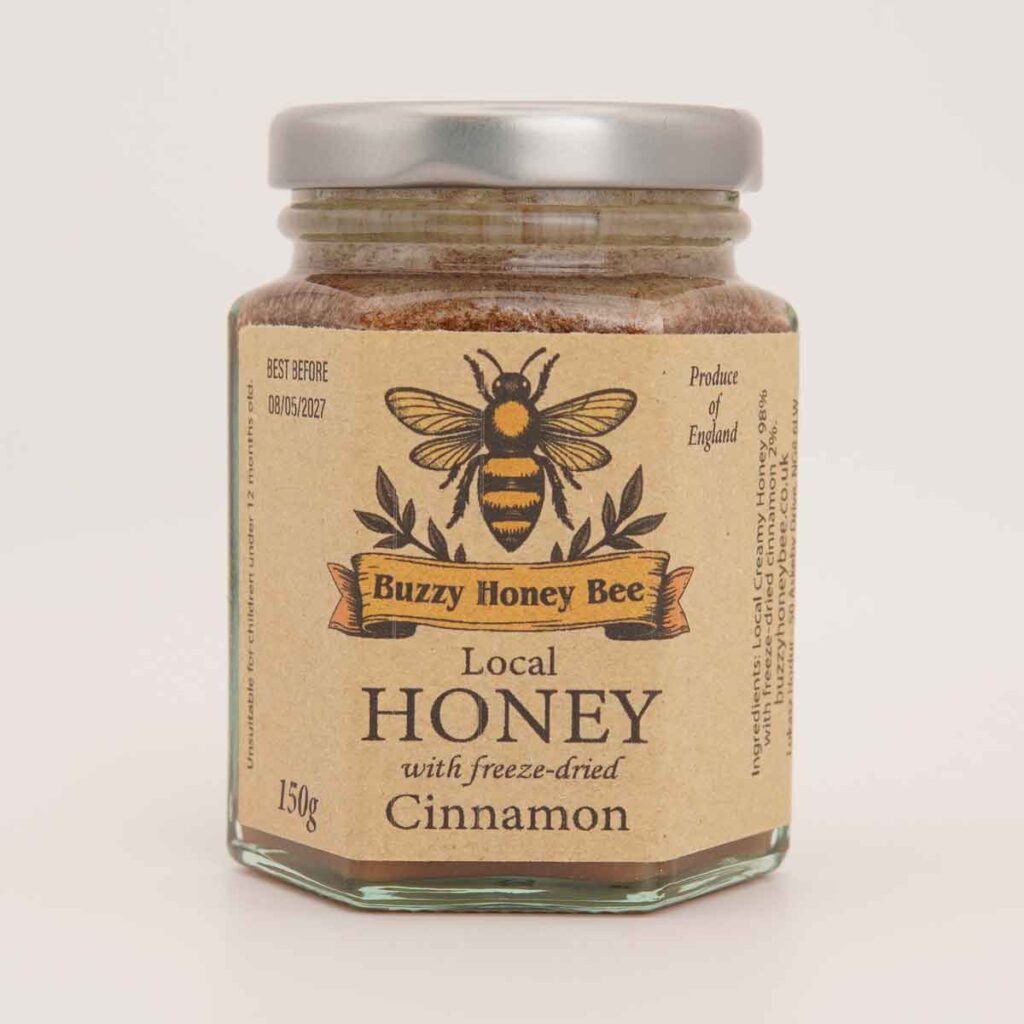
People sometimes add ginger or a pinch of cinnamon for the same reason they add lemon: taste and a feeling of warmth. Those are kitchen choices. Local honey with cinnamon is already a jar if you want that note without opening two pots.
Dry cough, chesty cough, night cough
The drink is not equally useful for every cough. Name the type before you fill the mug.
| Cough type | What you notice | Honey and lemon? |
|---|---|---|
| Dry / tickly | Scratch, little or no phlegm, worse when talking or lying down | Best fit. Honey coats; warm drink soothes. |
| Night cough | Starts or worsens in bed; sleep is the problem | A spoon of honey 30 minutes before bed is the bit the trials measured. |
| Chesty / productive | You are bringing up phlegm | Fluids help. Do not treat the drink as a suppressant. See a pharmacist if it worsens. |
| Cough with a sore throat | Pain on swallowing sits next to the tickle | Honey still helps the tickle. For the pain itself, use the sore-throat guide. |
A sore throat and a cough often arrive together after a cold. Keep the pages separate. This one answers the cough. Honey for a sore throat is the page for pain when you swallow.
How to make a honey and lemon drink for a cough
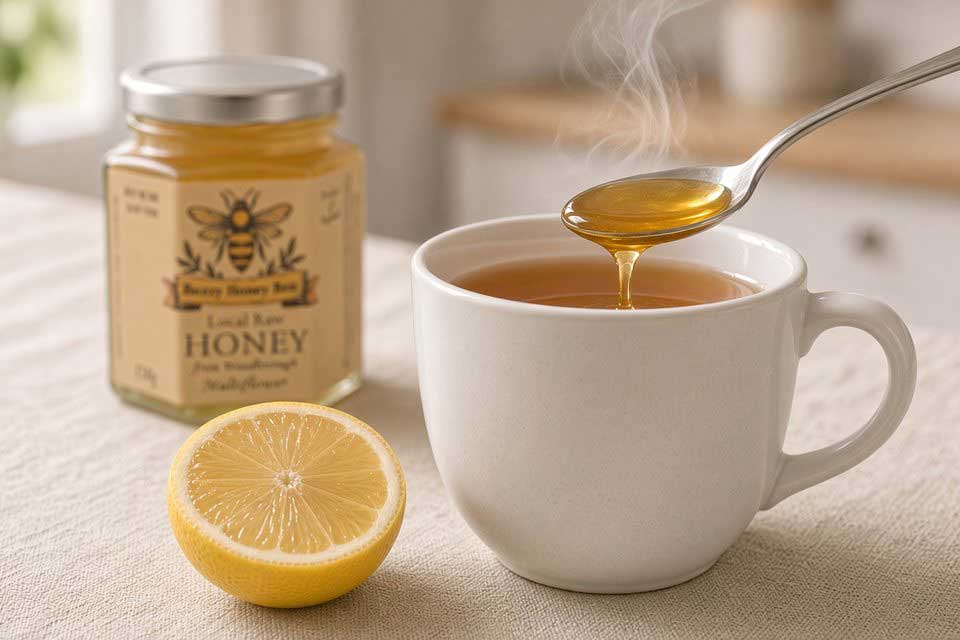
The NHS version is simple. You do not need a recipe card. You do need to keep the drink warm, not boiling, if you care about raw honey.
- Boil the kettle and pour a mug of water. Leave it a minute so it is hot to sip, not scalding.
- Squeeze in the juice of half a lemon. Fish out the pips.
- Stir in 1 to 2 teaspoons of honey until it dissolves.
- Drink it while it is still warm. Do not give hot drinks to small children.
That is the whole method. Fresh lemon beats bottled juice for flavour. Either is fine. Honey first in the mug, then a splash of the warm water, then the rest of the mug, is the easiest way if you are using set or creamed honey.
If you would rather not use lemon, honey in warm water works. So does honey in a mild tea once the cup has cooled a little. That everyday habit is covered in the benefits of honey in tea — this page is only the cough drink.
How often to take honey for a cough
There is no official “course”. The studies in children usually used one dose in the evening, for one to three nights. For an adult kitchen habit, a teaspoon two or three times a day plus one before bed is plenty.
A spoon of honey is still a sweet food. Keep it to those measured spoons rather than sipping a sweet mug all evening. The same jar earns its keep on toast once the tickle eases.
Honey for a cough in children
Never give honey to a baby under 12 months. That rule is not optional. Honey can contain Clostridium botulinum spores. An infant’s gut is not ready for them. The NHS is clear: no honey, including in a lemon drink, under one year.
From the first birthday, a small amount of honey in a warm — not hot — drink is the self-care option NICE and the NHS both mention. A teaspoon is plenty. Do not copy an adult mug. Do not add extra lemon if the child will not drink it.
Over-the-counter cough syrups are restricted in young children for a reason. Honey is not a workaround for a child who is struggling to breathe, who will not drink, or who is under five with a fever you cannot settle. That is 111 or a GP, not another spoon.
Which honey to use in a cough drink
Use honey you would eat on toast. That is the test. A raw, coarsely strained jar keeps the character of the forage. A clear, highly processed squeezy bottle has usually been heated and finely filtered so it stays liquid on the shelf. It will sweeten a mug. It is not the same food, and it is not the jar you want by the kettle.
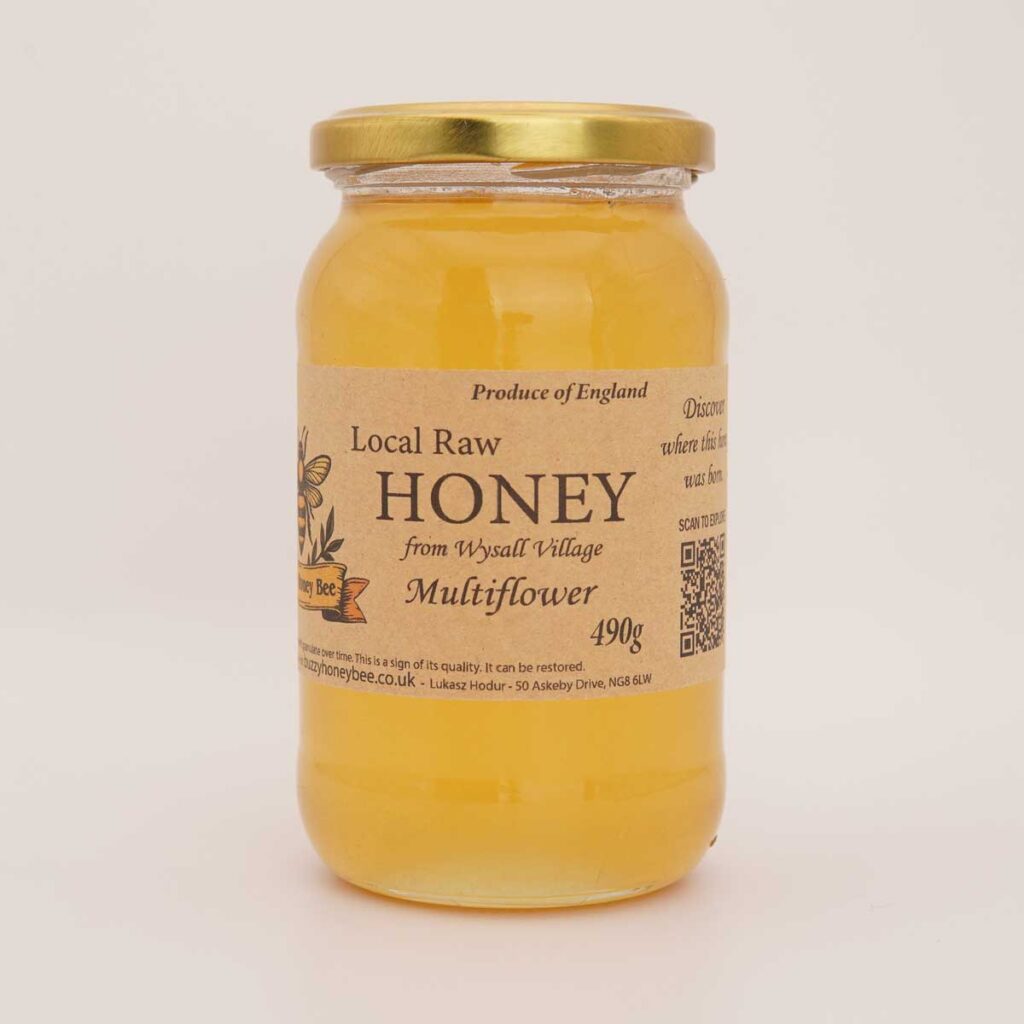
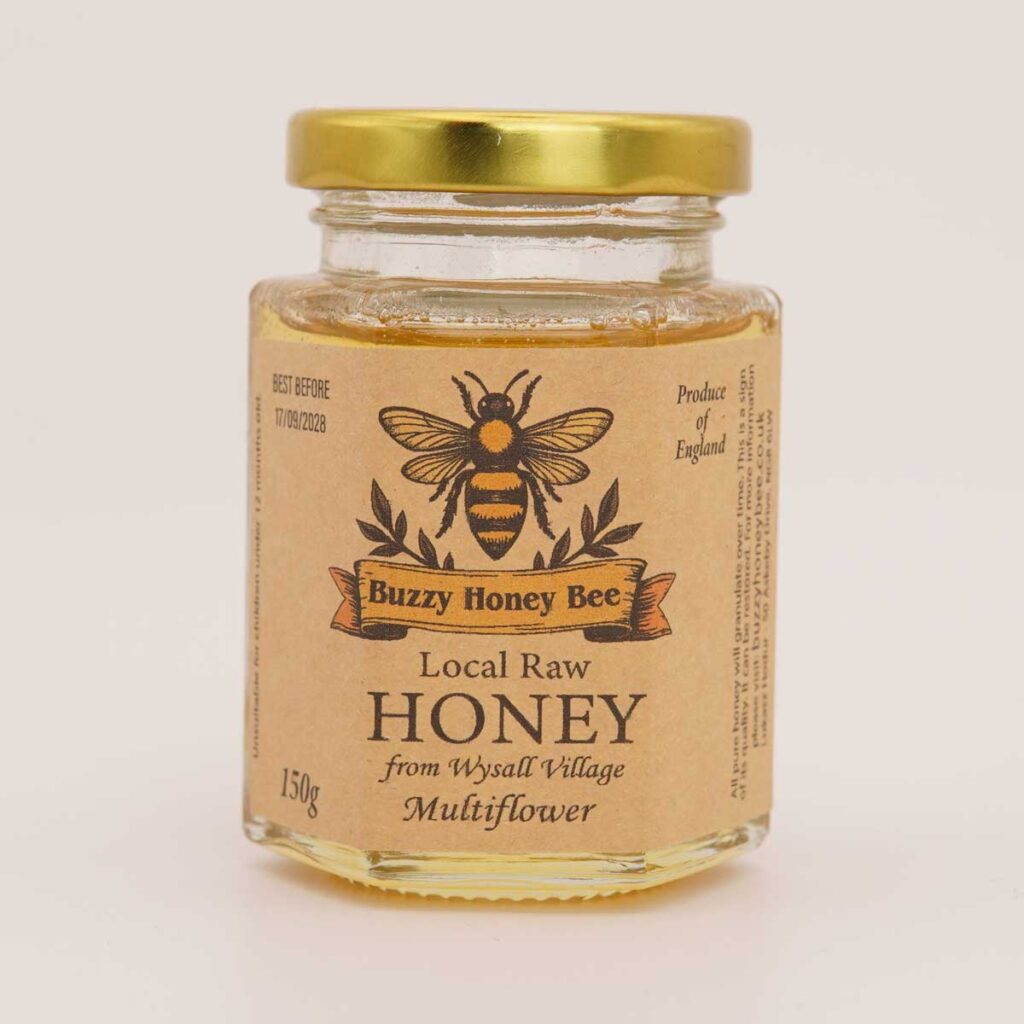
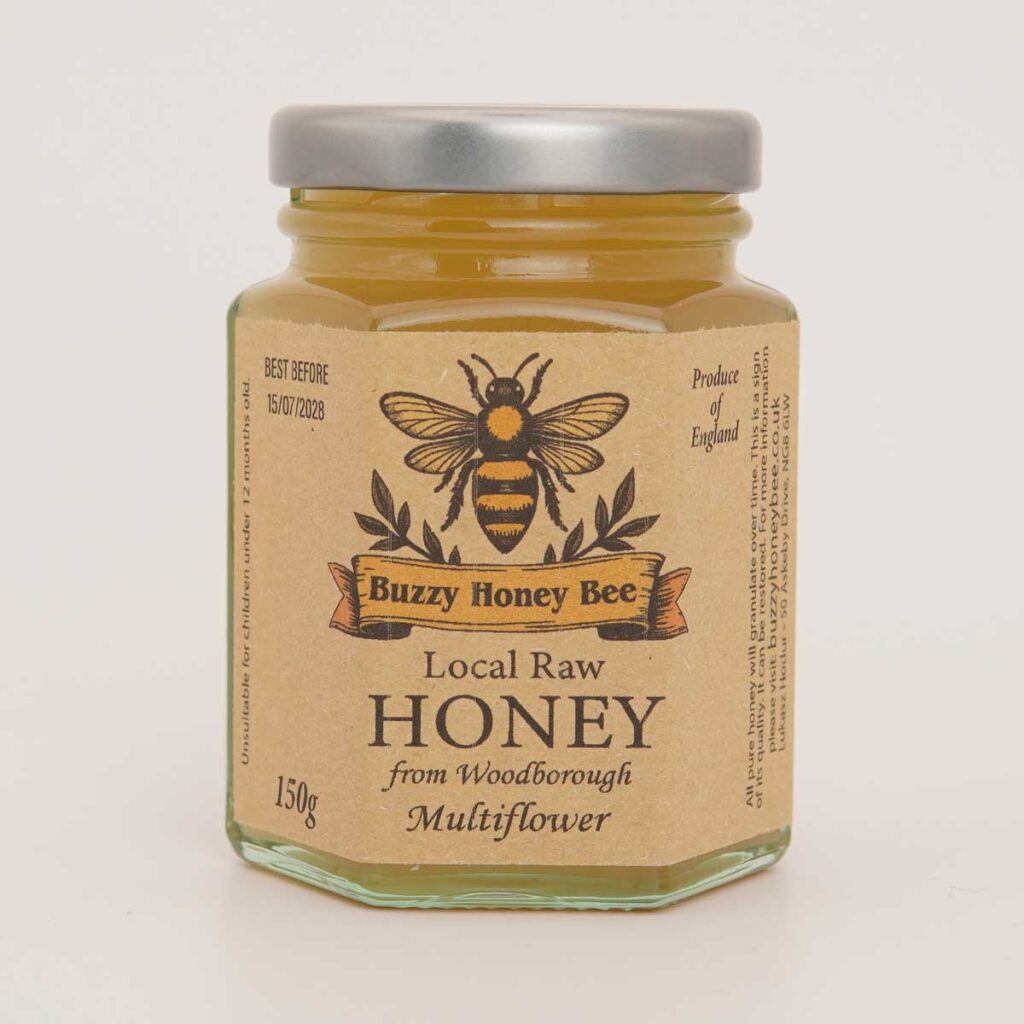
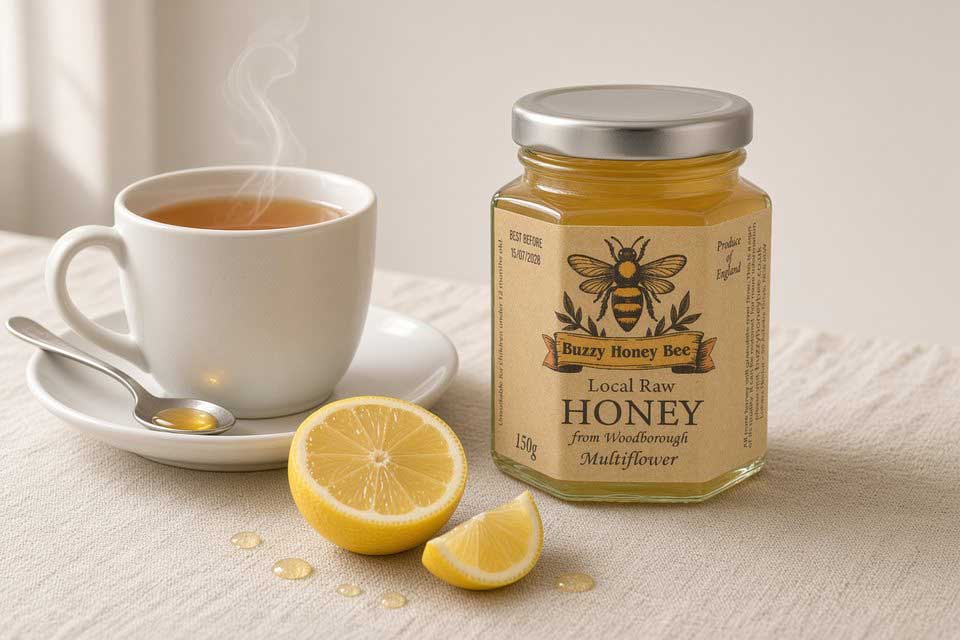
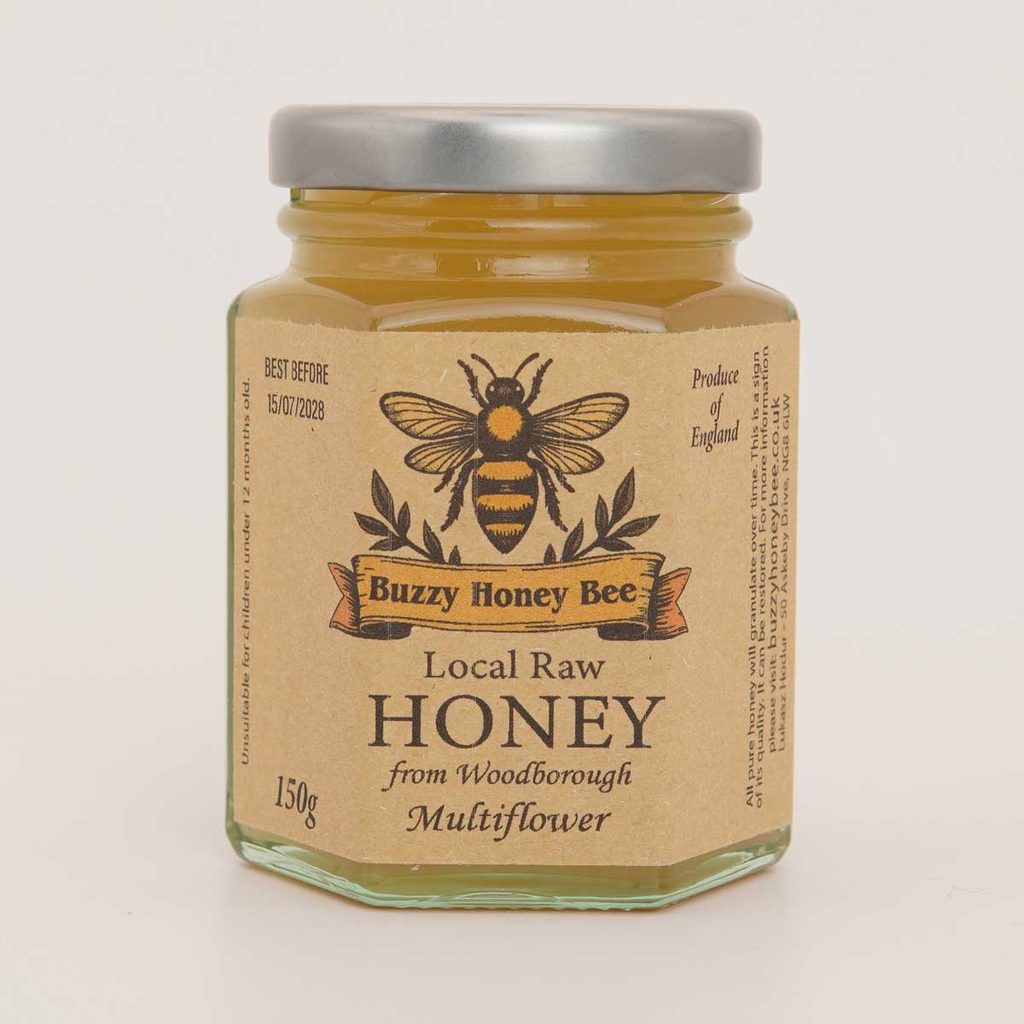
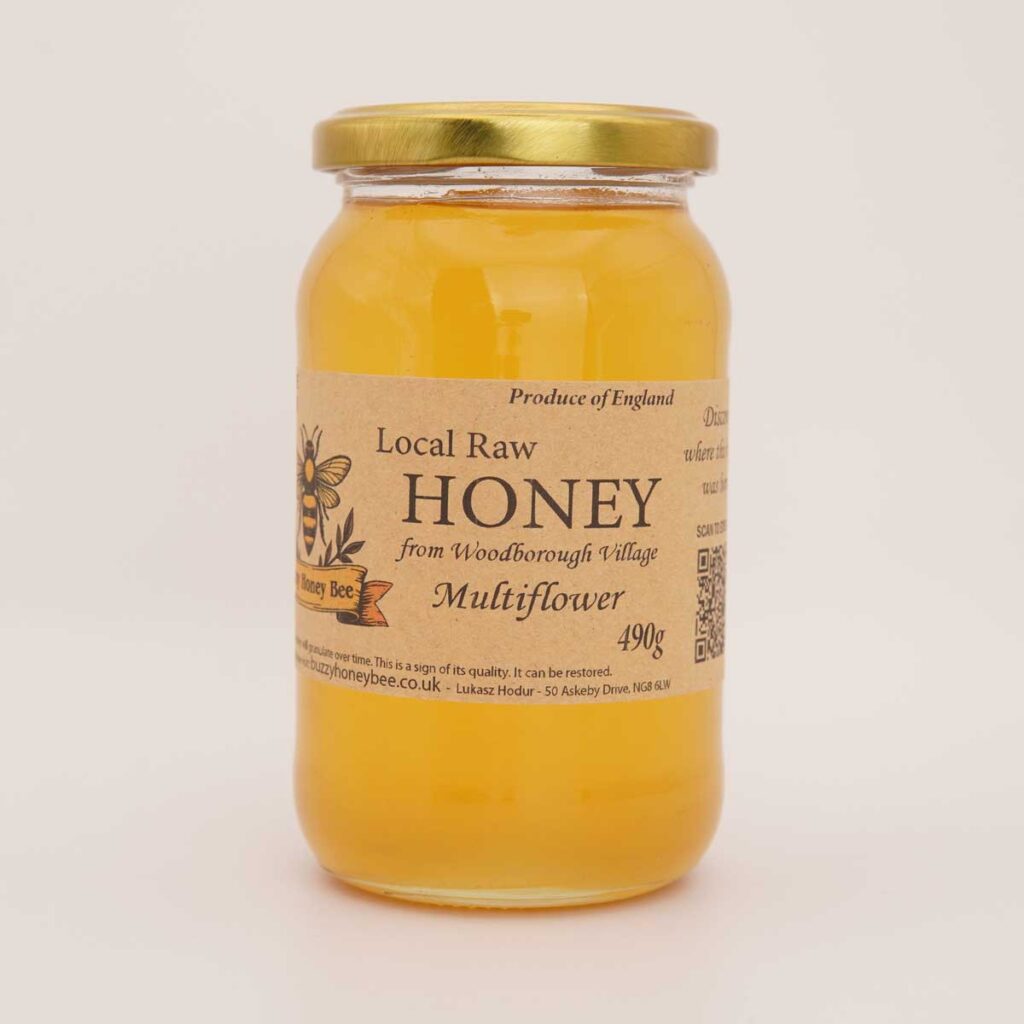
You do not need an imported medical-grade honey for a British winter cough. You need a raw jar you can trace. A village multiflower belongs in the mug because it is unheated honey from a named place. Start with raw multiflower honey from Woodborough Village 150g or raw multiflower honey from Wysall Village 150g if you want a small jar for the kettle. The wider shelf is under local honey.
Creamed honey dissolves a little slower and feels softer on a raw throat if you take it from the spoon. Local creamed honey from Whatton Village is the everyday texture for that. Set honey does the same job with a firmer crystal — see what set honey is if the jar has gone thick and you are not sure it is still good. It almost always is.
If you want to know the jar is what the label says, the buying checks sit on how to tell if honey is real. Origin line first. Kitchen myths after.
When honey and lemon is not enough
A kitchen drink is for an ordinary cough after a cold. It is not a plan for everything that makes you cough.
- The cough has lasted more than three to four weeks.
- You are short of breath, wheezing, or coughing up blood.
- Chest pain, a high temperature that will not settle, or you feel seriously unwell.
- A child is under five and you are worried, or anyone is struggling to breathe.
- You have a long-term lung condition and this cough is different from your usual one.
Those are NHS thresholds, not a shop disclaimer. Use the NHS cough page or call 111 if you are unsure. Honey stays in the cupboard for the next ordinary cold.
Honey and lemon will not replace these things
Rest and fluid still do more than any jar. Paracetamol or ibuprofen can take a temperature down so you can sleep. A pharmacist can tell you which cough syrup, if any, is suitable for the age in front of them.
Honey does not treat asthma, whooping cough, pneumonia or COVID. It does not make a smoker’s cough go away. It does not cancel the fact that a cough after three weeks needs a proper look.
Keep the claim small and the drink warm. That is the whole method.
Frequently asked questions
Does honey and lemon help a cough overnight?
Often, yes, for a dry or tickly cough. The useful dose in the studies was honey before bed, not a midnight mug of boiling lemon. Give it half an hour to coat the throat, then lie down.
Is honey better than cough syrup?
For a short viral cough in children over one, honey has held its own against some syrups and beaten “nothing”. That is not the same as saying it is stronger than every pharmacy product. For adults, the NHS puts hot lemon and honey in the same box as many cough medicines.
Can I use honey without lemon?
Yes. Lemon is optional. A slow spoon of honey, or honey in warm water, is the part with the better evidence. Use lemon if you like the taste and it does not sting.
Does lemon help a cough on its own?
Not in any way you should count on. Warm fluid helps. The citrus is flavour and a little vitamin C. Do not drink neat lemon juice on a raw throat.
Can I give honey and lemon to a one-year-old?
From the first birthday, a small amount of honey is the self-care option in UK guidance. Keep the drink warm, not hot. Under 12 months, no honey at all.
Should I use Manuka honey for a cough?
You do not need an imported grade for this. The cough trials did not depend on a New Zealand label. A raw British multiflower in a mug does the coating job, and it is the jar you will finish on toast afterwards. The shopping question — Manuka versus a village jar — is on is Manuka honey better for a cough than local honey?
Can I put honey in boiling water?
You can, but you flatten what raw honey is for. Let the mug stand, then stir. More on heat is in temperature’s impact on honey quality and why you should never microwave honey.
What if my honey has set?
Use it. Set honey is still honey. Stir a spoon into the warm mug or take it straight. Crystallisation is explained in what is set honey.
How long should I keep taking honey and lemon?
While the tickle is bothering you. An ordinary cough can last three weeks; the drink is for the nights it keeps you awake. If it is not easing by then, or it is getting worse, get advice rather than adding more spoons.
Is honey and lemon safe if I am pregnant?
Honey and lemon as food are fine for most people. If you are pregnant and the cough is new, heavy or paired with other symptoms, ask a midwife or GP rather than scaling up kitchen remedies. Some herbal extras people add to the mug are a different question.
A warm mug is not a small jar’s only job
When the cough has gone, the same honey goes back on toast. That is the point of a raw jar from a named village. If you want the place behind the lid, trace your honey sits with the harvest, not with a winter recipe.
Keep one small jar near the kettle in the cold months. That is as much system as this needs.
The short version
Does honey and lemon help a cough? Honey can ease a short, dry or night-time cough enough to sleep. Lemon makes the drink worth finishing.
Use a teaspoon of raw honey in a warm — not boiling — mug, with lemon if you like it. Never under one year. See a professional when the cough is not ordinary.
If you need a jar for the kettle, start with the local honey shelf. If the throat hurts more than it tickles, go to honey for a sore throat instead of reading this page twice.
Further reading
- NHS — Cough: how to treat it yourself
- NICE NG120 — Cough (acute): antimicrobial prescribing
- Cochrane — Honey for acute cough in children
- NHS — Foods to avoid giving babies (honey under 12 months)
- Honey for a sore throat
- The benefits of honey in tea
- What is local honey?
Enjoyed this article? If you’d like to support more honest writing about bees and local honey, you can buy me a coffee here:
Buy Me a Coffee – Buzzy Honey Bee
Your support also helps me continue working with the bees and offering free bee swarm collection.
Of course, the best way to support this small apiary is still by choosing one of the products below.