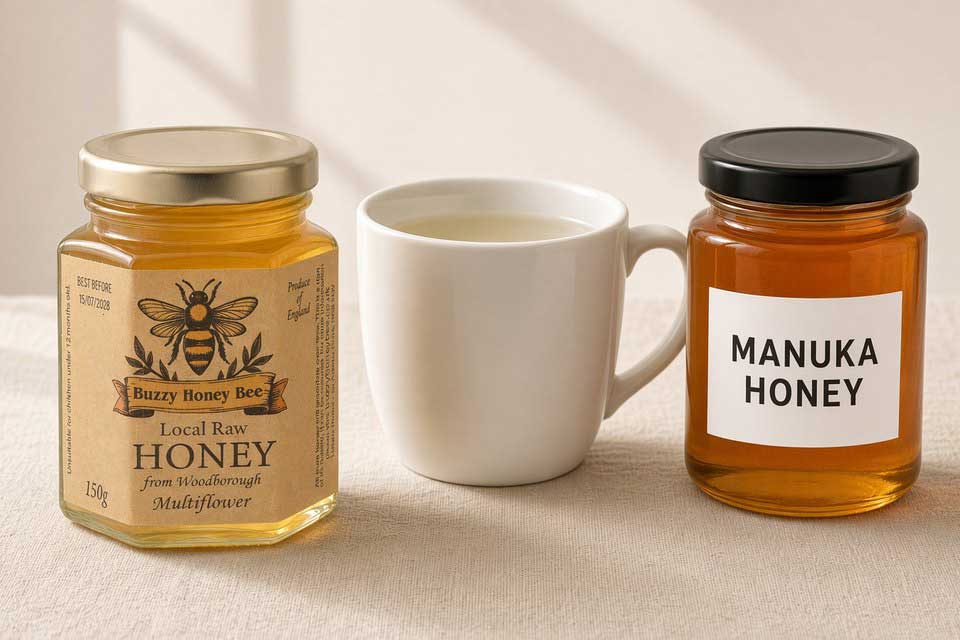
The short answer is no. Manuka honey for cough is not better than local raw honey for an ordinary UK cough. Manuka is a New Zealand honey with a lab number on the lid. Local raw honey is a named jar from a British apiary. For a short, viral, tickly cough, UK guidance talks about honey. It does not talk about UMF, MGO, or a flight from the other side of the world.
If you want the drink itself — warm water, lemon, a spoon of local raw honey — that sits on Does honey and lemon help a cough?. This page is only the shopping question: do you need Manuka, or will a village jar do?
What people mean by Manuka honey for cough
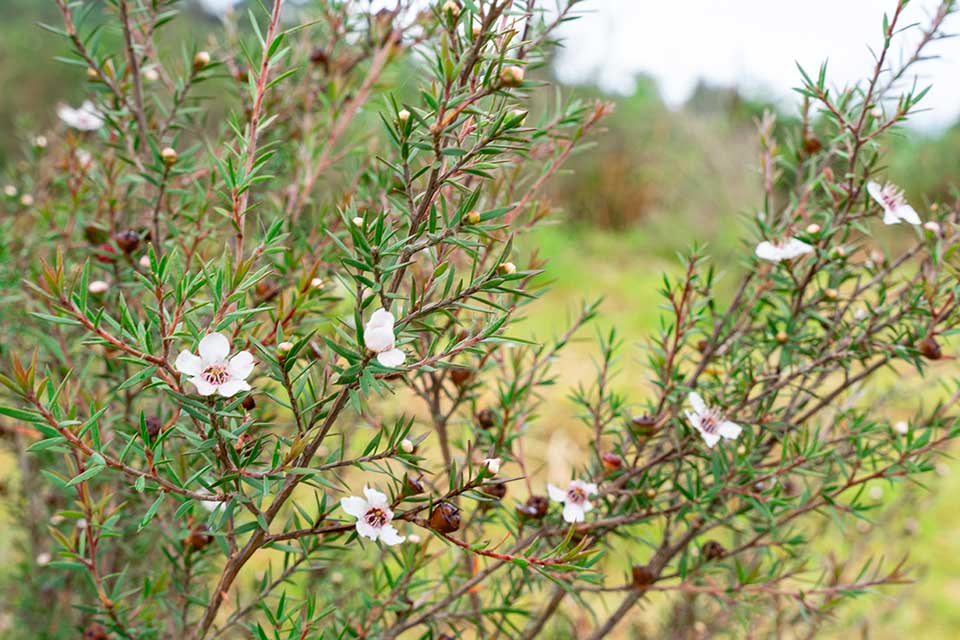
Manuka honey comes from the nectar of Leptospermum scoparium, the mānuka bush that grows in New Zealand (and, in smaller amounts, in parts of Australia). What you pay for is not “stronger honey” in the kitchen sense. You pay for a measurable compound, methylglyoxal (MGO), plus a grading scheme (UMF or MGO on the label). Those numbers matter in wound-care research and in the marketing of lozenges. They are not the reason the NHS put honey on a cough page.
A supermarket “Manuka” blend with a low number is still an imported jar. A high-UMF pot is still honey with sugar in it. Neither fact makes it the official British cough honey.
Is Manuka stronger?
In a laboratory dish, high-MGO Manuka can look impressive against certain bacteria. That is real chemistry. It is also a different job from a winter cough. Most coughs that send people to Google are viral. They run for days and stop. Honey is not an antibiotic. It does not shorten the infection because the lid says 250+ MGO. If you have a bacterial throat that needs a GP or Pharmacy First, a dearer jar does not replace that.
Where Manuka can feel “stronger” is flavour and thickness. Some pots are darker and more medicinal. Some people like that in a night spoon. That is taste. It is not a ranking from NICE.
Local raw honey has its own character: the flowers of one season in one place. It may set in the cupboard. That set texture is useful on a spoon, because it does not run off as fast as a thin blend.
Local honey versus an imported grade
What is local honey? is the definition. Here it only needs one test: can you name the apiary?
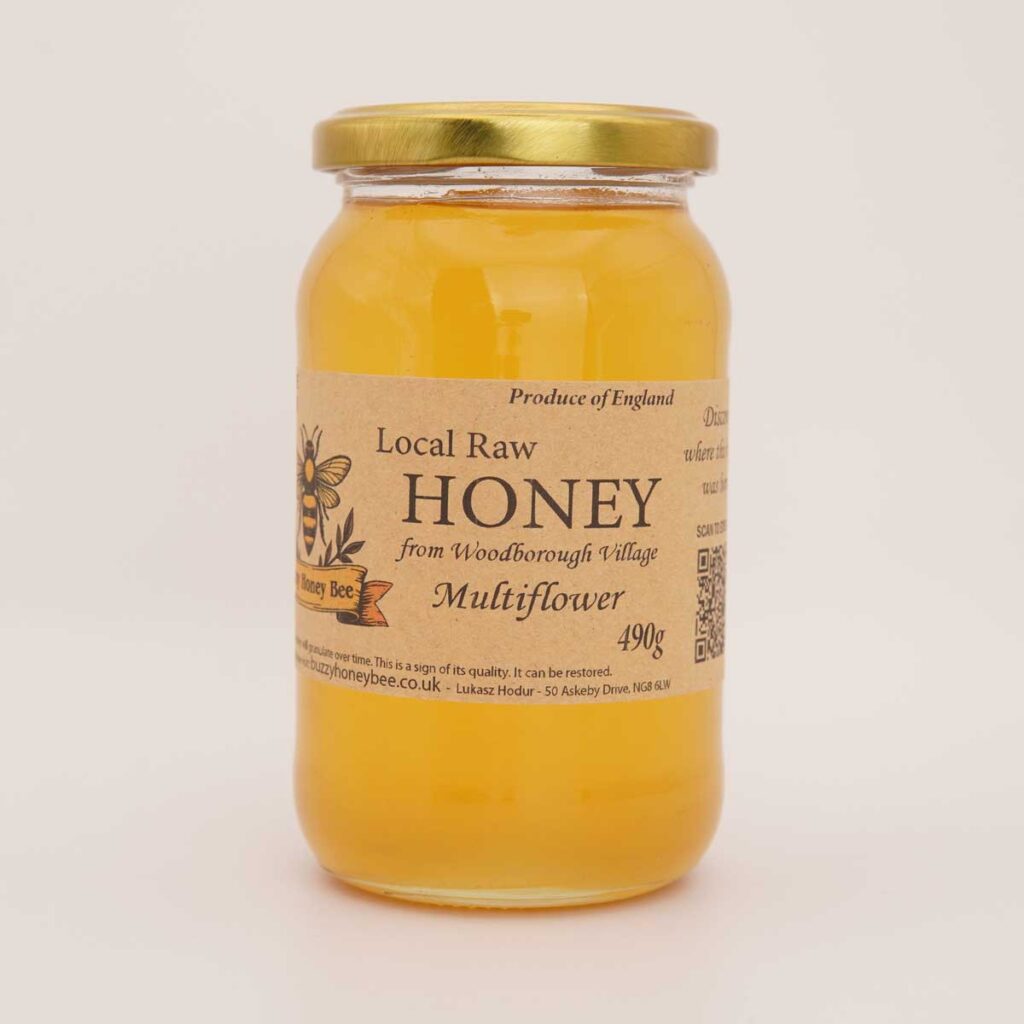
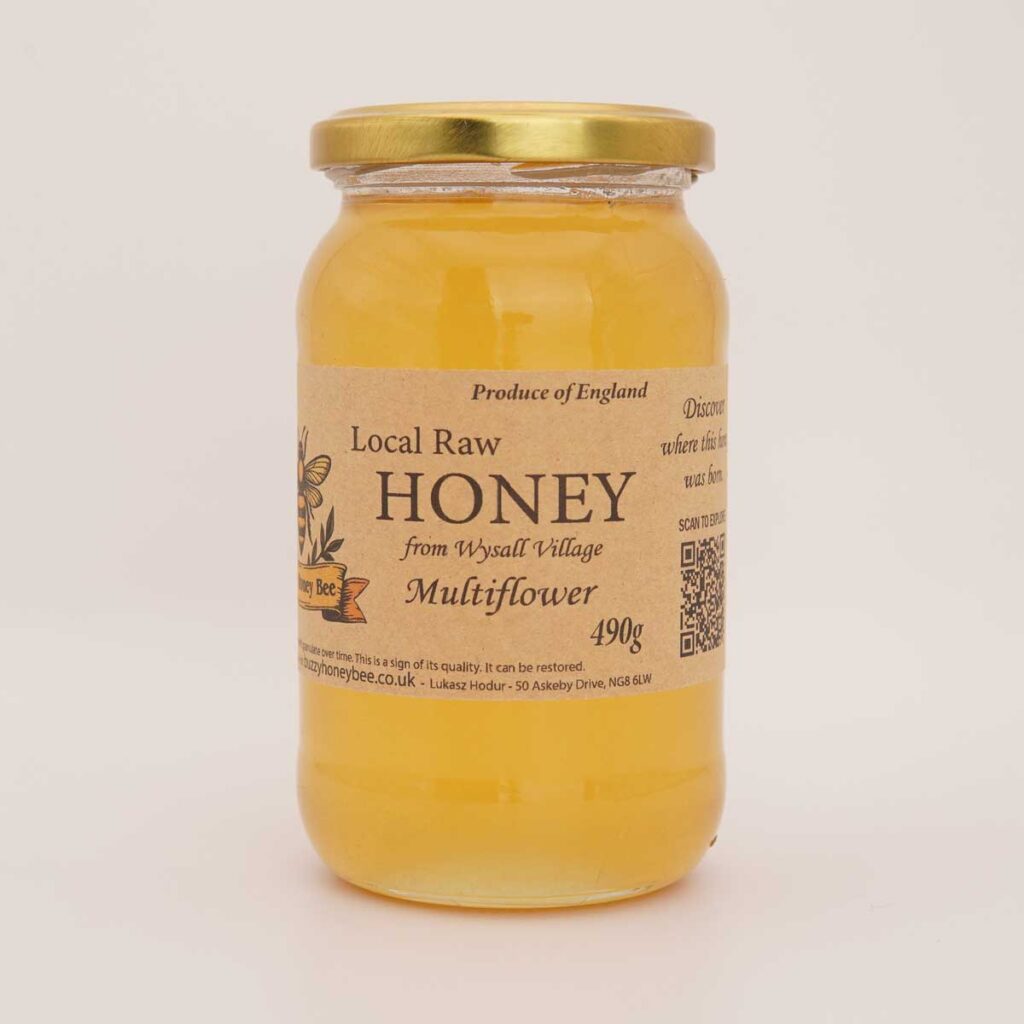
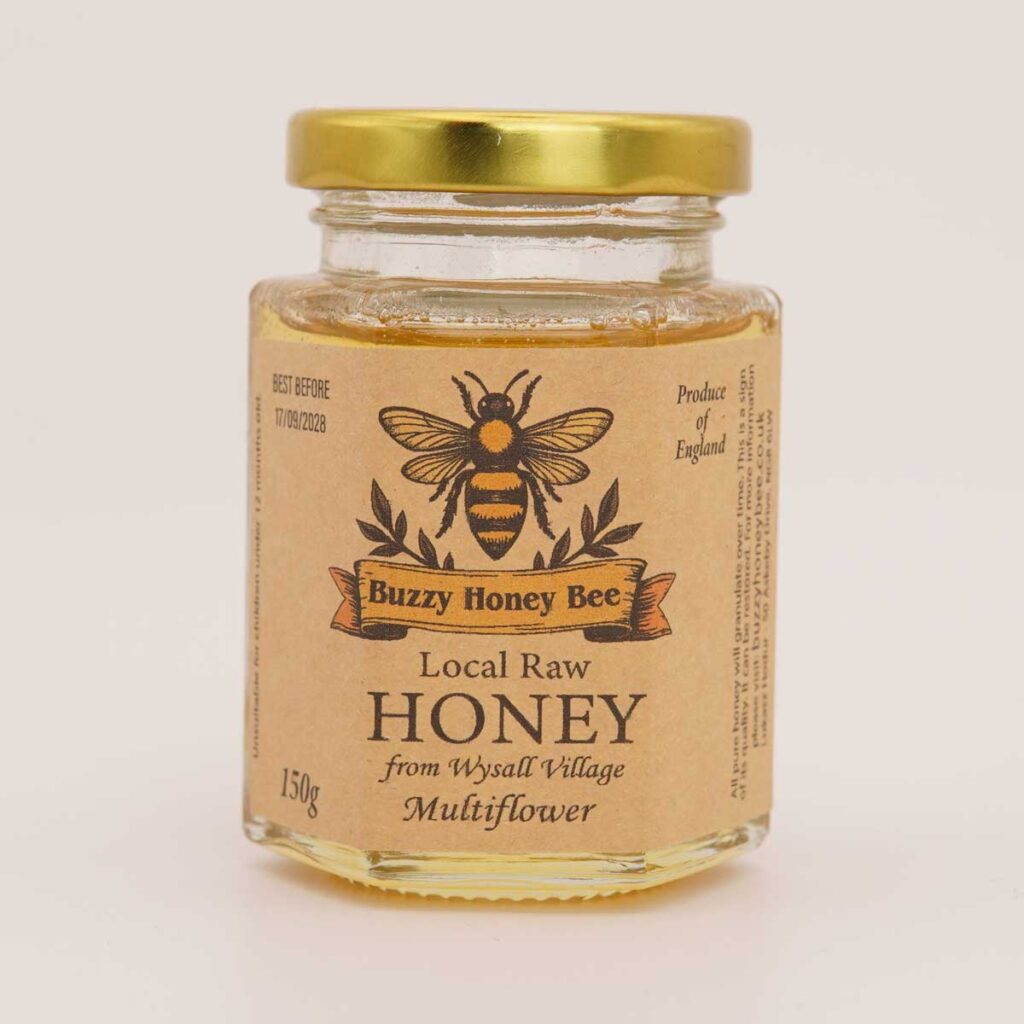
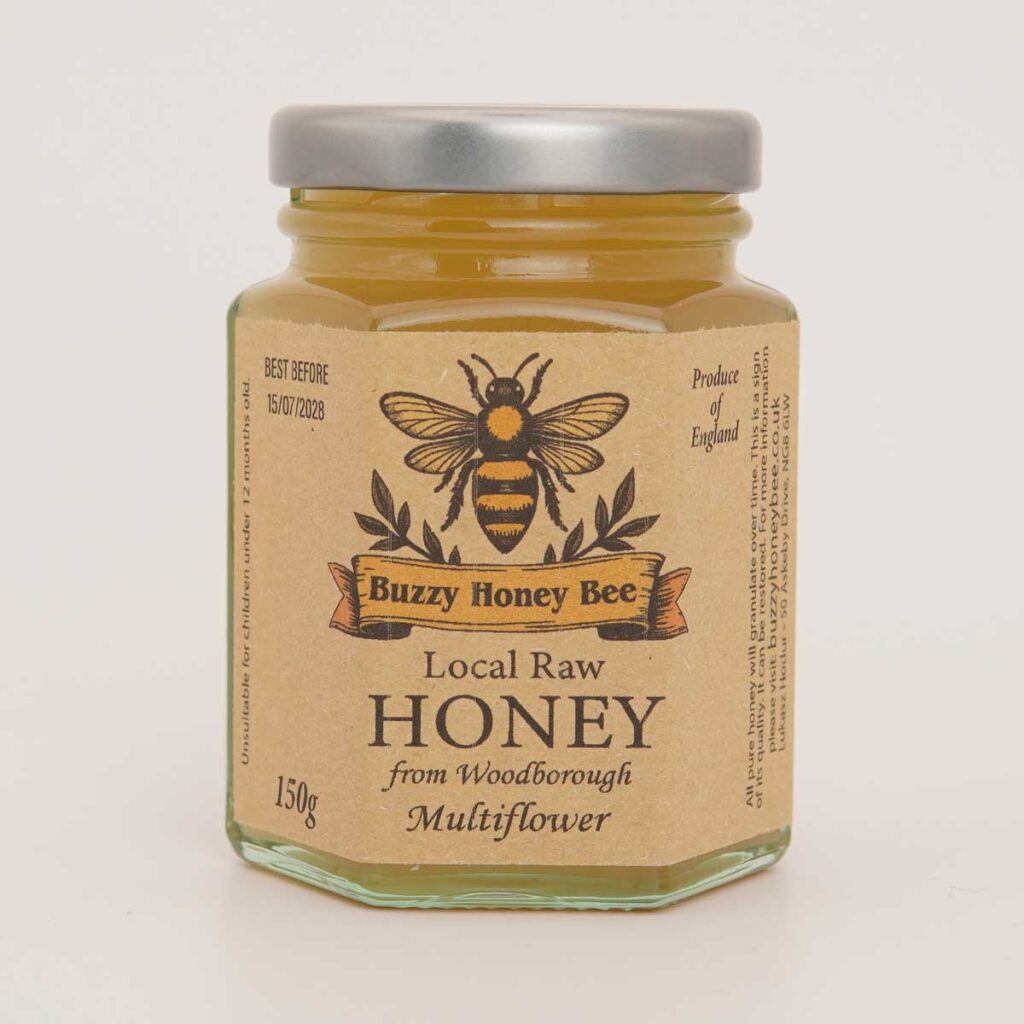
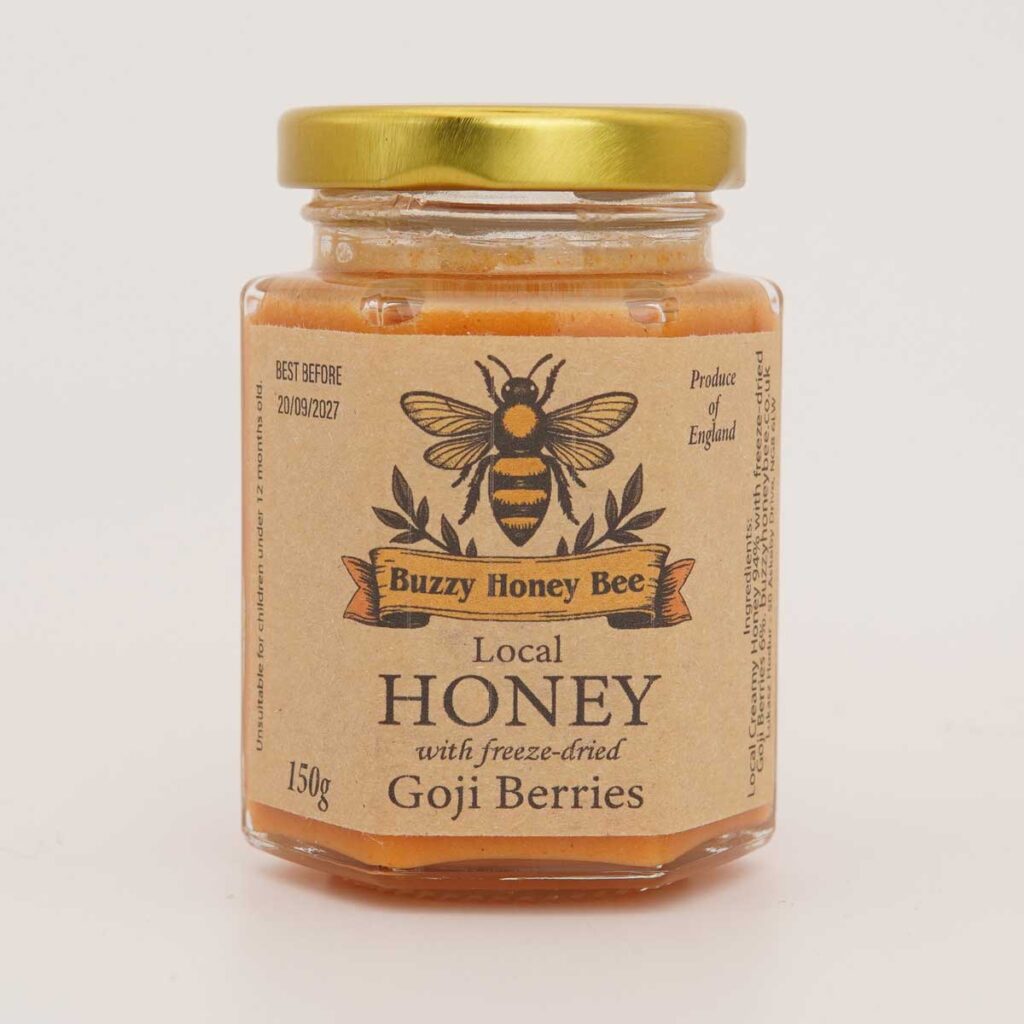
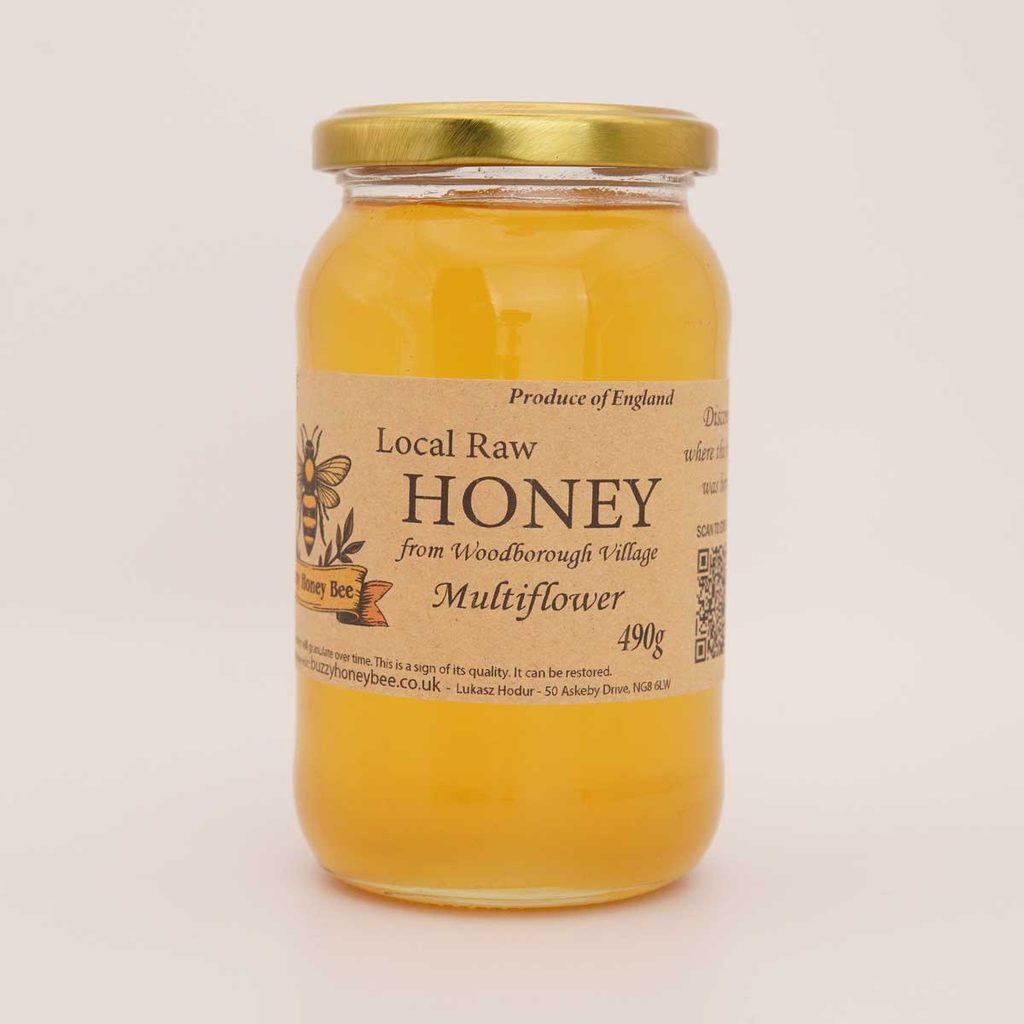
A Buzzy jar is unpasteurised, unfiltered and unheated. The village is on the label. The harvest date is on the lid. You can match it on trace your honey. That is the opposite of a blended “Produce of more than one country” pot, Manuka or not.
What local honey does not automatically do:
- beat Manuka in an MGO contest (it will lose that contest; it was never in it)
- treat hay fever (that claim is thin; we keep it off this page)
- stay runny on a shop shelf for two years (raw honey sets — why honey crystallises)
If the jar has set and you want it in a mug, stand the closed pot in warm water. Not the microwave. Steps: how to decrystallise honey safely.
Do you need Manuka honey for cough drinks?
No. Make the drink on the cough page. Use the honey you have. A teaspoon or two in water that has come off the boil. Lemon if you want it. Honey last, so you are not cooking the pot.
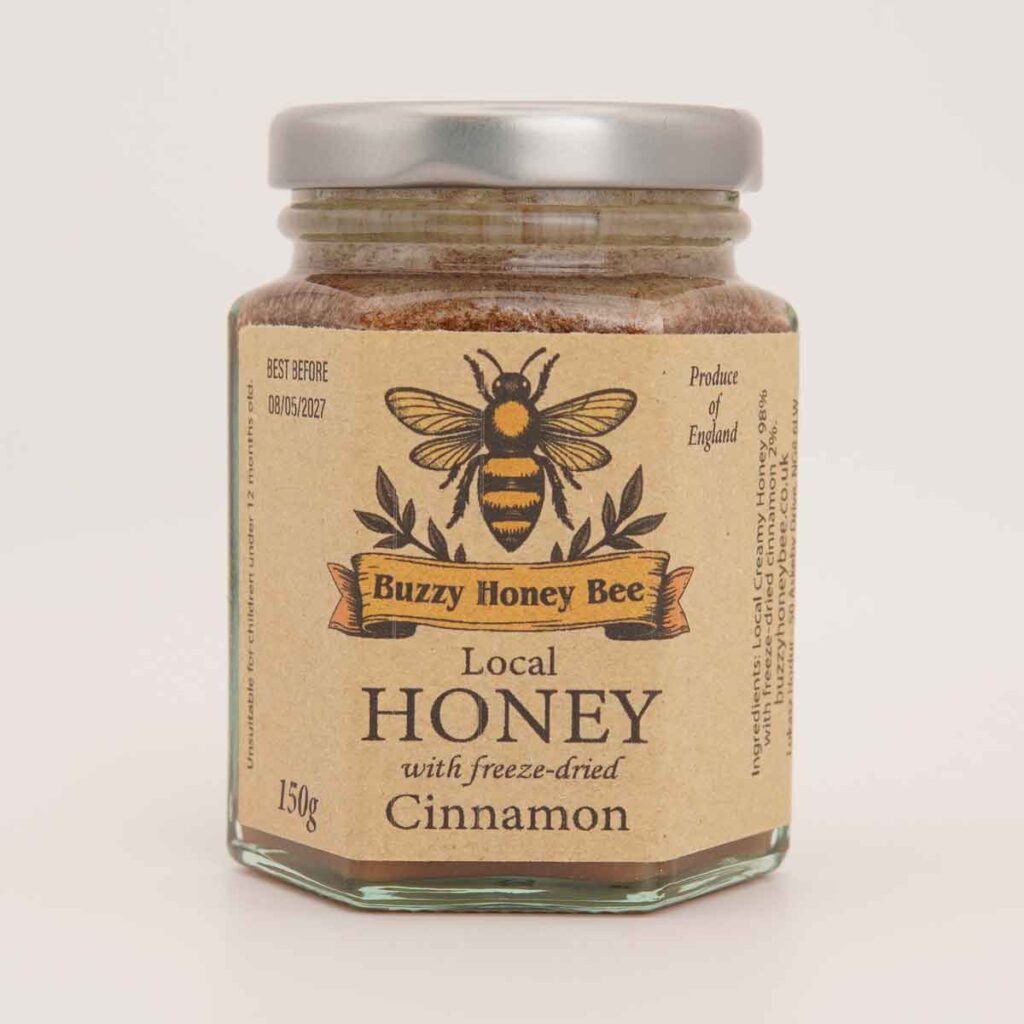
Fruit-infused honey is the wrong tool here. The fruit flavour fades in heat, and a cough mug is not a breakfast bowl. Keep those jars for porridge and pancakes.
A raw multiflower 150g from Woodborough or Wysall is the everyday pot for the mug. If you want a spoon that stays put, a set or creamed jar from Whatton is easier than chasing a runny import. The rest of the village line lives under local honey.
When Manuka honey for cough still makes sense
Buy Manuka if you already use it on a dressing, or you like the taste. Do not buy it because October arrived and an advert said “immune”.
For a UK cough in a kitchen:
- honey you will actually take tonight beats honey with a better story
- price per spoon matters, because you may want it for a week
- a named raw jar does the coating job the guidance describes
If the throat is the main complaint rather than the cough, that is the older page: honey for sore throat. Do not run both articles as the same drink.
When a jar is not enough
See a GP or use NHS 111 if the cough is getting worse after three weeks, you cough up blood, breathing is hard, or a child under one is unwell — honey is off the table for that infant anyway. A high-UMF lid does not change those rules. For a short winter cough in a UK kitchen, Manuka honey for cough is a shopping story, not a ranking from NICE. Use the jar you will actually take tonight.
Frequently asked questions
Is Manuka honey better for a cough than local honey?
No. UK cough advice is about honey. It does not rank Manuka above a raw British jar.
Is Manuka honey for cough better than a village jar?
No. UK cough advice is about honey. It does not rank Manuka above a raw British jar.
Does a higher MGO number mean a better night?
It means more of one New Zealand compound. It does not mean NICE prefers that pot for your cough.
Can I put Manuka in hot lemon and honey?
Yes, if that is the jar on the worktop. You do not need to. The method is on the honey and lemon for cough page.
Is local raw honey strong enough?
It is honey. That is the ingredient in the guidance. Strength here means thickness on the throat, not a certificate.
What if my local jar has set?
Use it on the spoon, or loosen the closed jar in warm water. Setting is normal for raw honey.
Can children have Manuka or local honey for a cough?
Not under 12 months, either jar. Older children: a small spoon, same NHS caution as any honey.
Further reading
- NHS: Cough — hot lemon and honey as self-care; not under 1 year
- NICE NG120: Cough (acute) — honey as a self-care option
- Does honey and lemon help a cough?
- What is local honey?
Enjoyed this article? If you’d like to support more honest writing about bees and local honey, you can buy me a coffee here:
Buy Me a Coffee – Buzzy Honey Bee
Your support also helps me continue working with the bees and offering free bee swarm collection.
Of course, the best way to support this small apiary is still by choosing one of the products below.