You do not attract bees with a wooden ornament and a hopeful label. You attract them with food they can find, reach and return to. I watch this from the hive entrance. On a good day the foragers leave in a line and come back heavy. They are not touring the neighbourhood for scenery. They are working a patch, a block of lavender, a strip of clover, a tree in flower, and they will ignore the rest of the street if that patch pays. That is how to attract bees to your garden in Britain. Build a bee friendly garden that behaves like forage, not like a display. This page is the method. The plant list lives on the hub for flowers for bees. Use both.
You’ll get what bees actually need, why clumps beat speckles, how to cover the year, what not to spray, and what still works in pots. No hive on the patio required. No “bee house” that sits empty while the border is all doubles.
What bees actually need
Honey bees and wild bees are not looking for the same house. They are looking for the same meal.
Nectar is energy. Pollen is protein. Water is a drink on a hot day. A shallow dish with pebbles beats a steep-sided pond they can drown in. Shelter from wind helps a small garden more than people think. Sun matters, because many flowers make more nectar when they are warm.
They do not need you to keep a colony. A hive in the garden is a different job. This article is about forage on your ground — allotment, terrace, balcony, the strip by the path.
Wild bees often nest close to the food. A bare bank, a sunny wall, a bit of uncut grass and a log they can ignore will do more for a solitary bee than a decorative box facing north. Honey bees will fly further. They still prefer a target they can lock onto.
Wasps will use some of the same flowers later in the year. That does not make an active nest in the soffit part of a bee friendly garden. Leave bumblebees in the compost heap. Deal with a house nest that is a risk. The longer note is why wasps sting more in late summer.
If you want the plants as a list, open the flowers for bees hub and the best herbs for bees. The rest of this page is how you arrange them so the bees actually come.
Plant in blocks, not dots
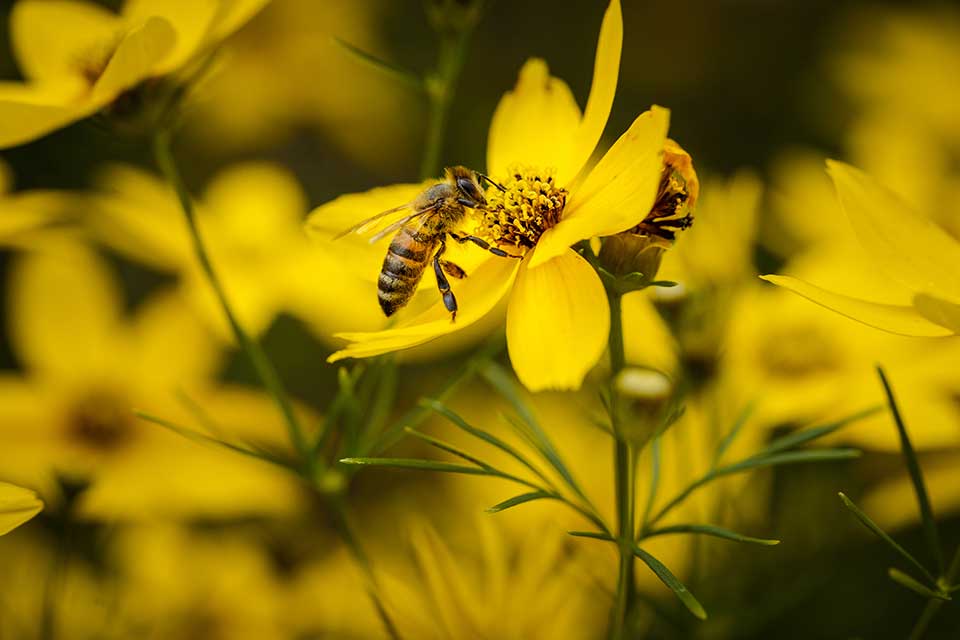
This is the rule that changes a border from “looks wildlife-friendly” to “gets worked”.
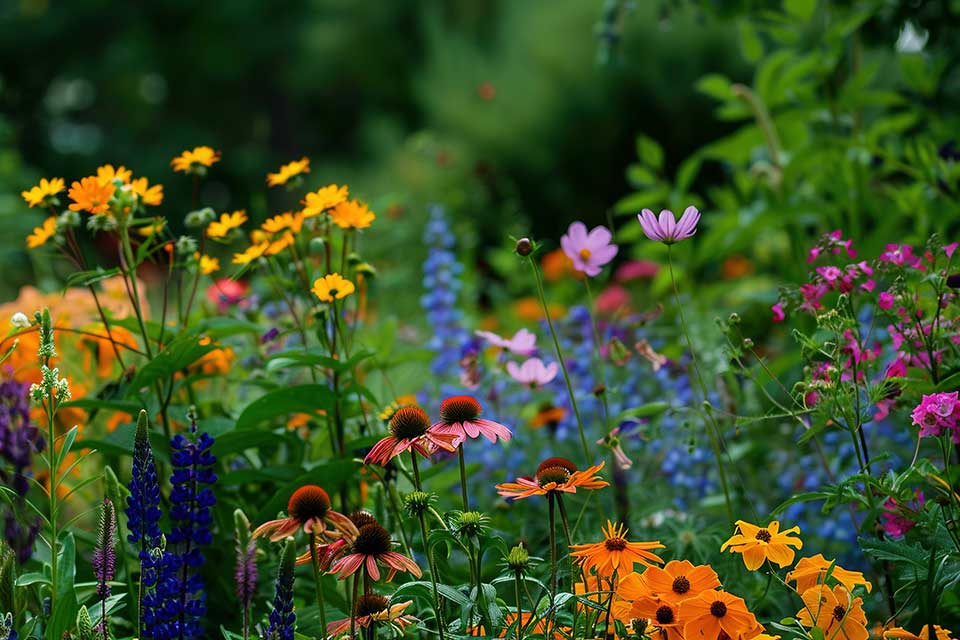
Honey bees are efficient. A scout finds a source. The colony piles on. They want a patch they can empty and visit again tomorrow. One cosmos in a mixed bed is a miss on a windy day. A drift of the same flower is a landing light.
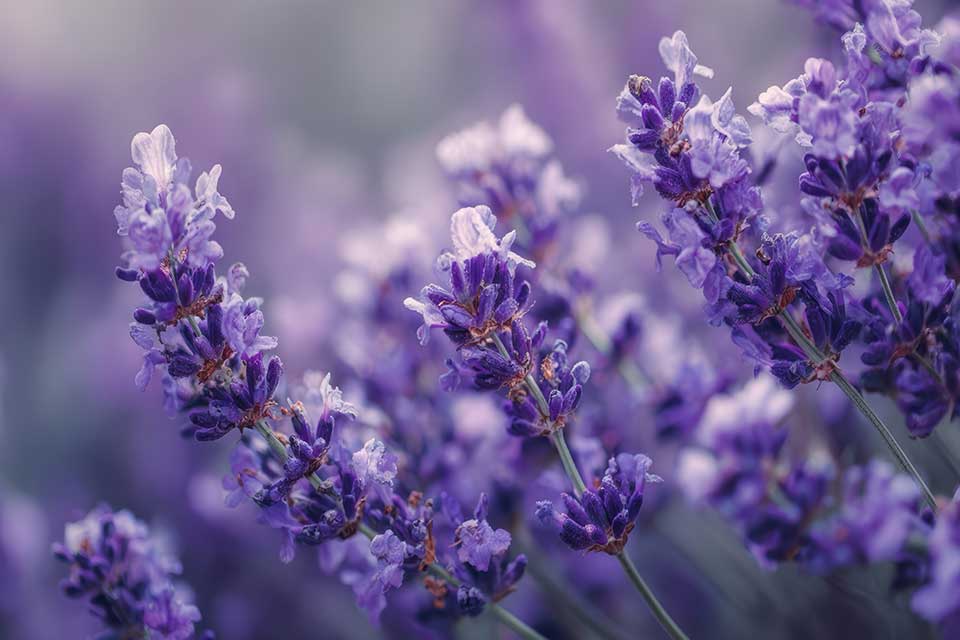
Think in groups of five or more of one plant, not one of everything. A metre of lavender along a path will beat twelve different “pollinator” pots scattered down the fence.
Single flowers, not doubles. If you cannot see the centre, a honey bee often cannot reach the nectar. Put the pom-pom back on the bench. Let them bloom. A herb you keep pinched for the kitchen is useful to you. A herb you let flower is useful to them. Thyme, oregano, mint, rosemary and chives all earn their space when the flowers are on. That detail is on the herbs guide. The method here is the same: stop cutting the thing you planted for bees.
Colour helps them find the block. Blue, purple and yellow show up. Scent helps on still evenings. None of that saves a plant bred into a cushion.
Cover the year
A June garden with nothing in March and nothing in September is the usual failure.
Early in the year the colony is small and hungry. Crocus, snowdrops, hellebores, primroses, willow catkins and the first fruit blossom do the work. A few pots of crocus by the back door are not a joke. They are the first open flowers many streets have.
Summer is the easy bit. Lavender, phacelia, borage, clover, salvias. Leave a strip of lawn so the clover and the dandelions can stand. You do not need a meadow kit to start. Stop mowing one corner.
Late season is what people tidy away. Sedum, Michaelmas daisies, the last echinacea, flowering ivy. Ivy only flowers on older wood. If you cut it hard every year, you will wait forever for the bloom and then decide ivy is useless.
Do not clone a fifty-name seasonal list on this page. The calendar belongs here. The names belong on the hub. Something open in March. A block in June. Something left standing in September.
| When | What to do in the garden | What the bees get |
|---|---|---|
| Late winter – early spring | Bulbs, hellebores, leave early weeds in a corner | First nectar and pollen after winter |
| Late spring | Fruit trees, hedge blossom, early herbs in flower | Short, heavy bursts |
| Summer | Blocks of lavender, phacelia, borage, clover | Main forage |
| Late summer – autumn | Stop deadheading the last perennials; let ivy flower | Late stores and mild-day flights |
Trees still beat a border. One apple or a lime in the street is a field on a trunk. If you can only plant one large thing this year, plant something that flowers.
What not to spray
You cannot attract bees to a garden you have just made toxic. “One last spray for greenfly” on the roses is the usual excuse. Systemic treatments in compost and lawn feed are the quiet ones. The plant looks fine. The forage is not.
Aphids are not a reason to poison the border you planted for bees. A jet of water, a bit of mess, and leaving the hoverflies to work is uglier than a bottle. It also leaves the lavender usable.
Do not treat the lawn like a billiard table and then wonder where the clover went. Do not spray the ivy “because it harbours pests” in the same week you wanted autumn nectar.
If a product says it kills insects, assume it does not read the badge on your bee pot. Put it back.
A bee friendly garden in a small space
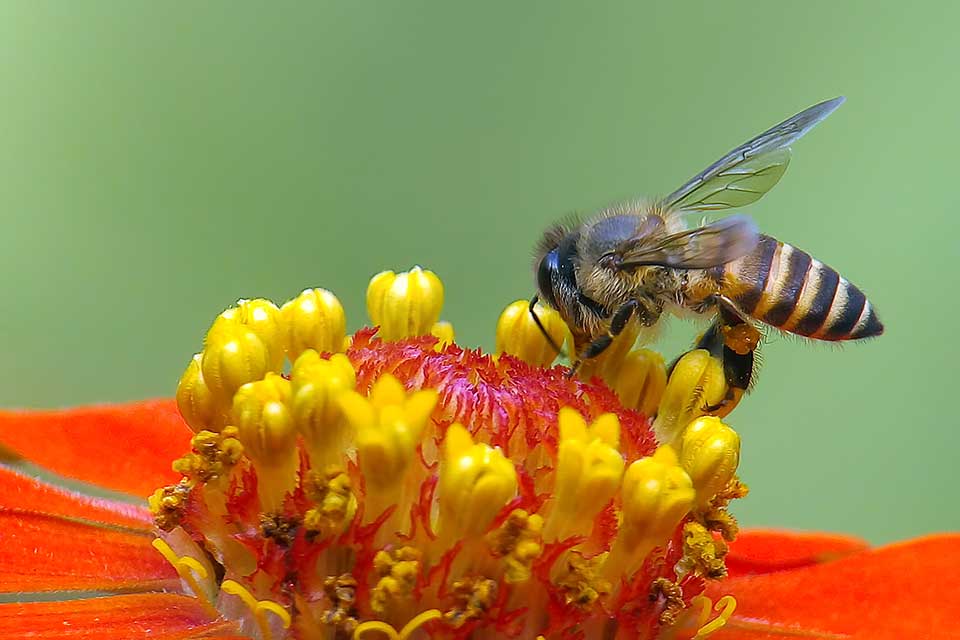
A balcony still counts. So does a yard with four pots.
Group the pots. One lonely thyme on a table is easy to fly past. A cluster of lavender, chives, thyme and a trough of phacelia or cosmos is a target.
Sun first. Then water. Container plants dry out and stop making nectar. A bee friendly garden in pots is a watering can job, not a set-and-forget display.
Herbs are the cheat for small ground. They sit on a path edge. They flower if you let them. They feed you as well. Use the herbs page for the short list. Do not try to run a wildflower meadow in a window box. Run three plants that bloom.
A hanging basket of doubles is still a hanging basket of doubles. Swap it for open flowers and you have already done the useful bit.
Water, mess and the bits that are not flowers
Bees drink. A saucer, pebbles, rainwater if you have it. Change it so it does not become a mosquito dish. They will also take water from a damp bit of soil.
Leave some mess. A tidy garden in March has no early forage and nowhere for a solitary bee to nest. Uncut grass, a sunny bank, a pile of stems you did not shred in November — that is habitat, not neglect.
Do not confuse a decorative “bee hotel” with a working garden. Some solitary bees will use a well-made box in sun, out of the rain, with clean tubes. Many will ignore it. The flowers still have to be there either way.
You do not need to feed bees sugar at the back door.
Common mistakes
Buying a mixed “bee” tray that is all packed petals.
Planting one of each plant from a Sunday list.
Deadheading the only late flowers because September looks untidy.
Mowing the dandelions and the clover, then buying seed to replace them.
Spraying the roses and keeping the lavender.
Putting up a bee house and leaving the border empty.
Treating every yellow-and-black insect as a bee you must protect. Honey bees and wild bees belong in this plan. An active wasp nest in the wall is a garden insects problem, not a planting one.
Waiting for a perfect redesign. A pot of lavender and a strip of uncut grass already attract bees. Start there.
What the garden has to do with the jar
Most gardens will never make a distinct honey. That is fine. The bees still eat.
When a stand is heavy enough on our ground, the forage shows in the jar — willowherb around Wysall, phacelia in an Oakwood mix, lime with phacelia at Woodborough. The map of that is where my honey comes from. The honest label is what local honey actually is. The plants came first.
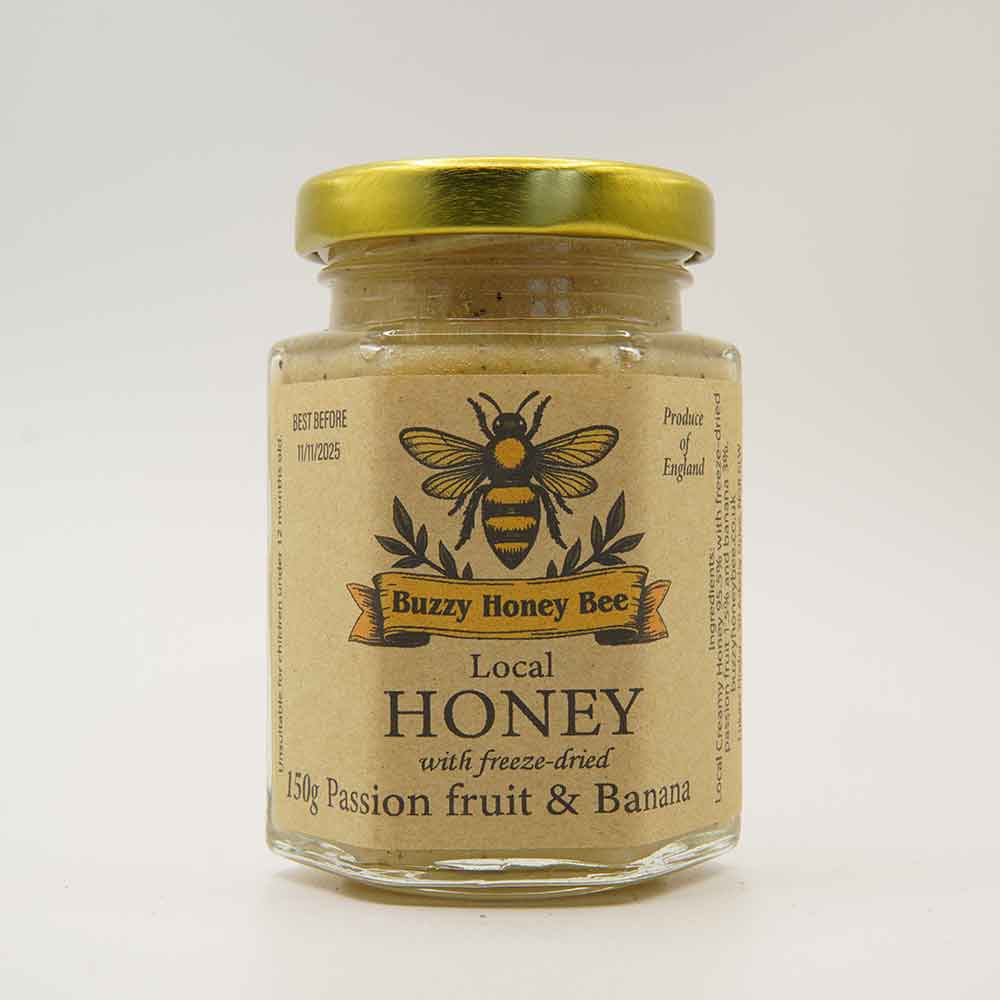
If you want a jar from that landscape, the raw local honey shelf is the record. It is not a substitute for planting your own block of lavender.
Frequently asked questions
How do you attract bees to your garden?
Give them open flowers in a clump, something in bloom from early spring to autumn, no insecticide on the forage, and a shallow drink. Start with lavender, flowering herbs and a corner you stop mowing.
How long does it take before bees turn up?
On a warm day, a block of the right plant can have traffic the same afternoon. A new border takes a season to look like the picture. The bees do not wait for the picture.
Will a bee house attract bees?
Sometimes, for a few solitary species, if it is in sun and stays dry. It will not replace flowers. Honey bees will not move into it.
Can I attract bees to a balcony?
Yes. Group pots of single-flowered plants in sun and water them. Lavender, thyme, chives and cosmos are enough to start.
Do I need a wildflower meadow?
No. A meadow is useful. A bee friendly garden can be a path of herbs and one uncut strip of lawn. Do both if you have the space. Do not wait for the meadow.
Should I leave the dandelions?
Leave a patch. They are early forage. Mow the path if you want a path.
Will planting for bees bring wasps?
Wasps will use some of the same blooms later in the year. Plant anyway. A nest in the soffit is a separate job.
What should I not do if I want bees?
Do not spray the plants. Do not buy only doubles. Do not plant one of everything. Do not tidy away the last flowers in September.
Is a hive the best way to attract bees?
No. A hive is livestock. Forage is what brings bees to a garden whether the hive is yours or three streets over.
Where do I pick the actual plants?
The list is on flowers for bees. Herbs have their own guide. This page is the layout.
Start with one block
How to attract bees to your garden is not a shopping list of fifty Latin names. It is a block of open flowers, a calendar that does not collapse in March or September, and a sprayer that stays in the shed.
Plant a clump this week. Let one herb bloom. Leave a strip of grass. The bees will vote with the landing.
For the plants themselves, use the flowers for bees hub next. For the forage as a jar, the trace page is the other half of the same story.
Further reading
- Flowers for bees
- The best herbs for bees
- Where my honey comes from
- What is local honey?
- Raw local honey
- Why wasps sting more in late summer
- Garden insects
Enjoyed this article? If you’d like to support more honest writing about bees and local honey, you can buy me a coffee here:
Buy Me a Coffee – Buzzy Honey Bee
Your support also helps me continue working with the bees and offering free bee swarm collection.
Of course, the best way to support this small apiary is still by choosing one of the products below.