A unique wedding favour is not the one that looks clever in a mood board. It is the one that leaves the room.
Most British receptions still put something by the plate. Six months later a lot of those somethings are in a kitchen drawer, or they never left the table. Seeds dry out. A bottle opener joins the other three. A fridge magnet stays in the favour box because nobody wanted to carry it home on the train.
If you are choosing unique wedding favours for a UK day, the useful test is simple. Would a guest open this on Sunday morning? Would they know who it came from without turning the bag inside out? This guide applies that test to the searches couples actually type — unusual, edible, personalised, practical — without turning the page into a catalogue.
You will not find a count of jars here, and you will not find wording for a label. Those are separate jobs. This one is the choice before the spreadsheet.
What unique wedding favours actually mean
Unique, in search boxes, is a polite way of saying not the same as last year’s cousin. Couples type unique wedding favours, unusual favours, creative wedding favours, interesting wedding favours. They mean one thing: do not give us a plastic heart and a stock pun.
Guests do not use those words. They pick the object up, decide in two seconds whether it is food, a tool, or clutter, and either pocket it or leave it.
So uniqueness is not a theme. A rustic day can still hand out the same seed packet as a city loft. A black-tie room can still put a jar that looks like breakfast. The thing that reads as unique is the thing that could only have come from this couple, and that still has a use after the taxi home.
Wedding favor ideas lists will offer you forty options. You need one. The work is cutting the list, not adding to it.
What guests leave on the table
Walk a room at eleven o’clock and you can sort wedding favours for guests without a survey.
- Trinkets stay. Magnets, coasters, keyrings and bottle openers look generous in a photograph. They feel like homework in a coat pocket.
- Empty packaging stays. A pretty box with nothing useful inside is a box. Guests do not take boxes home to admire the card stock.
- Anything that needs assembly stays. A bag of parts is not a favour. It is a craft kit for a tired adult.
- Food that looks like a party bag often gets eaten before the speeches. That is fine if it was the plan. It is not a keepsake.
The favours that leave are the ones that already look like something you would keep in a real kitchen. A small pot of something edible. A candle someone will actually burn. A jar that still makes sense next to the tea caddy.
That is why practical wedding favours and useful wedding favours sit in the same searches as unique. People have learned that unusual and usable are not enemies.
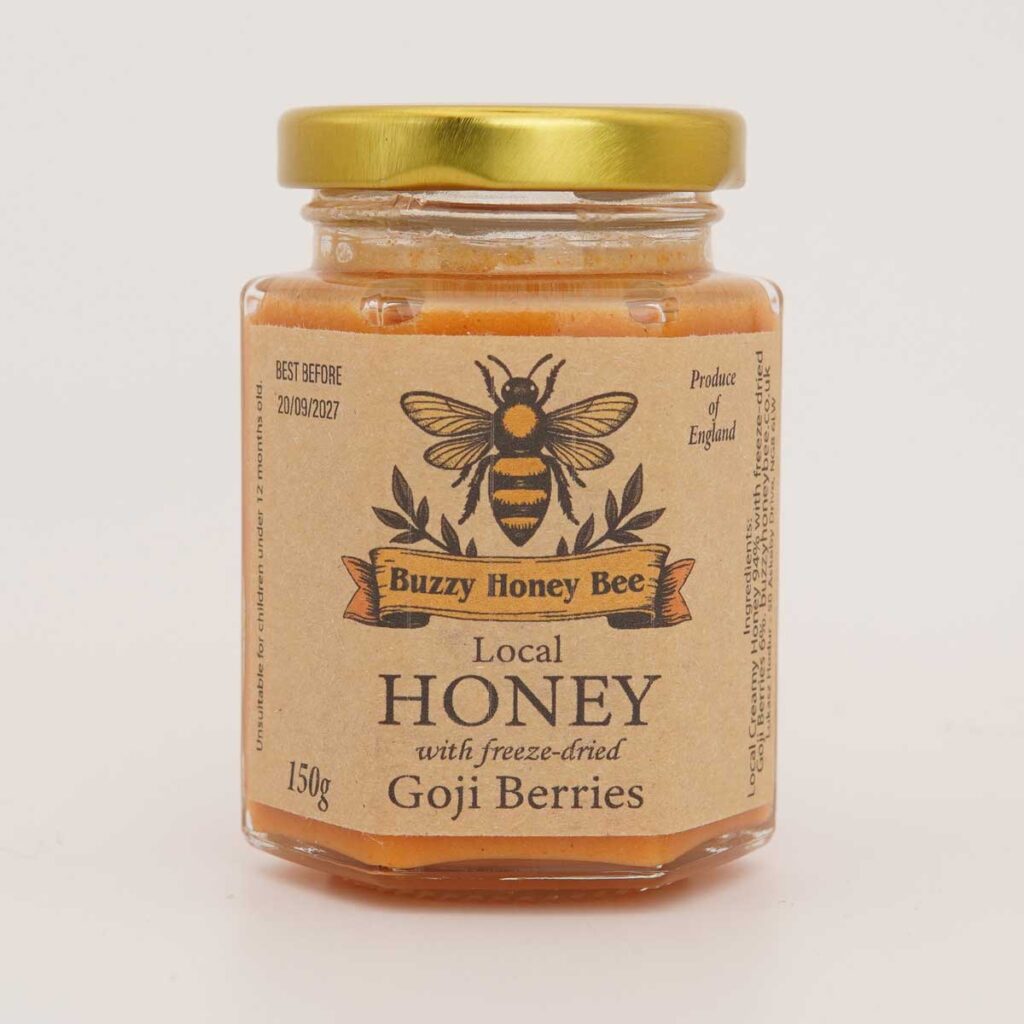
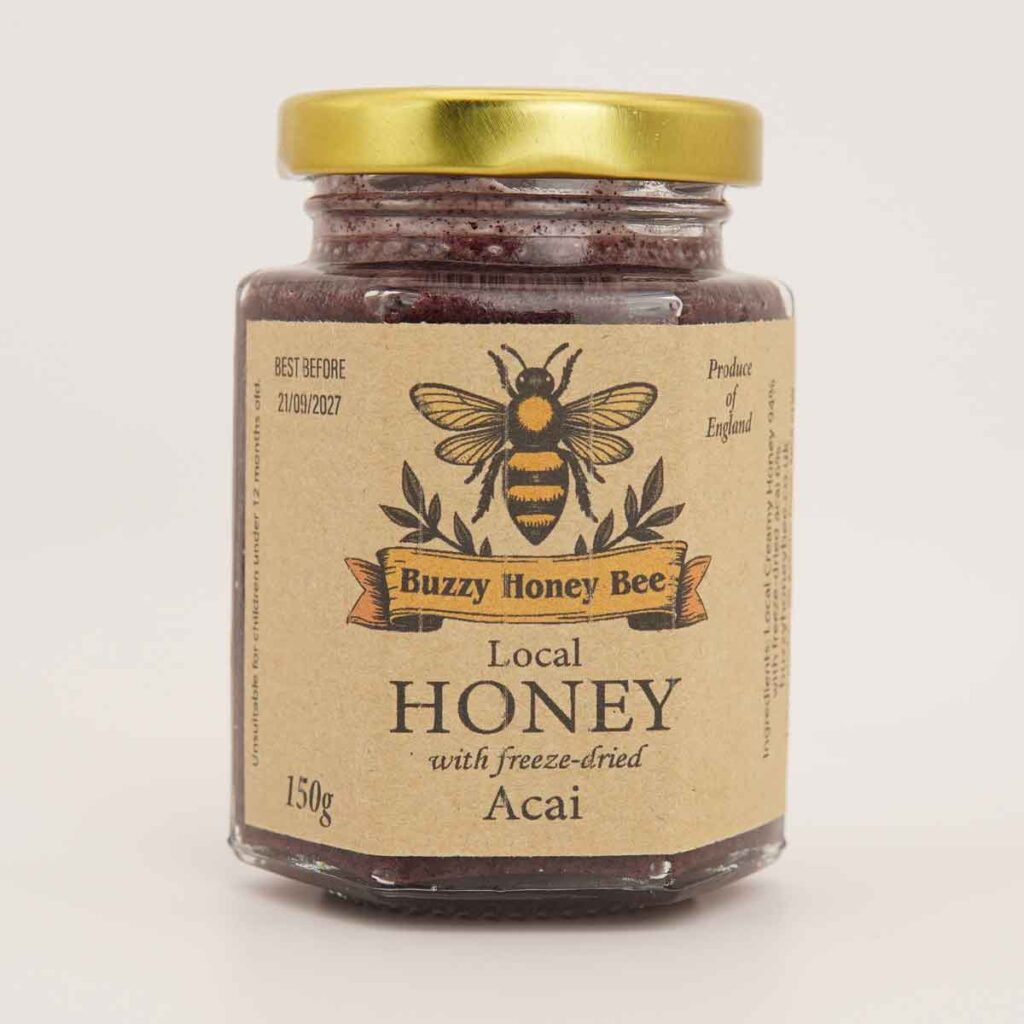
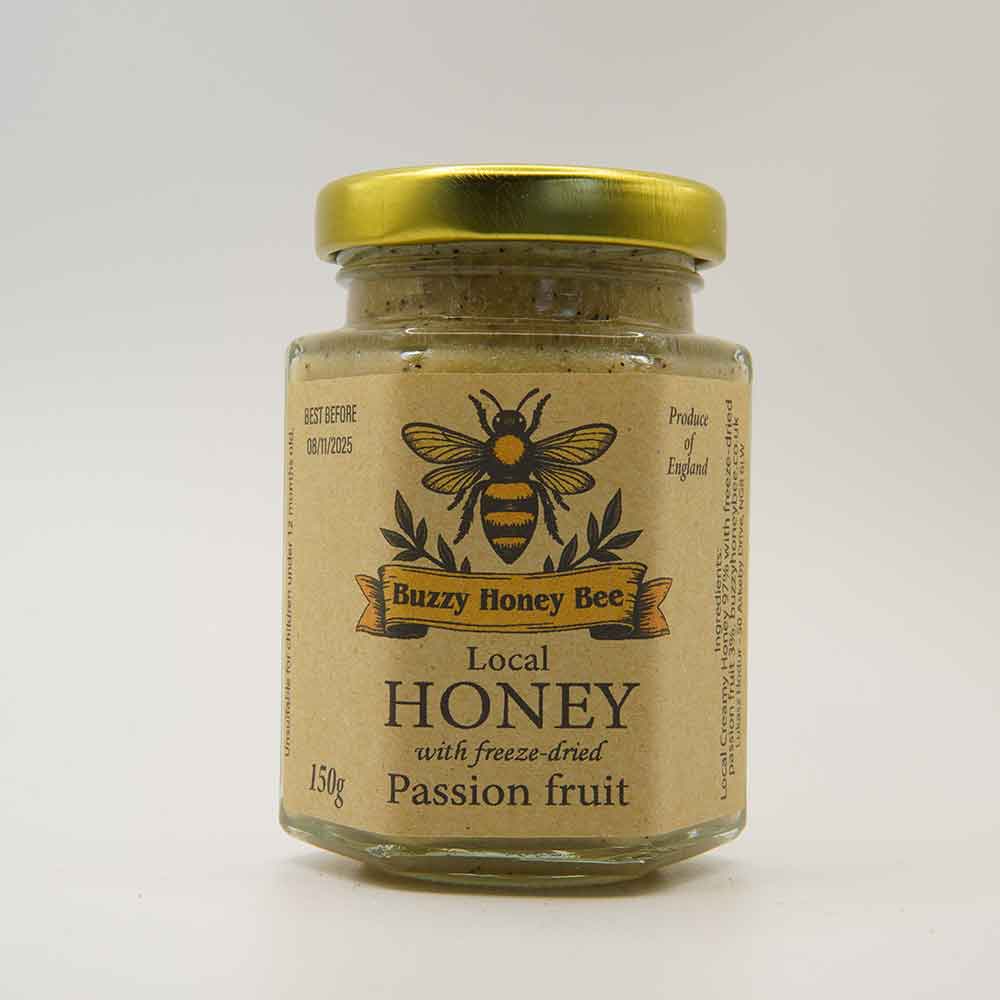
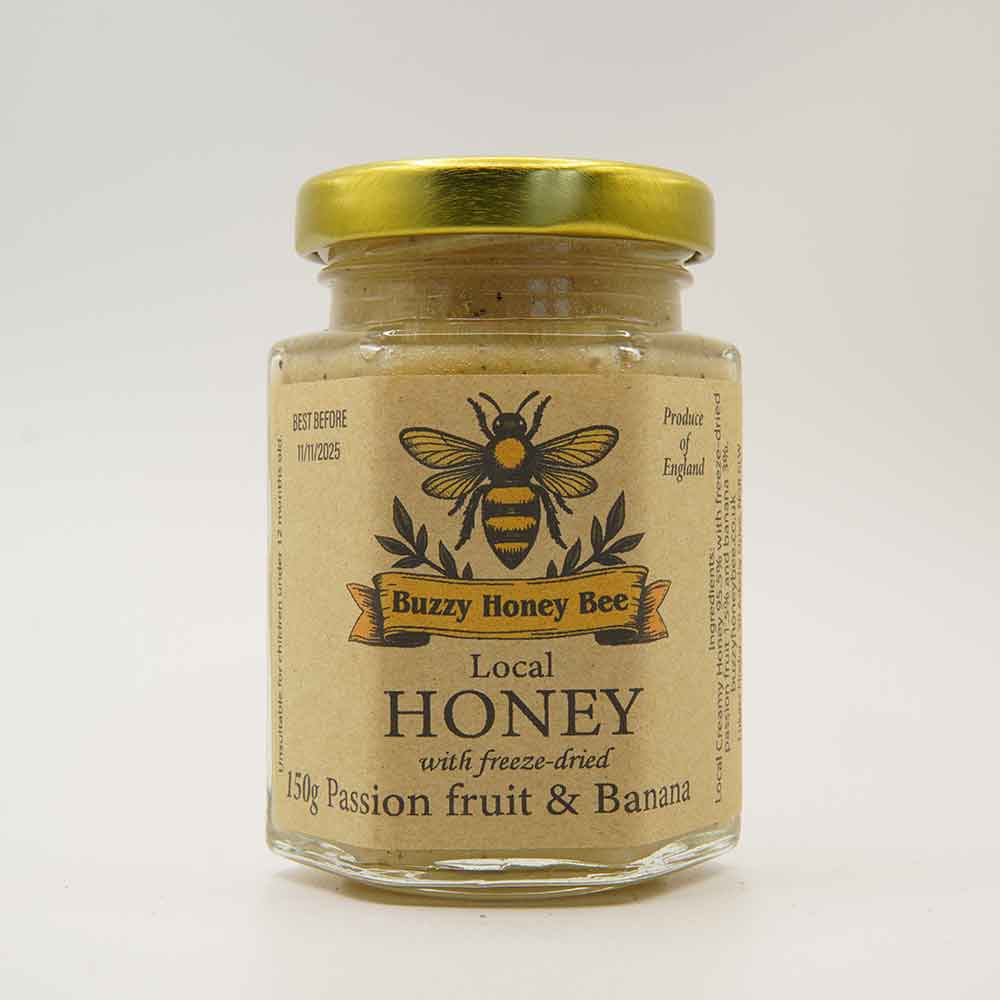
The jar guests talk about is usually the one that does not look like every other honey pot they have seen. Same shape on the plate. Different colour when they turn it in their hand. That is the gap a fruit honey fills. Creamed honey does a quieter job: it is the jar that still behaves on toast the next morning.
Edible wedding favours compared with trinkets
Edible is the largest honest group in this country. ChocIf you want the wording that goes on a honey jar, that is a different page. The point here is only the job it does on the table: it looks like a gift, not like leftover wrapping.
olate, biscuits, a miniature bottle, a jar. Rooms keep proving the same point: guests eat what they understand.
Edible still splits in two.
Eaten on the night
Sweets, a macaron, a shot of something sweet. These work as a gesture. They do not work as a wedding souvenir. If that is all you wanted, stop there and spend the money on the meal.
Taken home and used later
This is the narrower group. A closed jar. A sealed packet that will still be good on Tuesday. Something with a date on it, so it belongs to this Saturday and not to a supermarket aisle.
A small pot of honey sits in the second group. It is food, so it passes the edible test. It is also slow. Nobody finishes a jar between the starter and the cake. That is the difference between a party bag and a favour a guest can name a month later.
If you want the wording that goes on a honey jar, that is a different page. The point here is only the job it does on the table: it looks like a gift, not like leftover wrapping. The longer split — heat, wrappers and food that is still food on Sunday — is in edible wedding favours. This page stays on whether the object is worth giving at all.
Personalised wedding favours that still look clean
Personalised wedding favours are the other phrase couples type when they want a bought object to feel like theirs. Names. A date. Sometimes a short line.
The mistake is treating the object as a blank billboard. A long thank-you paragraph, three fonts and a cartoon bee will not make a cheap trinket feel considered. It will make a good object look busy.
A clean personalised favour does three things and then stops:
- It tells you whose day it was.
- It tells you when.
- It still looks like the thing itself — honey, chocolate, a candle — not like stationery glued to food.
If you have already chosen a jar and you are stuck on the words, use the separate guide on what to put on a honey wedding favour label. This page will not repeat that wording. The only rule that belongs here is: if the names are smaller than the decoration, you have over-personalised it.
Wedding table favours: on the plate or on a side table
Wedding table favours and table favours are the same decision in two searches. Where does the object live?
On the plate, everyone sees it. Nobody has to remember. The room photographs as a set. You also commit to one each, which is the higher number.
On a labelled side table, guests choose. Some couples prefer that for a buffet or a standing reception. The risk is obvious. The shy guest takes nothing. The keen guest takes two. A one-line card helps more than a speech.
How many you then order is a sums page, not this one. If the number is the only thing left, start with how many honey wedding favours you need and work from the catering list, not the invitation list.
Why a small honey jar belongs on a shortlist
Honey is not automatically unique. A supermarket squeezy bottle with a ribbon is still a squeezy bottle. The jar earns its place when three things are true.
- The honey is real food, not a novelty syrup with a wedding sticker.
- The pot is small enough for one person to finish, so it does not become a second family jar at the back of a cupboard.
- The label is theirs, not a generic line that could have come from any aisle.
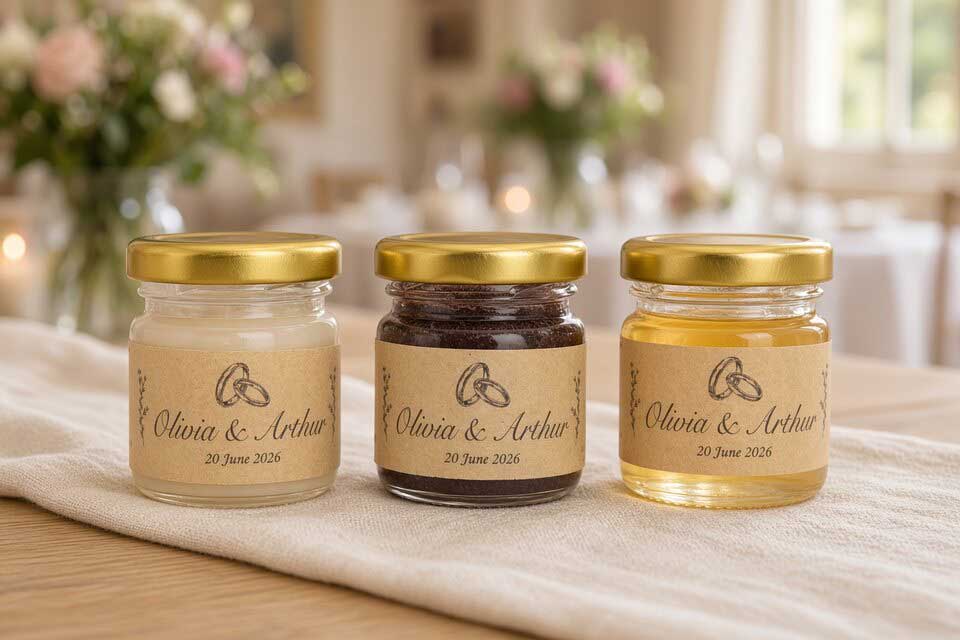
That is the version on the honey wedding favours page: a 50 g guest jar with names and a date. Plain honey is the usual room jar. Guests recognise it. You can stop there and still have a favour that leaves the table.
If you want the jar they remember, change what is inside, not the wrapping.
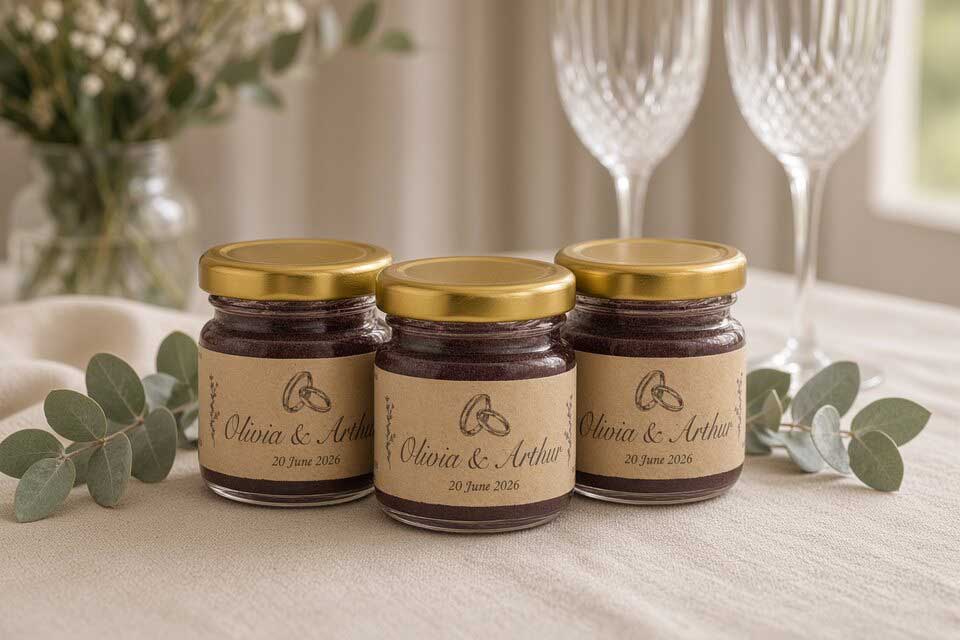
Honey with fruit is the unusual one. The pot looks darker. People turn it before they sit down. Raspberry, strawberry, blueberry or passion fruit is enough of a choice for a wedding table — you do not need a tasting menu at every seat. The same 50 g jar, the same label, a different breakfast. There is a fuller note on what fruit-infused honey is if someone at the table asks why it is not the gold they expected.
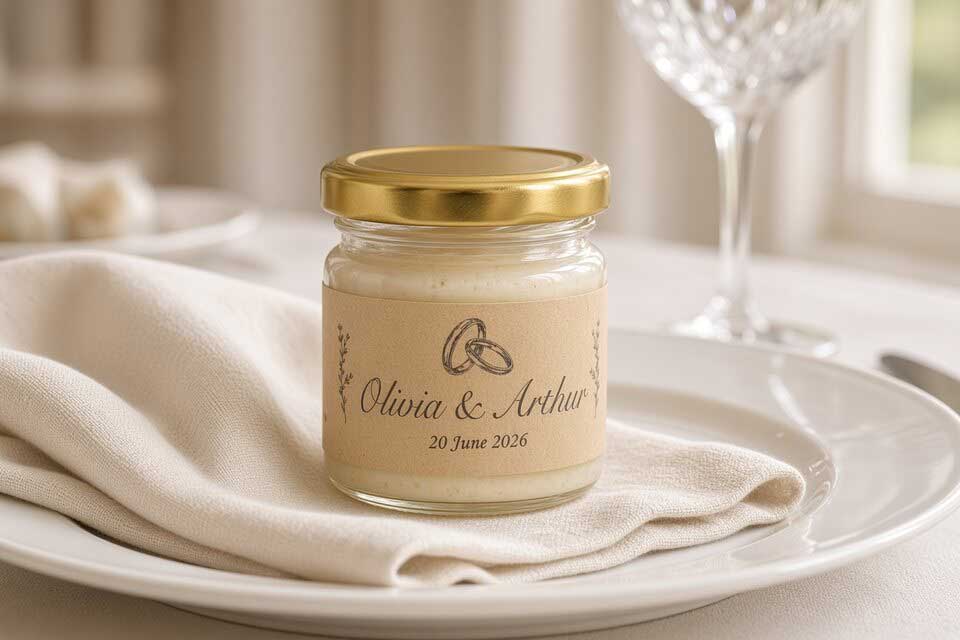
Creamed honey is the quiet option. No fruit, no darker glass, just a jar that spreads on a crumpet and does not run. It is the practical unique wedding favour, not the theatrical one. Use it when you want every place to feel considered and you do not want the room to look like a pudding trolley.
A common split is plain or creamed for the room, fruit on the top table. Or fruit for everyone, if that is the point of the favour. Say which you want in the same message as the date. The sums for mixed orders sit on how many honey wedding favours you need, not here.
Cheap unique wedding favours, and what they cost you
Cheap unique wedding favours is a real search. It usually means we like the unusual idea and we have eighty seats. Fair.
The floor is not zero. A favour that costs very little is often an empty box, a seed packet, or a chocolate that looks like every other chocolate. Guests notice the thought more than the pound. They also notice when the object has no second life.
A better way to cut the bill without making the room look mean:
- One object for the room, not a different trinket per table.
- A small jar on the adult places, not a second gift in every welcome bag unless you have a reason.
- Fruit or creamed only where you want the difference — the top table, or the whole room — instead of dressing every seat in extra ribbon.
- A slightly richer thing for the wedding party: a fruit honey gift box or a mixed honey and candle set, not an upgrade of all eighty seats.
- Skip the dipper, the hessian wrap and the extra tag if they only exist to look expensive in a photo.
Unique does not mean more props. It means one object that can survive the journey home.
A short way to choose without a Pinterest spiral
Suggestions for wedding favours go on forever. Use four questions and stop.
| Ask | If yes | If no |
|---|---|---|
| Will a guest use this next week? | It can sit on the plate. | It is decoration. Budget it as decoration. |
| Can they tell whose day it was? | Names and a date are enough. | Personalise the object, not the wrapping. |
| Can they carry it on a train? | Small, closed, no leaks. | Put it on a side table, or choose something smaller. |
| Would you keep one yourself? | Order it. | You already know the answer. |
Most couples who answer those four questions land on food or a candle. That is not a failure of imagination. It is what unique looks like when the room is full of tired, well-dressed people who still have to get home.
If the food is honey and you want one more cut: plain if you want calm, creamed if you want Sunday toast, fruit if you want the jar they turn in their hand.
Where honey sits among other unique wedding gifts
Unique wedding gifts for the couple and unique wedding favours for the guests are different jobs. A gift for the couple can be larger: a set of jars, a gift box, something they will open together. A favour has to work at scale. It has to look the same on table twelve as it does on table one.
If you want the jar to be used, not displayed, the texture matters less than people think. Some guests prefer a spoonable jar. Others want a drizzle. There is a plain explanation of what set honey is if someone asks why a jar looks thick, and a separate note on the best ways to use set honey if you are choosing for a breakfast table. Once the jar is home, how to store honey properly is the only care it needs.
Do not print any of that on the favour. Guests did not come for a lecture. They came for dinner, and they will keep the thing that still makes sense in a weekday kitchen.
What not to do
- Do not mix four different favours on one table unless you enjoy explaining it.
- Do not hide the object inside a box that then needs its own ribbon, tag and bag. That is three favours.
- Do not give honey to infants. UK advice is clear: honey is not for children under 12 months.
- Do not copy an American “favors” listing and expect it to read as a British table. Spell it favours on the card if you spell it favours on the menu.
- Do not put a different fruit on every seat. Raspberry at table four and mango at table nine is a stocktake, not a favour.
Rustic wedding favours, eco-friendly wedding favours and sustainable wedding favours are the same test in greener language. A reusable jar scores. A plastic magnet with a recycled hang-tag does not.
A working shortlist
If you want a unique wedding favour and you do not want twenty tabs open, these five cover almost every British room:
- A small personalised honey jar on each adult place.
- Plain or creamed honey for the room, if you want the table to look calm.
- Fruit honey for the top table — or for the whole room, if the unusual jar is the point.
- A candle or a fruit gift box for the people who stood next to you all day.
- One spare tray in the kitchen, not a second concept.
When you are ready to talk about a date and a rough headcount, the jars live on the honey wedding favours UK page. Bring the catering number, not the save-the-date list, and say whether the room is plain, creamed or fruit.
Frequently asked questions
What are unique wedding favours that guests actually keep?
Things they would buy for themselves on an ordinary Tuesday. A small jar of honey, a candle they will burn, a packet of something they already eat. Unusual shape helps less than a use at home.
Are edible wedding favours better than trinkets?
Usually, yes, if the food can travel. Chocolate on a hot day and an open sweet bag fail that test. A closed jar or a sealed biscuit tin does not.
Do unique wedding favours have to be personalised?
No. Names and a date help a guest remember which Saturday it was. A clean object without a slogan is still a favour. Personalised wedding favours go wrong when the decoration is louder than the food.
What should I put on the table — one per guest or a side table?
One per adult place is the tidy version. A side table works for a standing reception if you put a short card next to the tray. The count itself belongs on the how-many guide, not here.
Are honey jars unique wedding favours or just popular ones?
They are popular because they work. They become unique when the honey is real, the pot is small, and the names are yours. A ribbon on a supermarket bottle is not the same object. Fruit honey is the version guests notice on the table. Creamed honey is the version they use the next morning.
How small should a favour jar be?
Small enough for one person. A 50 g guest jar is breakfast, not a store-cupboard pot. Mini honey jars in that range leave the table. Family sizes stay in the gift pile.
Can the guest jars be fruit honey, not plain?
Yes. Same size, same label. Plain is the usual room jar. Fruit is the one people turn in their hand. You can mix: plain or creamed for the room, fruit on the top table.
What about rustic or eco-friendly wedding favours?
Use the same test. A glass jar that gets washed and reused is more honest than a seed packet that never gets sown. Hessian is optional. The contents are not.
Can I mix honey with another favour?
You can. You rarely should, not for the whole room. One object per guest keeps the table calm. Save the second object for the wedding party if you want a richer thank-you.
Where do I start if I have already chosen honey?
Count the seats with how many honey wedding favours you need, then settle the names on the label guide. This page is only for the choice before those two.
The short version
Unique wedding favours are the ones that leave with the guest and still make sense in a weekday kitchen. That is a higher bar than a Pinterest title, and a lower bar than most lists pretend.
If the object that passes your own four questions is a small jar, decide what is in it. Plain if you want calm. Creamed if you want toast. Fruit if you want the pot they remember. Then stop decorating it. The room will thank you, and so will the person who has to pack the leftovers at midnight.
Further reading
- Honey wedding favours UK — personalised guest jars
- Honey with fruits
- Honey with fruits from Buzzy Honey Bee
- Set honey vs creamed honey
- How many honey wedding favours do I need?
- What to put on a honey wedding favour label
Enjoyed this article? If you’d like to support more honest writing about bees and local honey, you can buy me a coffee here:
Buy Me a Coffee – Buzzy Honey Bee
Your support also helps me continue working with the bees and offering free bee swarm collection.
Of course, the best way to support this small apiary is still by choosing one of the products below.