You’ve chosen honey for the tables. Now the label stares back at you. Names and a date feel too plain. A pun feels like every other jar on Pinterest. A paragraph will not fit. And someone in the group chat has just sent six versions of “Meant to Bee”. What should I put on a honey wedding favour label? Less than you think. Guests read it for two seconds, then put the jar in a pocket. The wording that works is the wording they can still read from the next chair.
This is a practical guide for UK weddings. It sets out what you can put on a honey wedding favour label, what is worth putting, and what to leave off so the jar still looks like a gift. Names and a date sit on the jar after you have chosen the favour. The choice itself is in unique wedding favours. If you are still counting seats, start with how many honey wedding favours you need. If the number is already in your head, the honey wedding favours page is the place to send the date, the count and the wording together.
The short answer
You can put three personal things on a honey wedding favour label: your first names, the wedding date, and one small extra — either a short phrase or a simple graphic. That is enough. The jar already holds the honey. The label only has to say whose day it was.
A guest jar is small. Honey sold in the UK also needs the ordinary food information on the same pot: the weight, a description of what is inside, the producer’s name and address, and a best-before date. Those lines are required. They use space. That is why a poem, a hashtag and a second joke rarely make it onto the same label.
What you can put on a honey wedding favour label
Start with what is allowed, then cut back to what still looks clear.
Names
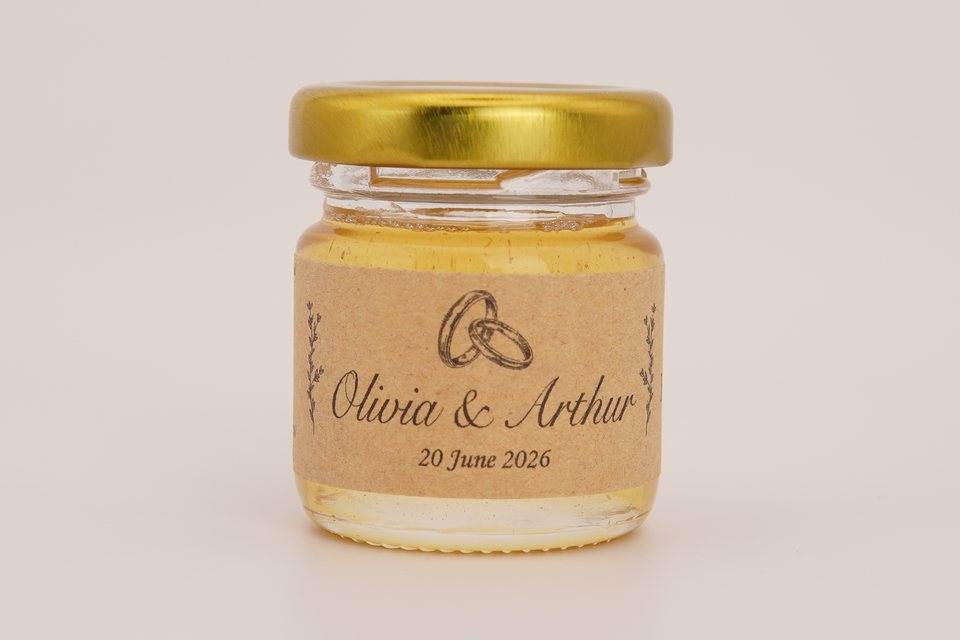
First names are the cleanest choice. Emma & James. Maya and Ben. That is the line guests recognise from across the table.
You can use surnames if they still fit. A long double-barrelled line next to the weight and the producer’s address usually shrinks until nobody can read it. Test the longest version on paper before you ask anyone to print a hundred of them.
Pick one joining mark and keep it. Emma and James is fine. Emma & James is fine. Emma + James looks like a poster. Use the same version on the menu and the place cards so the day does not mix three spellings of your names.
The wedding date
The date is the keepsake. Six months later someone finds the jar at the back of a cupboard and the date tells them which Saturday it was. A pun will not do that.
Write the month as a word: 14 June 2026. Numbers-only dates get misread, and American layouts swap the day and the month. A British wedding label should still look British on a breakfast table in November.
A short phrase
You can add one short line if you want one. Keep it under four words so the names stay large.
| You can use | Tone | Note |
|---|---|---|
| Thank you | Plain | Fits almost every room |
| With love | Warm | Quiet days, smaller lists |
| Love is sweet | Familiar | If you want one well-known line |
| Meant to bee | Playful | Only if it sounds like you |
| Nothing extra | Simplest | Names and date are already enough |
You do not need a pun for the favour to count as personalised. Names and a date already answer the question on the jar: who, and when.
Leave off anything that needs two lines. “Thank you for celebrating our special day with us” will wrap badly or print too small. The guest already celebrated.
A small graphic
You can use a small mark instead of a phrase, or skip both. A pair of rings is a common choice. A simple sprig or a tiny bee works too. The mark should stay smaller than the names. If the graphic is the first thing you see, the names have lost.
Treat the graphic and the phrase as one extra, not two. A guest jar does not have room for rings and a slogan and the food information the law already asks for.
What already has to be on the jar
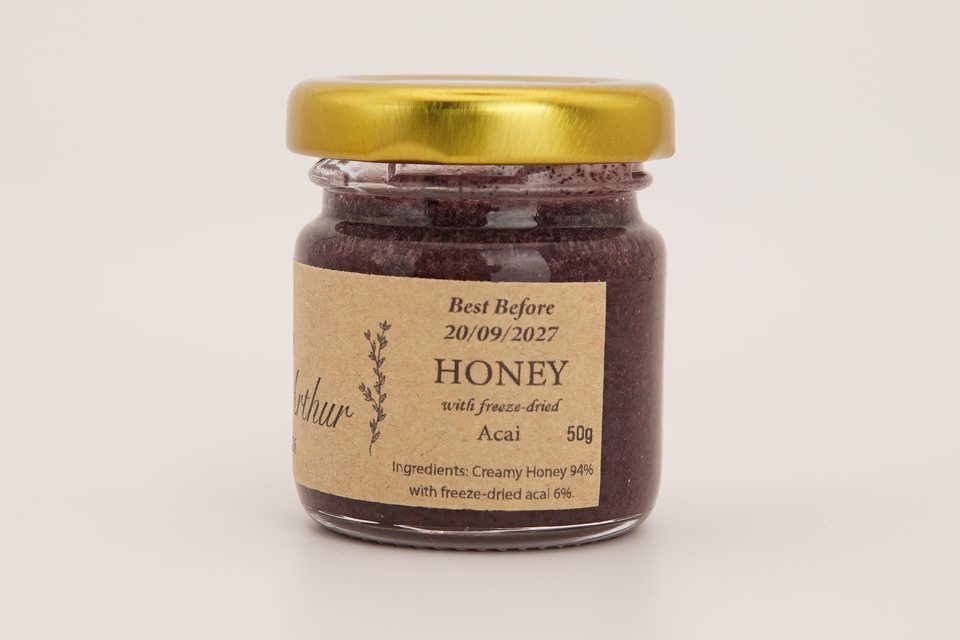
A jar of honey sold in the UK is food, even when it is a wedding favour. The same pot still needs:
- The net weight.
- A description of what is in it — honey, and the type if it is not a plain jar.
- The producer’s name and address.
- A best-before date.
That block is not wedding stationery. It is the same information you would find on any jar in a shop. On a small guest jar it uses real space. Plan the personalised part around it, not over it. You do not have to design this block from scratch. Anyone who already sells honey will already have it. Your brief is only the personalised part: names, date, and whether you want a short phrase or a small graphic.
What to leave off the label
These ideas come up often. Most of them belong somewhere else, or nowhere.
- A paragraph about the bees. If you want that story, put one sentence on a card on the table.
- A guest’s own name. One wording for the room is the point. Individual names belong on place cards.
- Table numbers. The jar should still make sense when it goes home.
- A QR code or a hashtag. Both fight the date for space.
- A long quote. It forces the names down.
If you care where the honey came from, say so in conversation or on that table card — not as a second essay on the lid. A jar of local honey already carries more meaning than a slogan. Guests taste the place. They do not need it written twice.
One line guests actually need
Raw honey may set in the jar. That is normal. It is still honey. A guest who has only ever bought a squeezy bottle will sometimes think the favour has “gone wrong”.
Do not squeeze that explanation onto the label. One sentence on a small card, or under the menu, is enough: if the honey is thick, stand the jar in warm water. It has not spoiled.
The same card can carry the infant warning. Honey should not be given to babies under 12 months. That is NHS advice, not a style note.
Personalised is optional
Personalised is optional. You can leave the names off and keep the ordinary honey label. It is still a favour. Guests still take the jar home.
Put names and a date on the label when you want the jar to look like part of the day in photographs. If you would rather spend the decision on the honey itself, the ordinary label is enough.
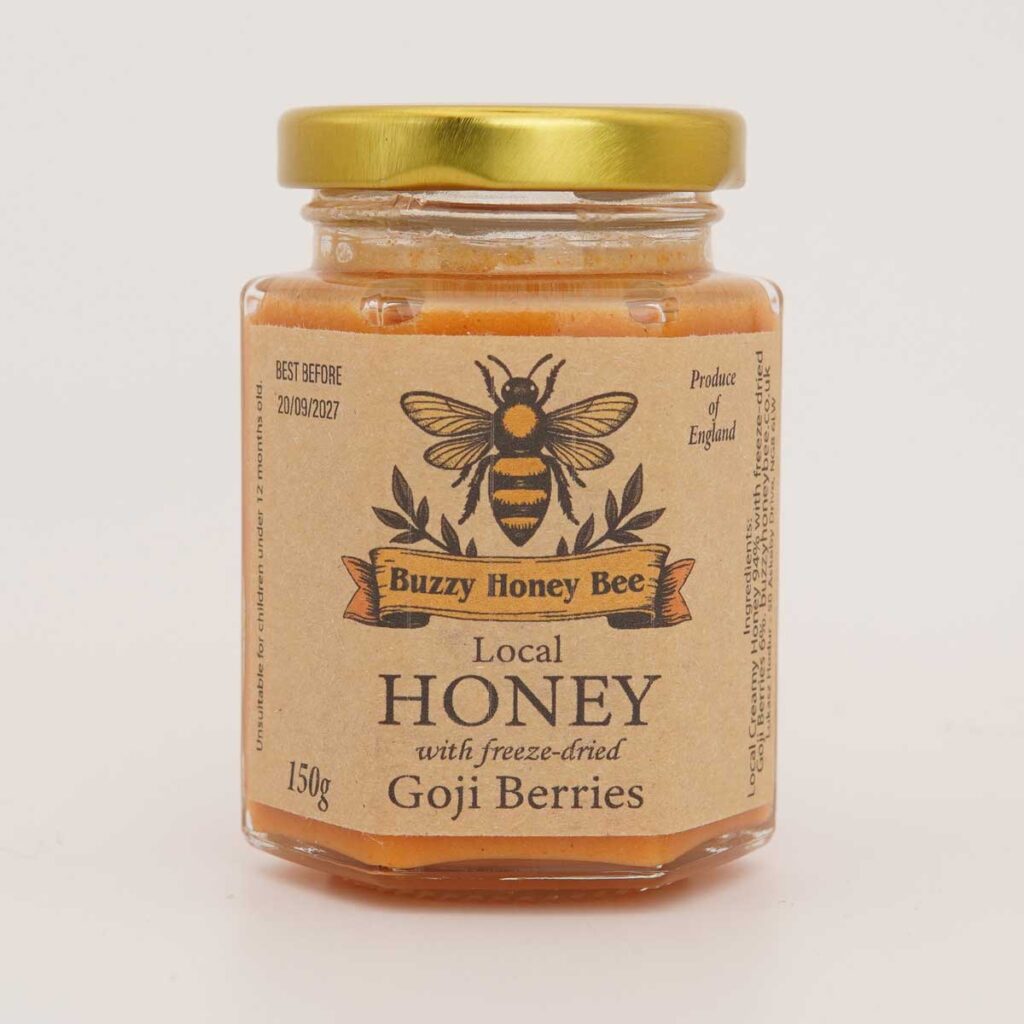
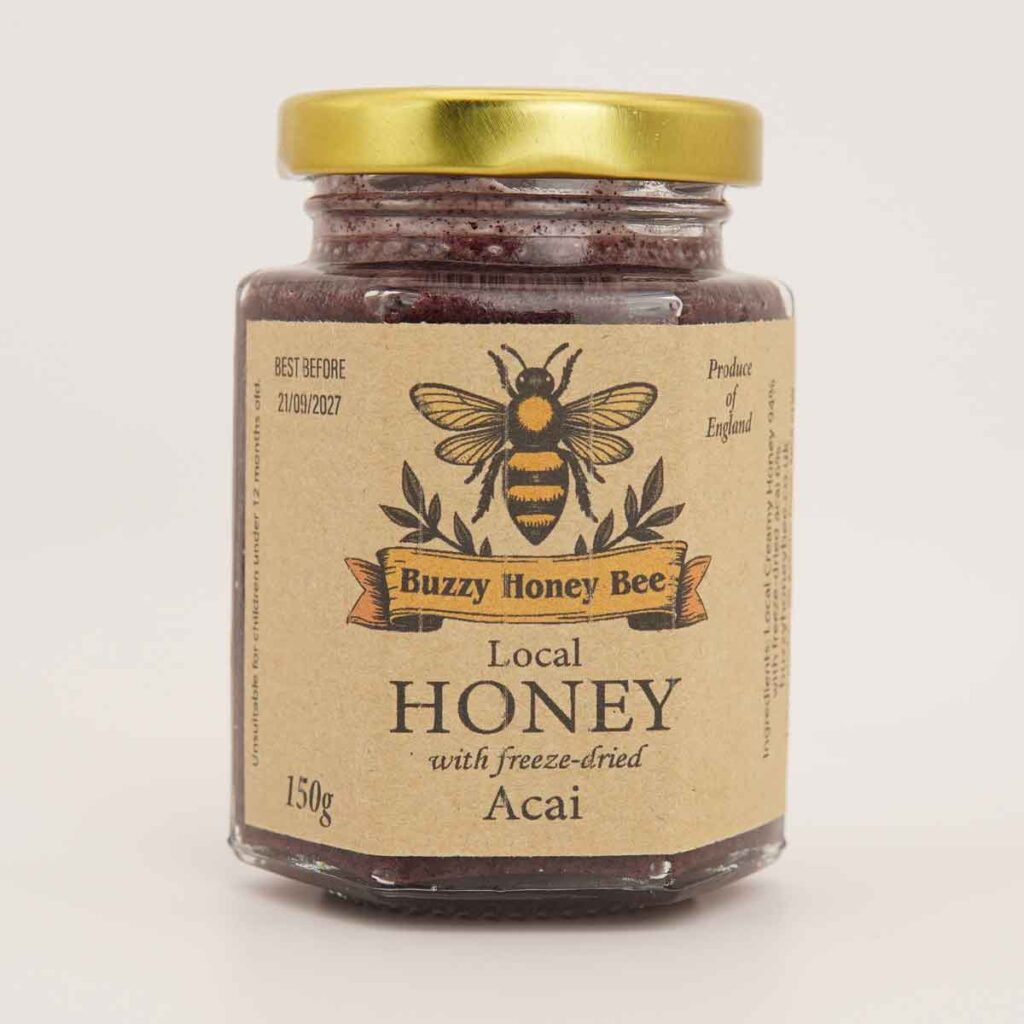
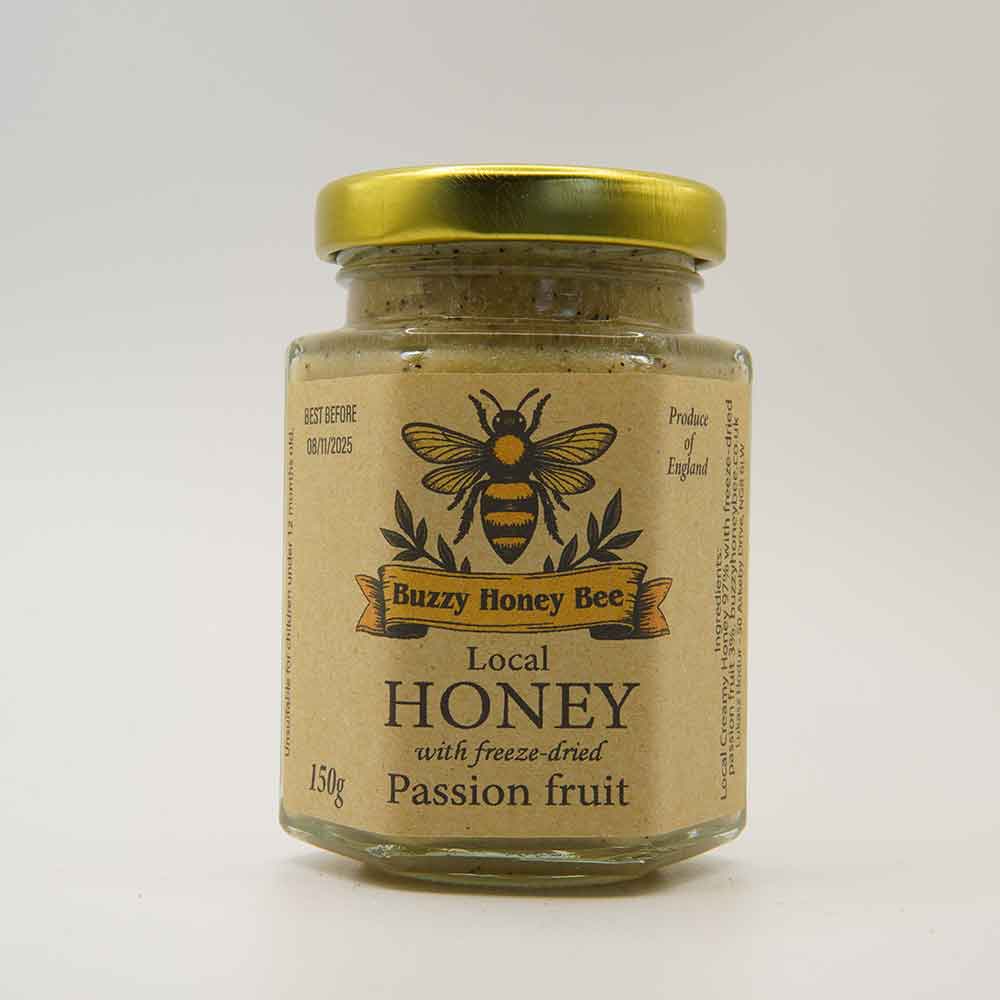
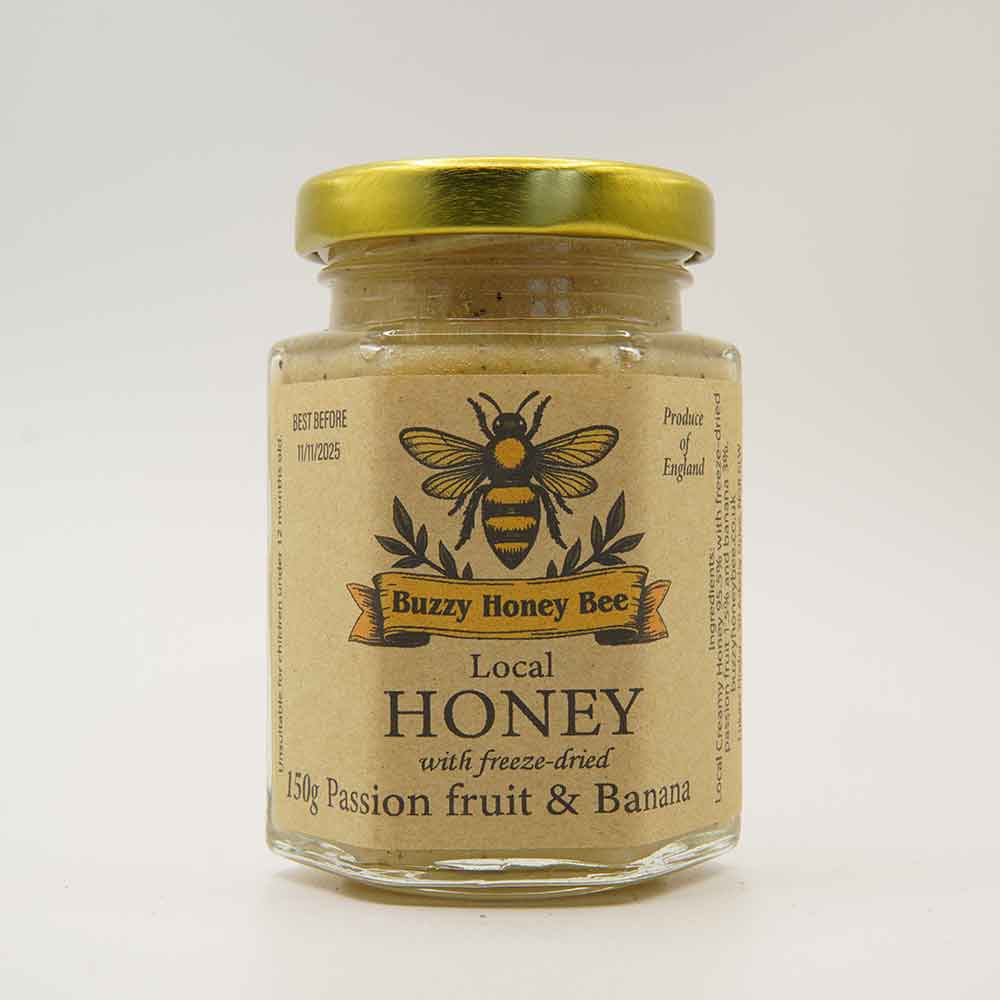
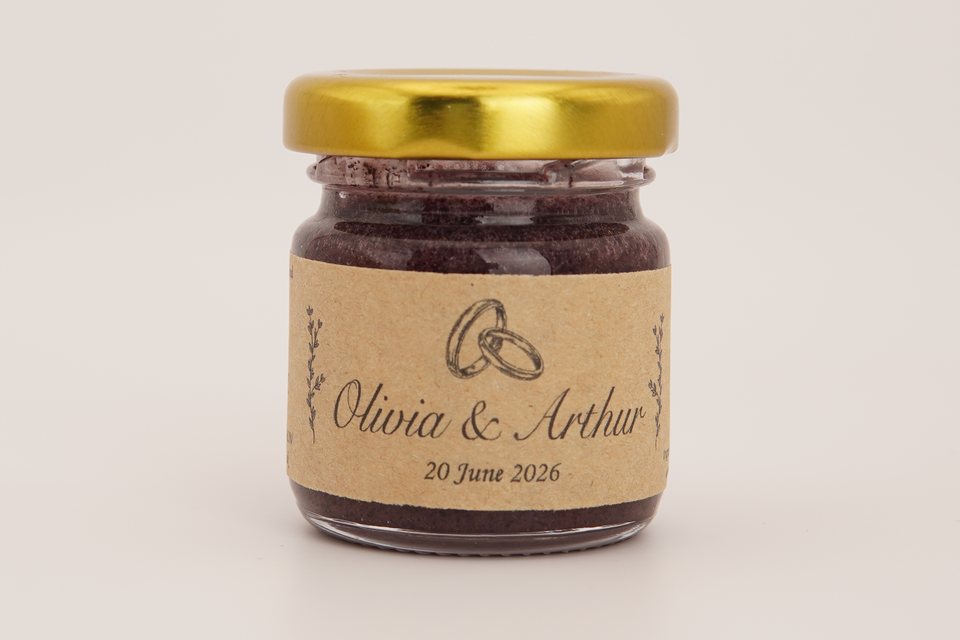
A plain jar is the usual guest favour. Guests recognise it. Honey with fruit is a different present. The jar is dark. People turn it in their hand before they sit down. That is the one they talk about at the table. You do not have to give every seat the same thing. Keep plain honey for the room. Put fruit honey on the top table or give the whole room the unusual jar, if that is the point of the favour.
If you want to know what is in a local jar before you order, start with What is local honey?. The jars are in the shop.
Wording you can actually send
Write one version. Exact spelling. Exact date format. Say whether you want a short phrase, a small graphic, or neither.
| What you can send | How it reads |
|---|---|
| Olivia & Arthur / 20 June 2026 | Names and date. Clear. |
| Thank you / Olivia & Arthur / 20 June 2026 | One short phrase added. |
| Rings / Olivia & Arthur / 20 June 2026 | A small graphic instead of a phrase. |
| The future Mr & Mrs Shah, Saturday 20th of June 2026, Love is sweet like honey | Too long. It will shrink. |
That is the personalised half of the brief. The rest is the number of jars, which honey goes in them, and when you need the box.
How the label fits the rest of the order
The wording is only one part of the brief. Send it with the number of jars, which honey goes in them, and when you need the box.
- How many jars. Confirmed adult seats, plus about 10 percent if the jar sits on the plate. The sums are in the jar-count guide.
- Which honey. Plain honey for the room is the usual choice. Fruit honey or creamed honey is the unusual jar — the one guests notice. Say which you want in the same message as the wording.
- The wording. Names, the date, and one extra if you want it. One version, not six.
- When you need it. Labels are quick once the words are fixed. Waiting happens when the words keep changing.
A few people may get more than a guest jar — a honey gift box or a beeswax candle with the same names on a card. That is a separate line on the order. Do not try to print “top table” on the guest label.
When to lock the wording
Lock the label when you lock the guest number, not the night before anything is printed.
Names rarely change. Dates do not change. What changes is the urge to add one more line. Give that urge two days, then send the short version.
If the wedding is close, keep it simple. Names and a date can go on honey that is already in jars. A new illustration and a poem cannot be invented on a Thursday for a Saturday.
What to send — an example
A Saturday in June. Ninety-two adult guests. A jar on every plate.
They send one short message:
- Wedding date: 13 June 2026
- 102 jars (92 seats plus 10 percent)
- Eight of those with fruit honey, the rest plain
- Label: two rings / Maya & Ben / 13 June 2026
That is enough. The weight, what is in the jar, the producer and the best-before date are already on a honey jar. You do not design those.
Do not send a folder of Pinterest photos. Send the words for the label.
Frequently asked questions
What should I put on a honey wedding favour label?
Your first names and the wedding date. Add one short phrase or one small graphic if you want to. The weight, the contents, the producer and the best before already belong on the jar.
What can I put on the label besides our names?
A date, a short thank-you, a familiar line such as “love is sweet”, a light pun if it sounds like you, or a small mark such as two rings. Pick one extra, not all of them.
Do honey wedding favours need a pun?
No. “Meant to bee” is optional. If it does not sound like you, leave it off. Personalised already means your names are on the jar.
Can we have a graphic and a slogan?
On a small guest jar, treat them as one extra. The required food information is already using the rest of the space.
Can the label include our surname?
Yes, if it still fits. First names usually look cleaner. Test the long version on paper first.
Should every guest get a different label?
Almost never. One wording for the room is the point. Individual names belong on place cards.
What if we do not want a personalised label?
Then use the ordinary label the honey already carries. The favour is still the honey.
Where do we put the warning about babies?
On a card or a menu line, not on an already full label. Honey is not safe for infants under 12 months — see the NHS foods-to-avoid guidance.
Will the honey still look the same on the day?
Raw honey may thicken. That is set honey, not a fault. Tell guests once. For keeping the jar in good condition after the wedding, how to store honey is the useful page.
How do we send the wording?
In one block, exactly as it should appear. Put it in the same message as the wedding date and the jar count. The honey wedding favours page is set up for that note.
Can the guest jars be fruit honey, not plain?
Yes. Plain honey is the usual room jar. Fruit honey is the one guests notice. Same size jar, same label. You can mix: plain for the room, fruit on the top table.
Further reading
- Honey wedding favours UK — personalised jars
- How many honey wedding favours do I need?
- What is local honey?
- Local honey from the shop
- What is set honey?
- How to store honey properly
Enjoyed this article? If you’d like to support more honest writing about bees and local honey, you can buy me a coffee here:
Buy Me a Coffee – Buzzy Honey Bee
Your support also helps me continue working with the bees and offering free bee swarm collection.
Of course, the best way to support this small apiary is still by choosing one of the products below.