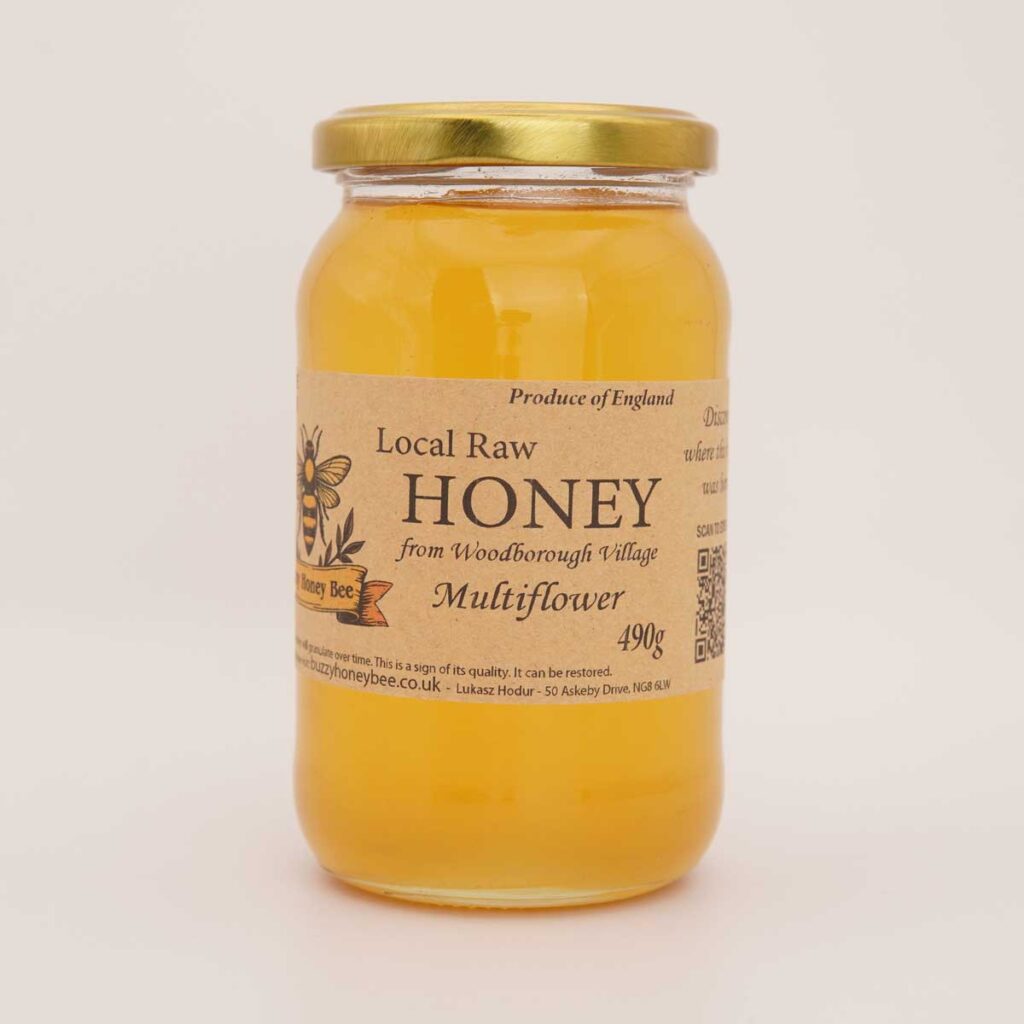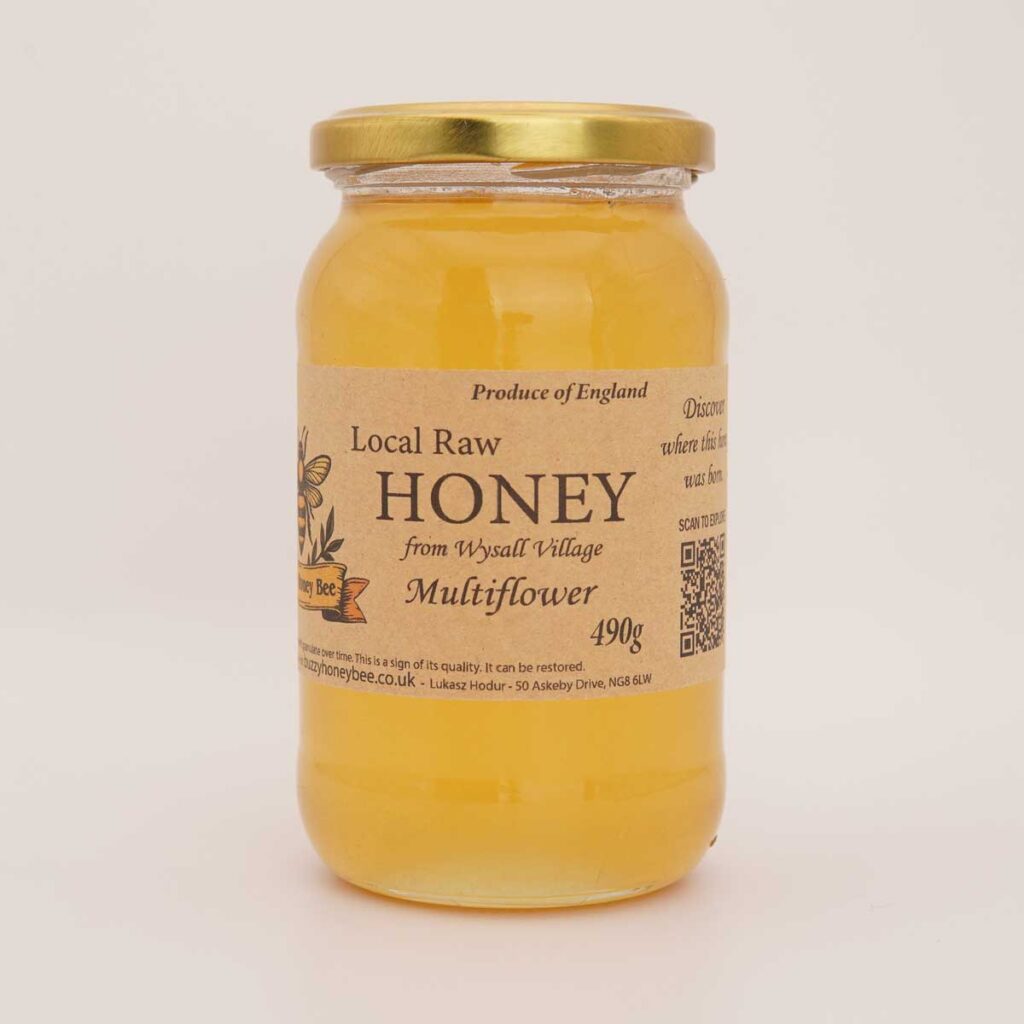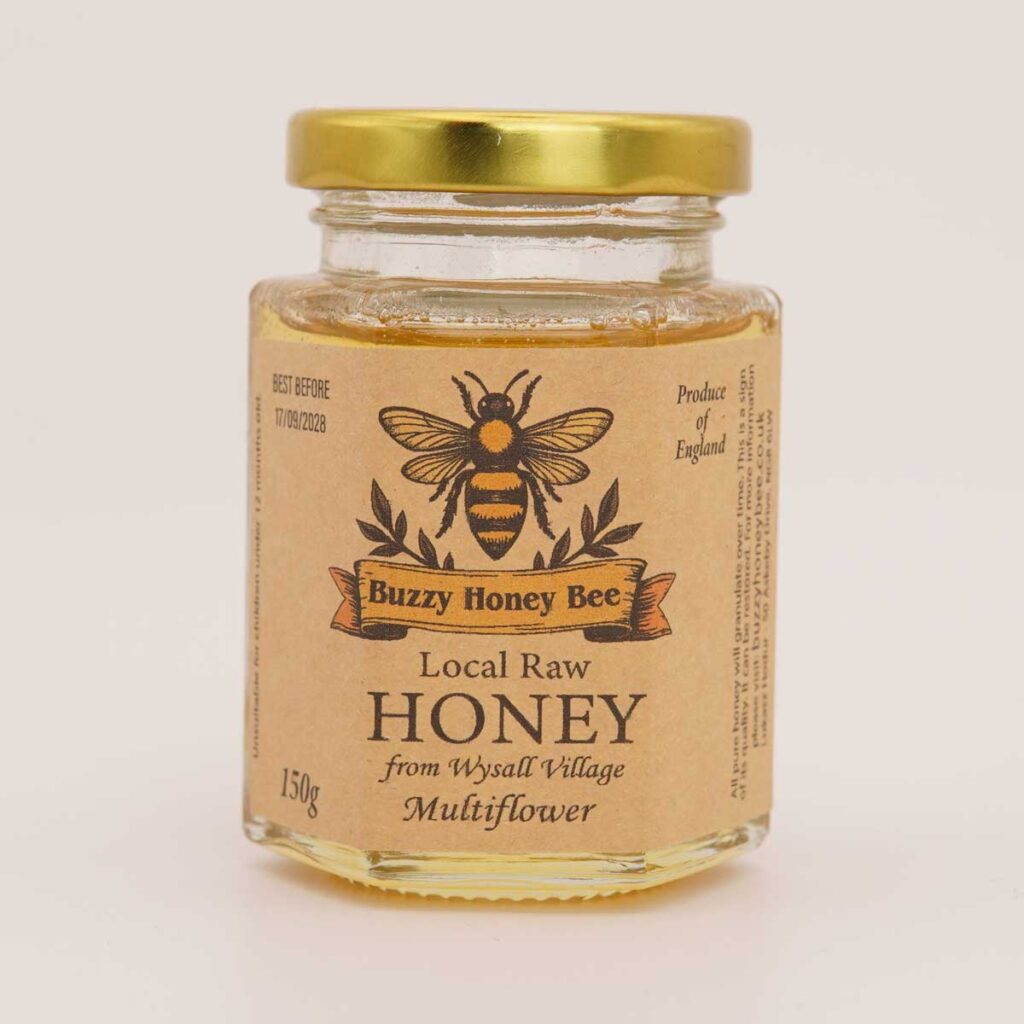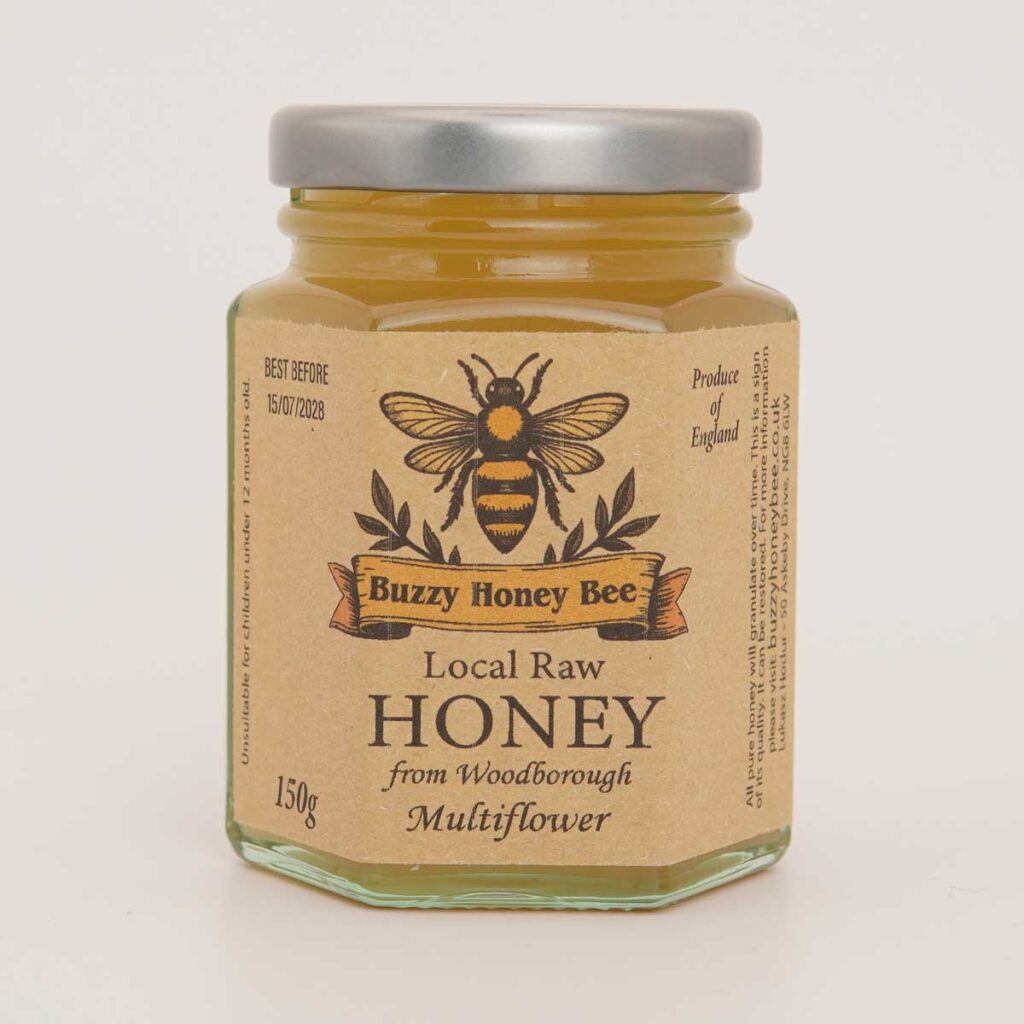
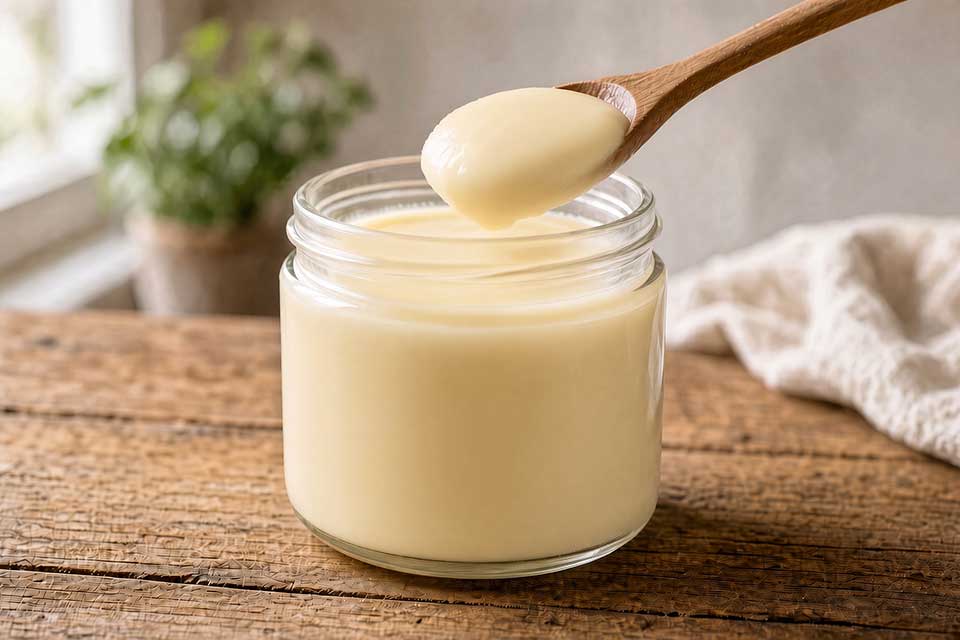
If you’ve only ever bought a squeezy bottle of runny honey, creamed honey can look like a different product. The jar is opaque. The honey sits still. A spoon stands up in it. People ask whether cream has been stirred in, or whether it’s just set honey with a prettier name. It isn’t dairy. It isn’t a blend. Creamed honey is still honey. The difference is the crystal. All raw honey wants to crystallise. Left alone, those crystals can grow uneven and a bit grainy. Creamed honey is raw honey whose crystals have been kept fine, so the jar stays smooth and spreadable. In the UK you’ll also hear soft-set honey and whipped honey. Same family of texture.
This guide explains what creamed honey is, what it is not, how it feels on bread, and when to choose it over a runny jar. If you want a jar from our own apiaries, start with local creamed honey from Whatton.
What is creamed honey?
Creamed honey is honey that has been guided through crystallisation so the crystals stay very small and even. That is the whole idea. Honey is a supersaturated sugar solution. Glucose comes out of solution over time and forms crystals. That is normal. It is the same process behind set honey. The difference is control. In a creamed jar the crystals are fine enough that your tongue reads “smooth” instead of “gritty”. Nothing dairy is added. The word “creamed” describes the texture, like creamed potatoes, not a splash of milk.
Our creamed honey is still raw and local. It comes from the same village forage as the other jars. The bees don’t make two kinds of honey. We bottle two textures.
Creamed, soft-set and whipped — are they the same?
In British shops the names wander.
Creamed honey is the name most people search.
Soft-set honey is the name a lot of UK beekeepers prefer.
Whipped honey is more American, and it makes people think of air beaten into cream.
For a shopper, treat them as the same job: a spreadable honey that does not drip like a runny jar. If a label says “creamed” and the ingredient list is just honey, you are in the right place. If the label lists cream, butter or flavouring oils, that is a different product.
What creamed honey is not
- It is not honey mixed with dairy.
- It is not icing.
- It is not a diet version of honey.
- It is not “fake set honey”.
A naturally set jar and a creamed jar are cousins. Both have crystallised. Creamed honey is the one that has been steered, so the set stays fine and even. We already compare the two here: Set Honey vs Creamed Honey. It is also not the same as runny honey that has been left in a warm cupboard. Runny honey pours. Creamed honey spreads. That comparison is the next article in this series.
Why creamed honey feels so smooth
Think of sugar in a pan. Large crystals feel crunchy. Fine crystals feel silky. Honey works the same way. When crystals grow large, you notice them. When they stay tiny and packed together, the honey feels buttery. Colour often looks a little paler than the same honey in a runny jar, because fine glucose crystals scatter light. The flavour is still the honey. Whatton forage still tastes of Whatton. Texture changes how it sits on the tongue, not which flowers the bees worked.
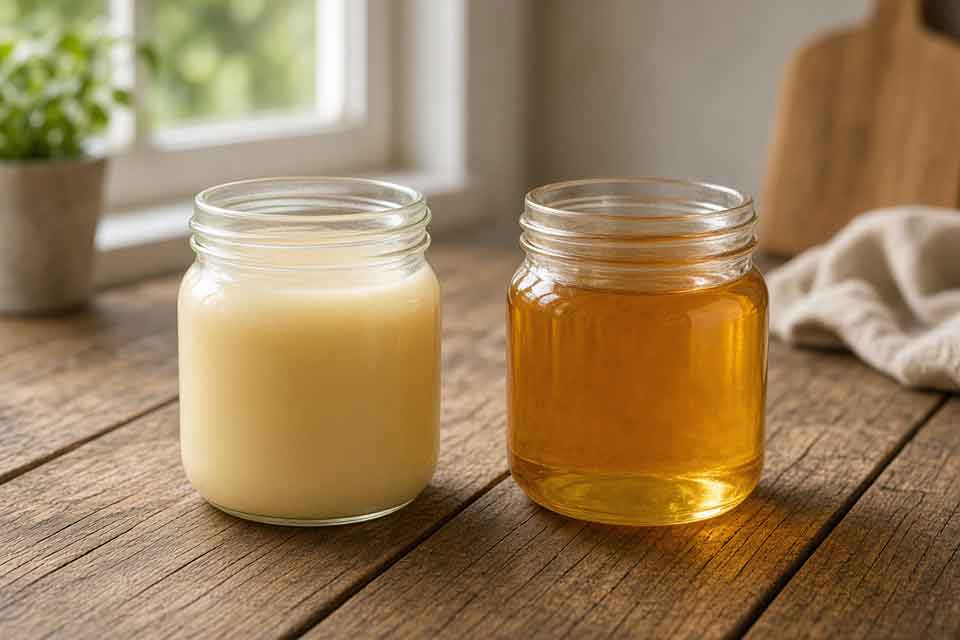
Creamed honey vs runny honey, in short
| Creamed honey | Runny honey | |
|---|---|---|
| Texture | Smooth, spreadable | Liquid, pours |
| On toast | Stays put | Drips |
| In tea | Needs a moment to melt | Dissolves quickly |
| Look | Opaque, even | Clear or cloudy liquid |
| Best for | Bread, crumpets, packed lunches | Drizzle, dressings, a spoon in a mug |
If you want the long version of that table, it belongs in Creamed Honey vs Runny Honey. For now: choose creamed when you want a knife, not a drizzle.
Why families keep coming back for a creamed jar
This is the practical bit, not a slogan. A slice of bread spread with creamed honey holds together. The honey does not slide off into a sleeve or the lunchbox lid. Children can walk across a kitchen with a piece of toast and leave less of a trail than they would with a runny jar. That is the same reason we talk about set honey for packed lunches. Creamed honey is the smoother version of that idea. It is the jar you reach for when the job is spreading, not pouring. Honey should not be given to infants under 12 months. For everyone else, texture is a household choice.
How to use creamed honey
Start simple.
- Toast and butter. The honey sits on the butter instead of soaking the crumb into a wet patch.
- Crumpets and English muffins. Same job. You want coverage, not a puddle in the holes.
- Porridge and yoghurt. A spoonful stirred through gives sweetness without turning the bowl into syrup.
- Cheese. A soft creamed honey next to a sharp cheddar is an easy board.
- Fruit. A little on a sliced apple or a spoon of yoghurt.
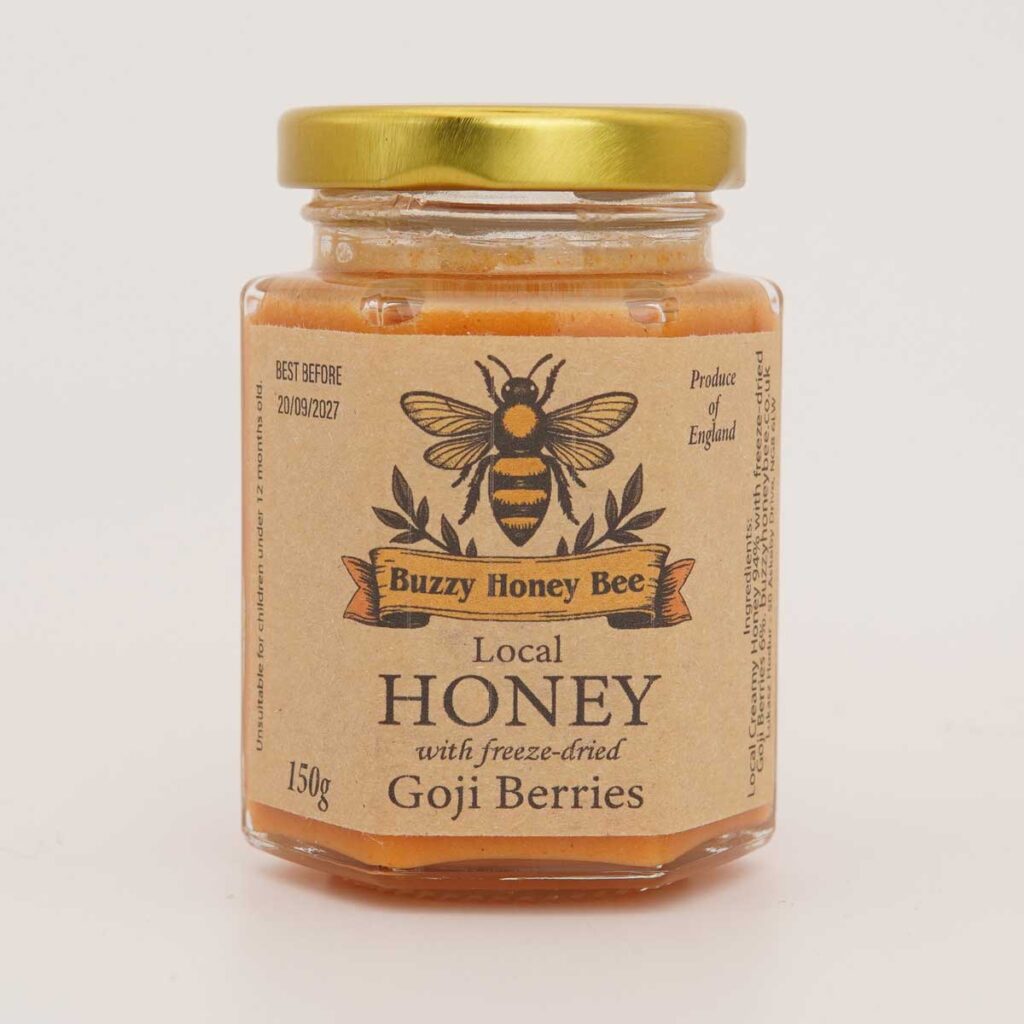
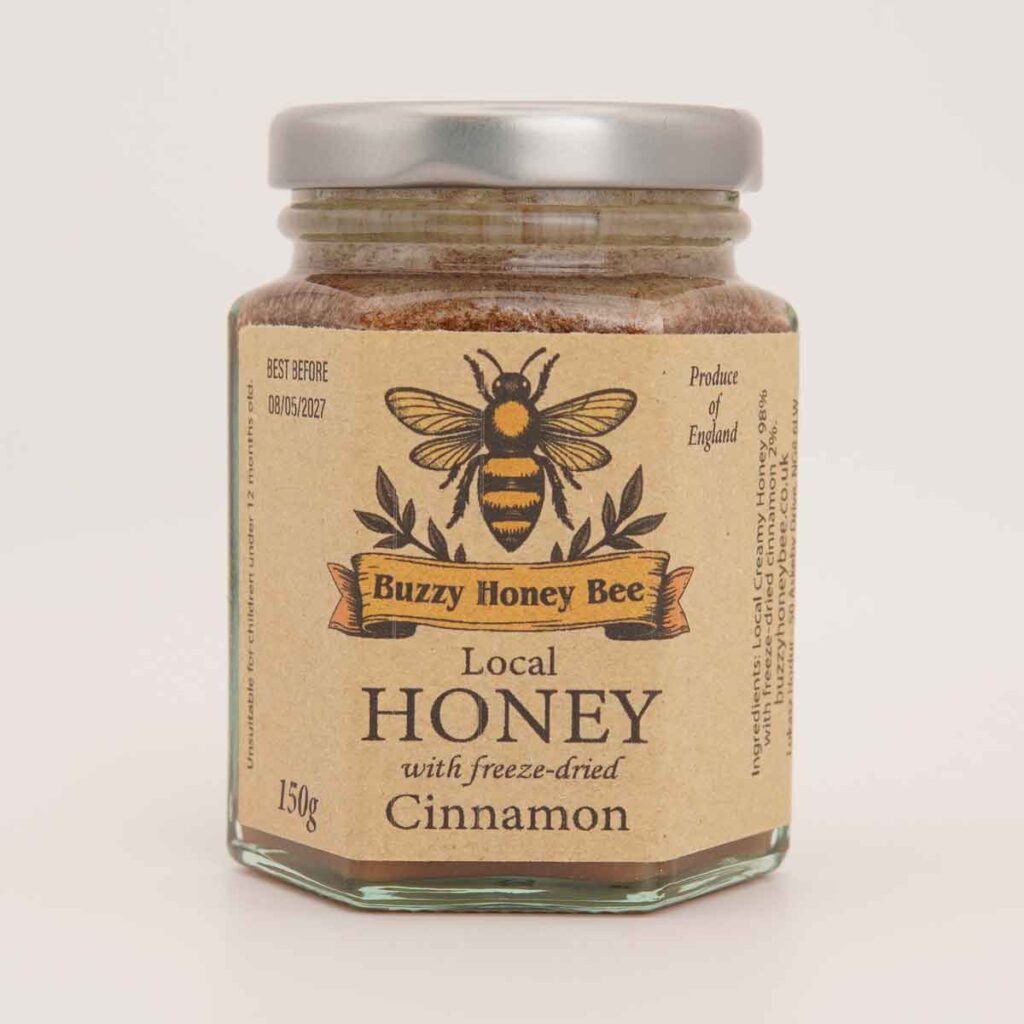
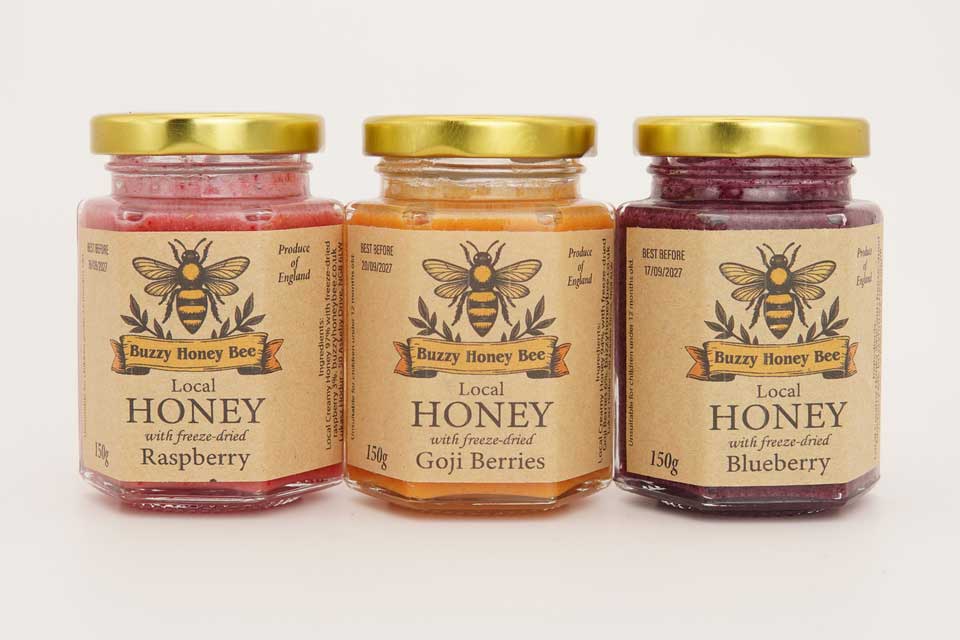
We also cream honey with fruit — raspberry, strawberry, blueberry, banana, mango, passion fruit — for people who want that same spreadable jar with a second flavour. Those jars live here: honey with fruits. A cinnamon jar is on the way. Don’t wait for it if you already want a plain creamed honey.
A longer “how to use” piece will follow this one. You don’t need it to open a jar.
Does creamed honey stay raw?
Ours does. We don’t pasteurise it to make it pretty. “Raw” and “creamed” are not opposites. Raw is about how the honey is handled. Creamed is about the size of the crystals. You can have raw creamed honey. You can also buy creamed honey that has been heated hard in a factory. Read the producer, not just the word on the lid. If you care about place as well as texture, that is the local test we already use for honey in general: What Is Local Honey?.
How to store creamed honey
Keep creamed honey in a cool, dry cupboard with the lid on tight, and always use a clean, dry spoon. That is the simplest habit, and it is enough for most kitchens. Heat is what changes the jar. If the honey sits somewhere warm — a windowsill, a cupboard above the oven, a conservatory in summer — the fine set can slacken. The honey looks a little more liquid. It has not gone off. The crystals have just loosened. Put it back somewhere cooler and it will usually settle again.
The fridge is not a problem for creamed honey. You can keep the jar in there if that suits your kitchen. Unlike a firm set honey, a creamed jar does not turn hard in the cold. It may come out a touch thicker, but it stays soft. You can still spread it straight onto toast without digging or waiting for it to warm up on the worktop.
So choose by how you like the texture, not by fear. Cupboard if you want it at its softest. Fridge if you prefer it a little denser, or if the kitchen runs warm. Either way, lid on, dry spoon, and the honey will last.
Treat it like the set jars: How to Store Set Honey Properly. A dedicated creamed storage note will come later. The habits are the same.
Creamed honey from Buzzy Honey Bee
We cream honey from our own workaround Nottinghamshire and Derbyshire. The plain jars are labelled by village, the same way the set and runny jars are.
- Local Creamed Honey from Whatton Village
- Local Creamed Honey with Bee Pollen
- Fruit jars: honey with fruits
If you already know you want set instead, the set collection is here: raw set honey.
Frequently asked questions
What is creamed honey made of?
Honey. In a plain jar that is the ingredient list. Fruit or pollen jars have those extras named on the label. There is no cream.
Is creamed honey the same as set honey?
No. Both have crystallised. Set honey is the natural set, which can be a little firmer or grainier. Creamed honey is steered so the crystals stay fine. Full comparison: Set Honey vs Creamed Honey.
Is creamed honey the same as whipped honey?
Usually yes, as a shopper’s term. It does not mean air has been beaten in like cream.
Does creamed honey go off?
Properly stored raw honey lasts. Watch the lid and the spoon, not a panic date. More on shelf life: Does Honey Expire?.
Can I put creamed honey in tea?
Yes. It takes a little longer to melt than a runny spoonful. Stir.
Why is creamed honey paler?
Fine crystals scatter light. The honey underneath is still the same forage.
Is creamed honey better for children?
It is tidier on bread than runny honey. Do not give honey to babies under 12 months.
A last word
Creamed honey is raw honey with a smooth set. That is the sentence that matters. If you want a jar that behaves on toast, this is the texture. If you want a drizzle, buy runny. If you like a firmer, more natural crystal, buy set. The bees made one honey. The jar is how you use it.
Start with creamed honey from Whatton, or browse the creamed honey collection.
Enjoyed this article? If you’d like to support more honest writing about bees and local honey, you can buy me a coffee here:
Buy Me a Coffee – Buzzy Honey Bee
Your support also helps me continue working with the bees and offering free bee swarm collection.
Of course, the best way to support this small apiary is still by choosing one of the products below.