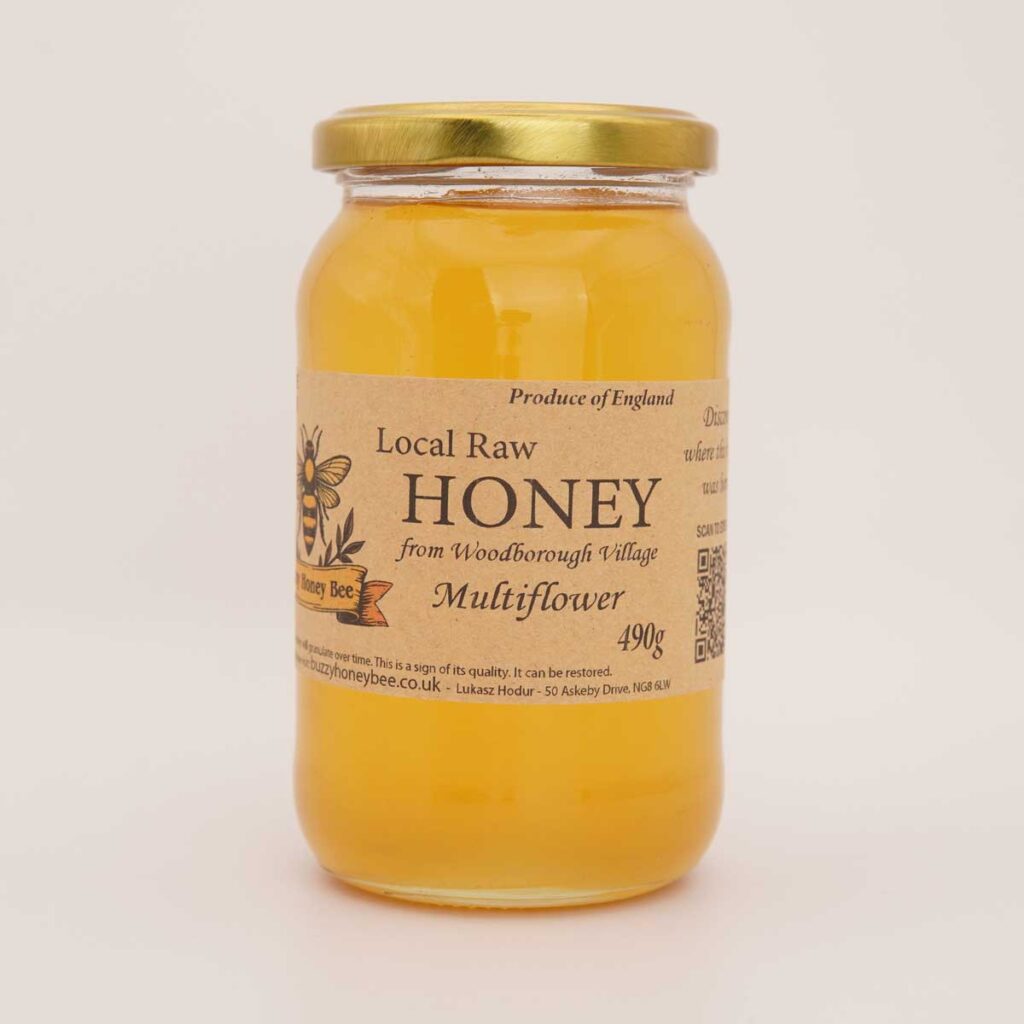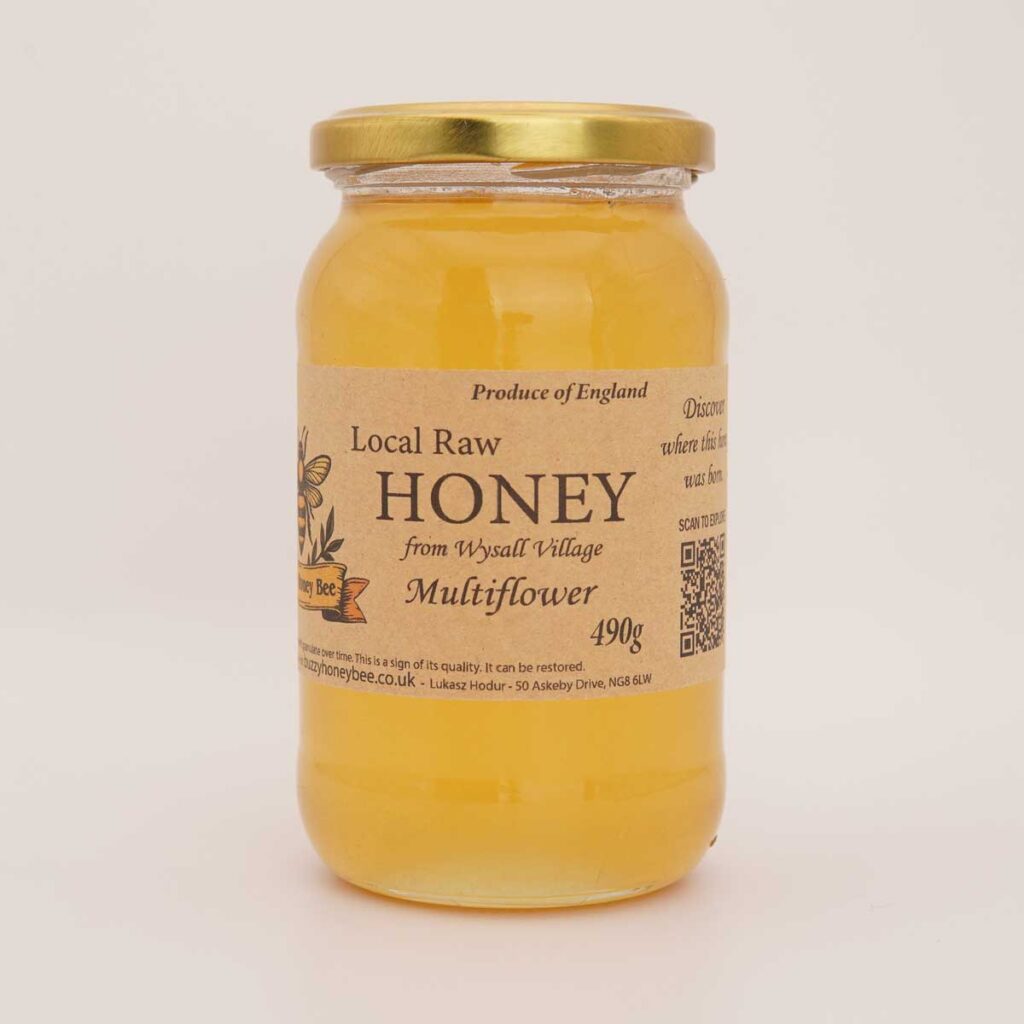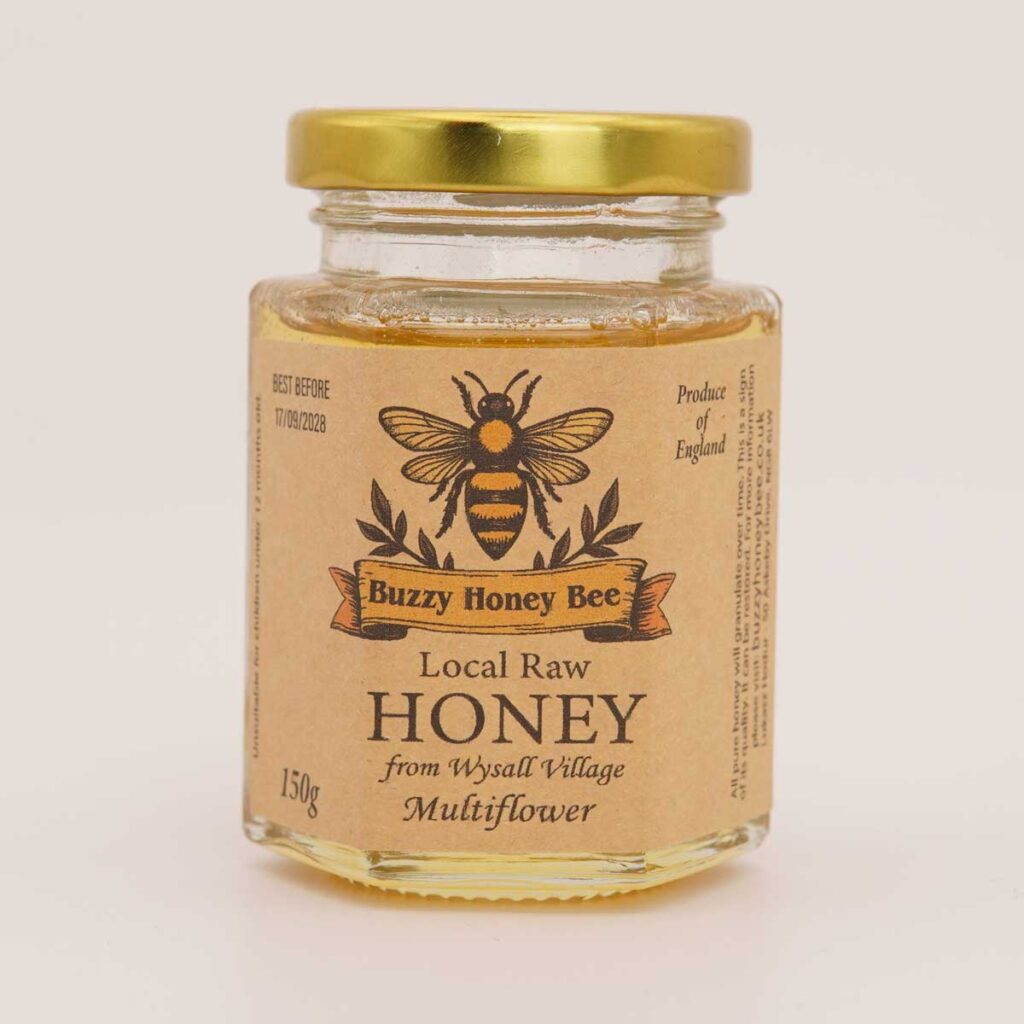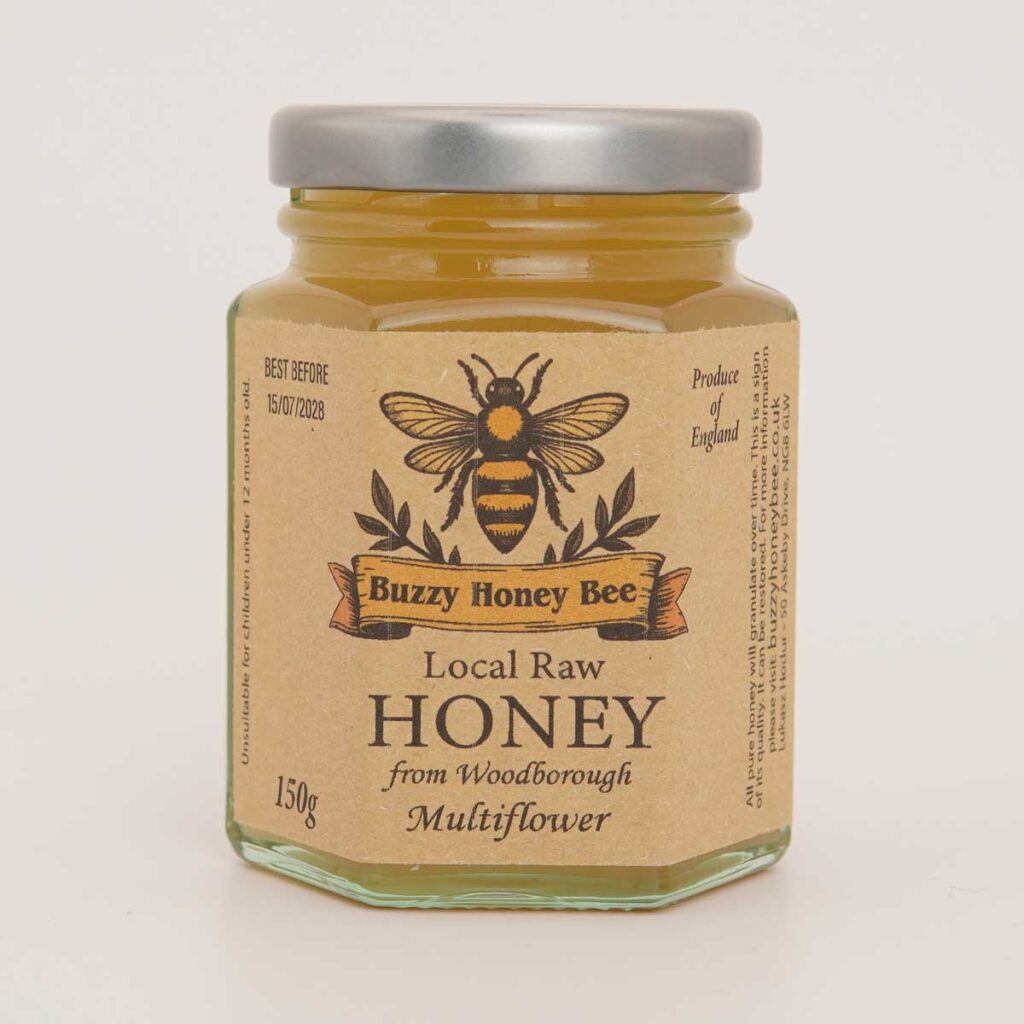
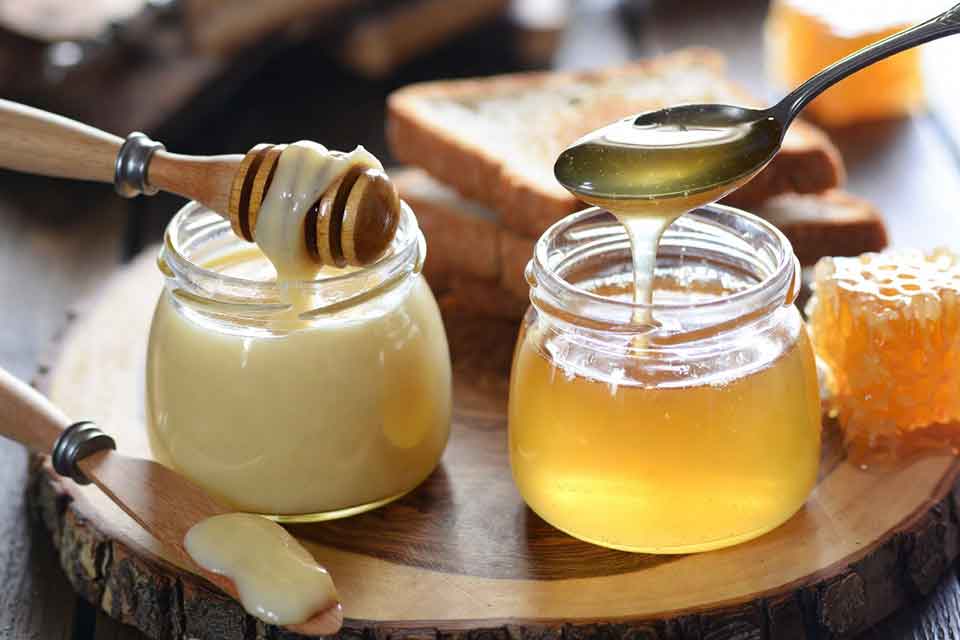
You’ve just opened a jar of honey and it’s thick, creamy and sits perfectly on your knife. Or maybe it’s clear, golden and pours like syrup. One is set honey. The other is runny. And if you’ve ever wondered which is better, or why some jars stay liquid while others turn solid, you’re not alone.
Most people in the UK grow up with both. Toast with set honey that doesn’t drip onto your fingers. A spoonful of runny honey stirred into tea. Yet the difference goes deeper than texture. It affects how the honey tastes, how long it keeps, how you use it in the kitchen, and even how the bees’ work is treated after harvest.
In this guide we’ll unpack exactly what separates set honey from runny honey, why both are completely natural, and which one is likely to suit you best. By the end you’ll know what to look for on the label, how to store each type, and why so many of us who keep bees in the East Midlands prefer the set version for everyday life.
If you’re new to the world of proper honey, you might also want to read our plain explanation of What Is Set Honey? first. It’ll give you the foundation for everything that follows.
What Is Set Honey?
Set honey is simply honey that has crystallised. The glucose in the nectar has formed tiny crystals, turning the liquid into a soft, spreadable paste. It can range from firm and sliceable to soft and smooth.
This is the natural state of most pure, untreated honey after a few weeks or months. In Britain we call it “set” because it has set solid (or semi-solid). You’ll often see it labelled as soft set, hard set, or naturally set.
Because the crystals are already there, set honey stays put on toast, doesn’t run off a spoon, and feels richer in the mouth. Many people who buy from small-scale beekeepers find that their honey arrives already set, especially if it’s raw and local.
You can browse our current range of raw set honey here.
What Is Runny Honey?
Runny honey is honey that is still in its liquid form. It pours easily, looks clear or slightly cloudy, and is the texture most people picture when they think of “honey from the jar”.
Some runny honey stays liquid for a long time because it has been gently warmed and finely filtered. Other jars are simply very fresh and haven’t had time to crystallise yet. A few varieties (such as some acacia or tupelo honeys) crystallise extremely slowly because of their high fructose content.
In the supermarket you mostly see runny honey. These jars are most often blends of honeys from EU countries, non-EU countries, or a mix of both (commonly labelled as a “blend of EU and non-EU honeys”). You can read exactly what that means and how supermarket honey is typically produced in our detailed guide: Supermarket Honey in the UK: What Are You Really Buying?.
On farm shops and from local beekeepers you’ll often find both set and runny versions.
At Buzzy Honey Bee we do things differently. We don’t filter any of our honeys. After extraction the honey is only passed through a coarse sieve to remove larger pieces of wax — nothing more. The result is completely natural, unfiltered, raw local honey that keeps its full character, pollen and the flavour of the Nottinghamshire and Derbyshire flowers our bees actually visited. It’s simply the highest-quality honey we can put in the jar.
The Real Differences Between Set Honey and Runny Honey
Here’s where the two types actually part company.
Texture and mouthfeel
Set honey is thick and spreadable. It clings to the knife and sits on bread without soaking through. Runny honey flows. It’s perfect for drizzling but can make toast soggy if you’re not careful.
Appearance
Set honey is usually opaque and creamy-white to pale gold, depending on the flowers the bees visited. Runny honey is translucent and ranges from almost water-clear to deep amber.
How they are produced (in general terms)
All pure honey starts liquid. Set honey is allowed to crystallise naturally or is encouraged to form fine, even crystals. Runny honey is often kept liquid by careful temperature control and filtration that removes some of the particles that help crystals form. We never reveal the exact methods used by any particular producer, but the principle is the same across the industry: temperature and particle size decide whether honey sets or stays runny.
Flavour release
Many people notice that set honey tastes slightly milder and more rounded because the crystals dissolve slowly on the tongue. Runny honey hits you faster and can taste brighter or sharper, especially if it’s very fresh.
Best everyday uses
- Set honey: toast, crumpets, sandwiches, spreading on scones, stirring into porridge where you want it to stay put.
- Runny honey: salad dressings, marinades, drizzling over yoghurt or pancakes.
When it comes to drinks, both set and runny honey dissolve very easily once the liquid is warm. The crystals in set honey simply melt. Just remember not to add honey to boiling or very hot drinks — high temperatures can damage the natural enzymes and beneficial compounds. Let your tea or coffee cool a little first.
Why Does Some Honey Set and Some Stay Runny?
It comes down to the natural balance of sugars, the amount of bee pollen and wax particles left in the honey, and the temperature it’s kept at.
Honey is a supersaturated solution of sugars. Glucose wants to form crystals; fructose prefers to stay liquid. Honeys with a higher glucose-to-fructose ratio crystallise faster. Cooler storage speeds the process up. Fine particles act as starting points for crystals.
Taste, Colour and Floral Source Matter More Than Texture
A set honey from oilseed rape will taste different from a set honey from mixed East Midlands hedgerows. The same is true for runny versions. Texture is secondary to what the bees actually foraged.
That’s one reason we always encourage people to try raw local honey. When you buy from the same landscape the bees flew over, you get the flavour of that year’s flowers — whether the jar ends up set or runny.
Some producers also offer crude honey, which is the least processed form and almost always sets hard. It’s a completely different experience again.
Which One Is Right for You?
Ask yourself how you actually use honey most days.
If you mainly spread it on toast, crumpets or bread, set honey wins. No drips, no sticky fingers, better control.
If you mostly stir it into drinks or drizzle it, runny is more convenient.
If you bake, both work, but set honey is easier to measure by the spoonful without making a mess.
A lot of our customers keep one jar of each. Soft set for the breakfast table, a runny jar for the kitchen counter.
And if you like the idea of set honey but want an especially smooth, fine-crystal version, look at creamed honey. You can read more about it here: Discover the Finest Creamed Honey from Buzzy Honey Bee.
Our Raw Local Set Honey
Most of the honey we harvest in Nottinghamshire and Derbyshire naturally sets within a few weeks. We simply let it do what it wants to do. The result is a soft, spreadable set honey that still carries the pollen, enzymes and flavour of the local forage.
You can find our current range of set honey and raw honey on the shop pages. Many customers tell us the soft-set jars become their everyday favourite once they’ve tried them.
How to Store Both Types Properly
Keep set honey in a cool cupboard away from direct sunlight. It will stay the same consistency for years. Runny honey prefers the same conditions. If it starts to crystallise and you want it liquid again, warm the jar gently in a bowl of warm water (never in the microwave or on direct heat). Full details on safe warming — and why the microwave is a bad idea — are in our article Why You Should Never Microwave Honey.
Neither type needs the fridge. Cold temperatures only speed crystallisation. For more on shelf life see also Does Honey Expire?.
FAQ: Set Honey vs Runny Honey
Is set honey just old runny honey?
No. Set honey is crystallised honey. It can be freshly harvested and still set within weeks if the natural sugar balance and particles encourage it.
Does set honey go off?
Pure honey doesn’t really go off if stored well. Set honey can last indefinitely. The flavour may slowly change over many years, but it remains safe.
Can I turn set honey back into runny honey?
Yes. Gentle warming returns it to liquid. Once it cools it may set again — that’s normal.
Is runny honey more processed?
Often yes, because extra filtration and temperature control are used to keep it liquid. But not always — very fresh raw honey can still be runny.
Which is better for toast?
Most people prefer set honey. It spreads cleanly and doesn’t soak the bread as quickly.
Does set honey contain less goodness?
No. Crystallisation is a physical change, not a chemical one. The natural compounds stay the same.
Why does supermarket honey stay runny for so long?
It is usually finely filtered and sometimes blended to stay liquid. Local raw honey behaves more naturally. See our full explanation: Supermarket Honey in the UK.
Is set honey the same as creamed honey?
Not exactly. Creamed honey is a controlled, fine-crystal form of set honey. You can read more in our creamed honey guide: Discover the Finest Creamed Honey.
Can I cook with set honey?
Absolutely. It melts when heated and works in the same recipes as runny honey.
Which one should I buy if I want raw and local?
Look for jars that say raw and give the area of origin. Most of our Nottinghamshire and Derbyshire honey arrives as soft set. Browse the local honey collection.
Final Thoughts and What to Do Next
The difference between set honey and runny honey is mostly about texture and how the honey has been handled after the bees finished their work. Neither is superior in every situation. Set honey simply suits the way many of us actually eat honey day to day — on bread, in porridge, straight from the spoon.
If you’ve only ever bought runny honey, try a jar of soft set. You might be surprised how much more you use it once it stops dripping everywhere.
A set jar is not automatically healthier than a runny one. That is covered here: Is Set Honey Healthier Than Runny Honey?. If you have been told crystallised honey has gone off, read Common Myths About Set Honey Debunked.
Browse our current set honey collection or explore the full range of raw local honey from Nottinghamshire and Derbyshire.
And if you still have questions, the rest of our honey guides are here to help:
- What Is Set Honey?
- What Is Local Honey?
- What Is Crude Honey?
- Discover the Finest Creamed Honey
- How to Store Honey the Right Way
- Does Honey Expire?
- Supermarket Honey in the UK: What Are You Really Buying?
Enjoyed this article? If you’d like to support more honest writing about bees and local honey, you can buy me a coffee here:
Buy Me a Coffee – Buzzy Honey Bee
Your support also helps me continue working with the bees and offering free bee swarm collection.
Of course, the best way to support this small apiary is still by choosing one of the products below.